

Argentine business leaders have begun to respond to harsh criticism leveled against them by President Javier Milei, though initial reactions have largely focused on calls for respect rather than economic concerns. The response comes after several days of deliberation following Milei’s public rebuke of the country’s wealthiest and most powerful business figures.
Both the Industrial Union (UIA) and the Business Association (AEA) have demanded respectful treatment, but have largely avoided detailed discussion of the economic implications of the President’s statements. Internal challenges within both organizations may be contributing to the muted economic response. The UIA recently saw the resignation of its executive director, Diego Coatz, who also served as the organization’s chief economist for two decades. In his departure, Coatz affirmed his belief that Argentina “was, is, and must be an industrial country.”
Milei’s direct criticism of prominent business leaders is unprecedented in recent Argentine history, exceeding previous administrations’ generalized concerns about issues like capital flight. While former President Fernández also publicly denounced capital flight upon assuming office, those statements were not followed by concrete action. Reports indicate that Sebastián Eskenazi, a personal friend of Fernández, frequently visited the President’s office during his tenure.
Documents revealed by El Cohete reveal that Eskenazi and his family held significant dollar reserves overseas, totaling over $100 million. The family members listed include Enrique Eskenazi ($40.5 million), Matías Eskenazi Storey ($29 million), Sebastián Eskenazi Storey ($18.2 million), Valeria Eskenazi Storey ($7.8 million), and Esteban Eskenazi ($7.4 million). This revelation underscores the ongoing debate surrounding offshore wealth and its impact on Argentina’s economy.
Past conflicts between presidents and business leaders, while present, differ in nature from the current situation. Previous disputes often centered on government policies, such as expropiations under Juan Perón or the media law debated during the Kirchner administrations. The current situation marks a more direct and personal attack on the country’s economic elite.
During the Kirchner presidencies, disputes arose over the Law of Audiovisual Communication Services, which required the Clarín Group to divest numerous licenses, and an agreement between two newspapers and the military dictatorship regarding the Papel Prensa company. Court rulings were divided, with Daniel Rafecas ruling against Clarín and Julián Ercolini ruling in its favor. The Supreme Court upheld the law’s constitutionality but imposed conditions that effectively rendered it unenforceable, and it was later repealed by President Macri.
Argentina’s relationship with major global powers and their companies has historically been complex. During Perón’s first presidency, the “Braden or Perón” dilemma highlighted economic pressure from the United States. Later, during Perón’s second term, a blockade was imposed. More recently, vulture funds created a task force to pressure the Argentine government over debt repayment. The Kirchner administration, in 2005, thwarted the creation of the Free Trade Area of the Americas (FTAA) championed by then-President George W. Bush in Mar del Plata.
Currently, the United States government is a key supporter of the Argentine administration. The U.S. Department of Justice recently filed a brief in federal court in Wall Street in support of Argentina in a case brought by the Burford Fund, which purchased the litigation rights from the Eskenazi family (operating under the name Grupo Petersen) regarding the YPF expropriation.

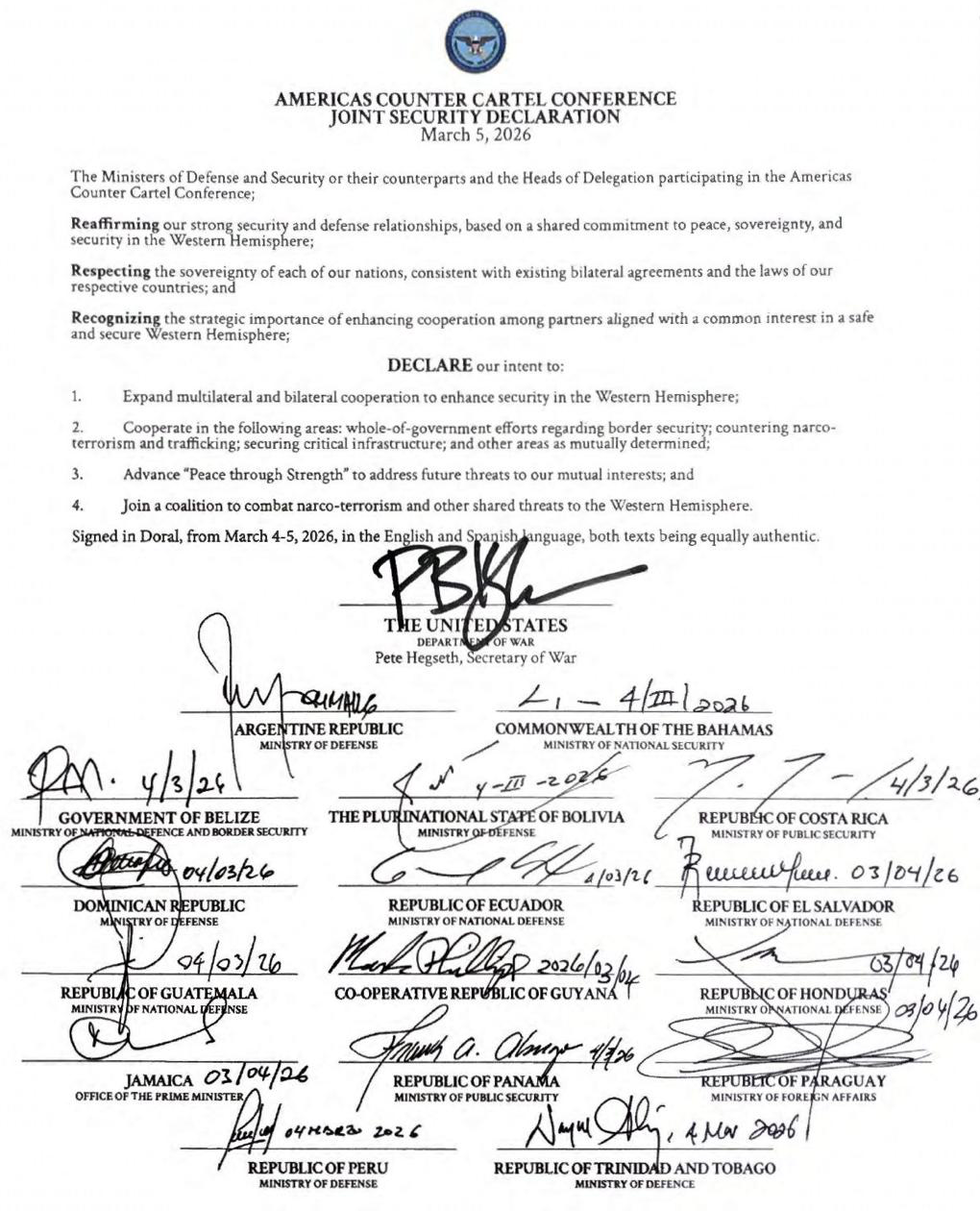
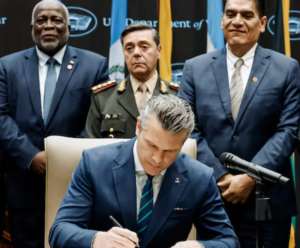
On March 7, 2026, President Milei made his 15th visit to the United States, attending the “Shield of America” meeting at Trump National Doral Miami, a resort similar to Mar-a-Lago. The meeting included President-elect of Chile José Antonio Kast, Presidents Nayib Bukele of El Salvador, Daniel Noboa of Ecuador, Santiago Peña of Paraguay, Rodrigo Paz of Bolivia, Tito Asfura of Honduras, José Mulino of Panama, Luis Abinader of the Dominican Republic, Rodrigo Chaves of Costa Rica, Mohamed Irfaan Ali of Guyana, and Kamla Persad-Bissessar of Trinidad and Tobago. Brazil, Uruguay, Colombia, and Mexico were notably excluded, reportedly due to their unwillingness to align with the group’s policies.
Trump aims to establish collective coordination on regional security, drug trafficking, immigration, and the influence of China and Iran in Latin America. Amidst the controversy surrounding his remarks to the Argentine Congress on March 3, Milei articulated a vision for a “lasting strategic alliance with the United States” that would develop into “a matter of state policy,” asserting that the South Atlantic will be the stage for “strategic disputes in the coming decades.”
The Nisman Case Resurfaces
Investigations related to the late prosecutor Natalio A. Nisman and his death have been reactivated in recent months. Prosecutor Eduardo Taiano has identified and will summon 90 military personnel and approximately 200 intelligence agents for questioning, and has also taken testimony from Viviana Fein, the original prosecutor on the case, who reportedly faced harsh treatment and responded in kind. The renewed investigations come amid evolving international dynamics involving the United States and Israel.
As early as August 3, 2010, Magnetto met with Maurizio Macri and leading figures of the then-opposition Peronism to form an anti-Kirchner electoral alliance. In the same year, Magnetto told the Financial Times that the Kirchner administration was entering a phase of expropriation.
In March 2010, Nisman participated in Washington, D.C., at a congress of the American Israel Public Affairs Committee (AIPAC), speaking on a panel titled “Dangerous Friendships: Iran’s Alliances with Criminal Regimes.” He argued that the Chávez government was complicit with the then-Iranian leader, Mahmoud Ahmadinejad. Nisman later alleged that Chávez had connected Kirchner with Ahmadinejad. During that trip, AIPAC connected Nisman with a senior executive from the Israel Hayom newspaper, owned by Las Vegas casino magnate Sheldon Adelson. Adelson was a major donor to both the Republican Party and the Likud party in Israel.
Between 2010 and 2014, the Israel Hayom group transferred $280,000 to an account held by Nisman at the Bank Hapoalim in Colonia, Uruguay, purportedly for speaking fees, but these payments were not declared and no record of the alleged lectures exists. The funds also reached other members of his family.
The Pentagon has stated that an investigation is underway regarding the February 28 bombing of the Shajareh Tayyebeh primary school in Minab, which resulted in between 160 and 180 deaths, mostly girls aged 7 to 12 and their teachers. The Iranian government has vowed retaliation for the Argentine government’s support of the U.S.-Israeli aggression in the Middle East. The U.S. Government’s spokesperson stated that they do not typically bomb schools, while President Trump called for the evacuation of areas of Lebanon, stating they would be treated as Gaza was.
Several key factors will determine the success of this strategic alliance for Milei. Politically, Trump must successfully navigate the November election and his party must maintain control of both chambers of Congress. Economically, the alliance requires American investors capable of competing with China’s economic power.
On March 8, 2022, General Laura Richardson testified before the House Armed Services Committee, highlighting the economic importance of China’s projects in the area overseen by the Southern Command. Over five years, China committed $72 billion in investment, while the Army Corps of Engineers had only $250 million for the same period. The Southern Command subsequently emphasized history and shared values—democracy, human rights, and gender policies—which translates to bombings and dispossession capitalism.
The government’s optimistic projections and the general’s assessment can be compared with the views of major banks supporting the government’s search for investors. A JP Morgan report last month indicated that disinflation may be slower than the government predicts, remaining above 2% monthly through at least the second quarter of 2026, averaging 2.4% in the first half of the year and 26% annually. The report also suggests the economy will remain fragile in the short term.
Bank of America stated that the success of Milei’s policies depends on concrete progress in structural reforms and in Congress, and is closely monitoring reserves, fiscal sustainability, and exchange rate normalization. Both banks recommend that their clients divest from Argentine sovereign bonds due to concerns about the country’s ability to pay amidst the current conflict. Finance Minister Caputo is aware of these difficulties. His Secretary of Finance, Alejandro Lew, had announced plans to issue debt, but the announcement was retracted due to a rise in country risk and subsequent interest rate increases. Lew resigned and was replaced by Federico Furiase.
Milei previously expressed negative opinions about Furiase in 2018, before his “magic wand” transformed Caputo into the best minister in the solar system.

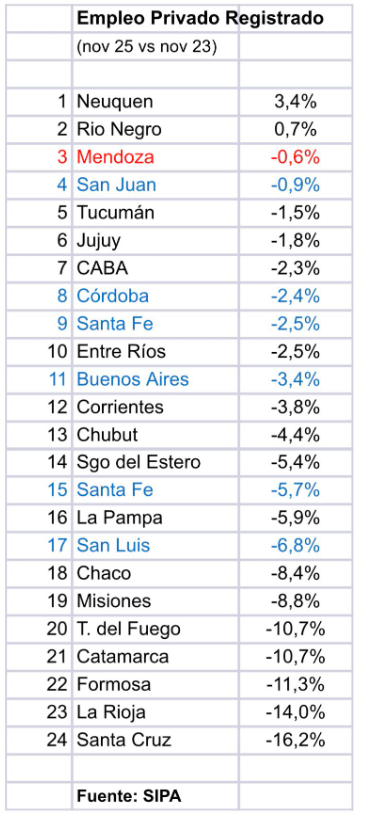
Over the past two years of the Milei administration, private sector employment has declined in all provinces except the Neuquén and Río Negro regions, with Neuquén experiencing visible growth of 3.4% between November 2023 and 2025. Río Negro saw a modest improvement of 0.7% over two years. Mendoza experienced a 0.6% decrease in registered employment since Milei took office, despite Governor Alfredo Cornejo releasing figures from the Integrated Pension System (SIPA).
Wall Street banks are less concerned with inflation than with Argentina’s low net reserves, which rely heavily on external loans and swaps, and require restructuring to lift banking controls. International investors do not believe a stable exchange rate is possible without sufficient reserves. They see the exchange rate scheme as mirroring the government’s approach to the labor market: to attract long-term capital, a unified exchange rate and greater freedom of capital movement are necessary.
Local analysts share this view. The CIFRA Center of the CTA and the Area of Economy and Technology of FLACSO recently published notes on the recovery of international reserves in a turbulent context. The work, by Pablo Manzanelli and Leandro Amoretti, argues that following Trump’s intervention ahead of the October 2025 election, a period of exchange rate stability and a new financial bubble began. Although, this did not lead to a full return to international credit markets, limiting government external financing to international organizations and “Repo” loans. “During the first two months of this year, gross reserves grew by almost $5 billion, due mainly to the increase in the price of gold, Repo loans, and the increase in dollar deposits. However, as of February 23, net reserves measured according to the IMF methodology plummeted to -$16.865 billion. This demonstrates that the purchase of foreign currency was insufficient to accumulate the reserves needed to cover debt payments to international organizations and private creditors. The future outlook is fragile due to the high demand for dollars for hoarding, which reached record averages after the lifting of controls in 2025, the increase in the tourism deficit, and the deterioration of the trade surplus. What we have is compounded by global uncertainty due to the war in Iran, which encourages capital flight to safe assets. With debt maturities exceeding $72 billion by the third quarter of 2027, the Argentine economy remains highly vulnerable to potential external shocks in the short term.”
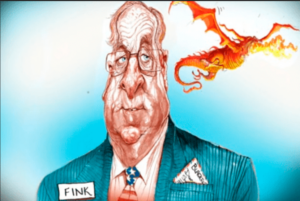
Following the publication of this warning, the situation became more complicated due to events beyond the Argentine government’s control. Shares of BlackRock’s Private Lending Fund fell 5% on Friday after the asset manager limited share repurchases to 5% ($1.2 billion), following requests from shareholders to withdraw 9.3% of the fund. Bloomberg reported that this decline was linked to similar declines at other private equity firms: Blue Owl Capital, KKR, Carlyle Group, and Ares Management fell 6%, and Apollo Global Management fell 5%. BlackRock stated that without these limits, investor capital would be drained and the expected duration of the loans would be shortened. Other specialists point out that a private investment fund is not like a bank account, where all deposited funds can be withdrawn at any time. It has these types of limitations, which in this case would be minor.
