
NASA has activated its planetary defense system to closely monitor the interstellar comet 3I/ATLAS, an unprecedented step for an object originating outside our solar system. The comet, discovered in June 2023, is exhibiting unusual behavior that has prompted the agency and the international astronomical community to initiate a dedicated observation campaign. While NASA maintains the activation is a routine measure to enhance detection capabilities, the lack of public statements surrounding the effort has sparked discussion regarding potential, tho currently unsubstantiated, risks.
NASA has quietly activated its planetary defense system following the detection of unusual activity in the interstellar comet 3I/ATLAS, first discovered in July 2025. Astronomers have described the object’s behavior as “inexplicable,” prompting the agency to initiate a global monitoring protocol. This activation underscores the increasing focus on identifying and tracking potential threats from objects originating outside our solar system – a growing area of concern as our detection capabilities expand.
The agency activated the IAWN Comet Astrometry Campaign, an international operation running from November 27, 2025, to January 27, 2026, to meticulously track the movements of 3I/ATLAS. Notably, NASA has not issued public statements or held press conferences regarding the activation, maintaining a low profile as the monitoring effort unfolds.
Why NASA Activated Planetary Defense for Comet 3I/ATLAS
According to reports, this marks the first time in history an interstellar object has been incorporated into a coordinated campaign led by the International Asteroid Warning Network (IAWN). The IAWN is typically activated only when there are potential threats to Earth. The operation aims to enhance global detection capabilities of celestial bodies and prepare the planet for potential impacts.
IAWN officials have acknowledged that 3I/ATLAS presents “unique challenges” in calculating its trajectory, as its movement doesn’t align with the patterns observed in known comets. This atypical behavior is driving the need for increased scrutiny and more precise tracking data.
The Unusual “Antitail” of Comet 3I/ATLAS
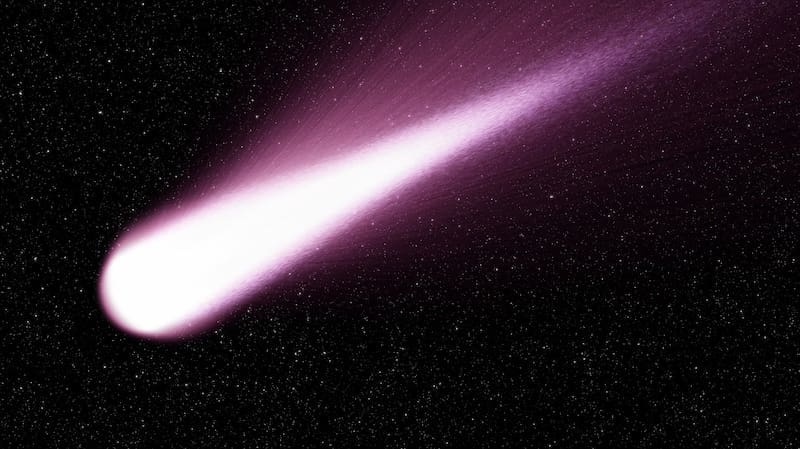
Among the most puzzling aspects for astronomers is the comet’s “antitail” – a stream of particles directed *toward* the Sun, a behavior contrary to that of typical comets. This phenomenon suggests an atypical composition or interaction with the solar wind, prompting further investigation into the comet’s origins and characteristics.
Scientists have detected a radio signal emanating from the object, further deepening the mystery surrounding its true nature. This discovery has fueled research aimed at understanding the implications of this phenomenon for the study of comets and their interaction with the solar environment.
The Astrometry Campaign: What It Is and Why It Matters
Throughout the observation period, telescopes and tracking systems worldwide will focus on comet 3I/ATLAS to precisely determine its location, composition, and orbital evolution. This coordinated effort represents a significant step forward in our ability to characterize and monitor interstellar objects.
While NASA has characterized the operation as a scientific cooperation exercise, the agency’s lack of public communication has fueled speculation on social media and specialized forums. Users on X (formerly Twitter) are questioning whether the agency is withholding information about a potential real threat to Earth.
