
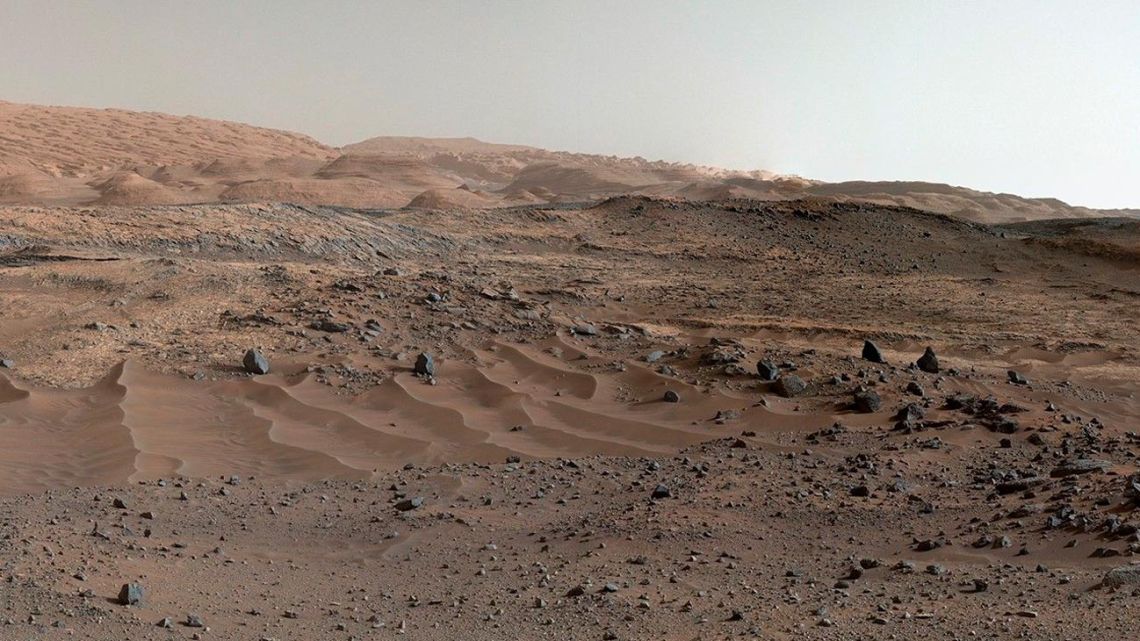
NASA researchers have detected a mysterious cylindrical object on the surface of Mars, captured by high-resolution cameras on one of its exploratory vehicles. The image, recently released as part of a scientific report, has sparked debate within the academic community due to its unusual appearance, which contrasts with the typical rocky formations found on the planet.
Erosion by wind, thermal fractures, and past volcanic activity can shape rocks into uncommon geometries, particularly on the red planet where the atmosphere is extremely thin and dust storms are frequent.
Esto no les gusta a los autoritarios
El ejercicio del periodismo profesional y crítico es un pilar fundamental de la democracia. Por eso molesta a quienes creen ser los dueños de la verdad.
Abigail Fraeman, a planetary scientist at NASA’s Jet Propulsion Laboratory, noted that the object “has a distinct texture from the surrounding material and relatively well-defined edges,” prompting a more thorough investigation.
Researchers at the National Aeronautics and Space Administration emphasized that Mars possesses processes capable of producing surprising shapes, rather than suggesting extraordinary hypotheses. This discovery underscores the complex geological forces at play on the red planet.
NASA geologist Ashwin Vasavada explained that “the combination of wind erosion, extreme thermal changes, and millions of years of exposure can sculpt rocks with very peculiar geometries.”
A mysterious “whistle” on Mars reveals the first evidence of lightning on the red planet
The main theories of scientists about the mysterious object found on Mars
Among the explanations gaining the most consensus is the possibility that it is a fragment of sedimentary rock hardened by chemical processes over millions of years. Another hypothesis suggests it could be a piece broken off from a higher geological layer, subsequently sculpted by abrasion from the Martian wind.
Scientists discovered a super-Earth of seven Earth masses 91 light-years from our planet
The possibility that the object is a mineral concretion is also being analyzed – that is, an accumulation of compounds that forms within sediments and, when exposed, takes on compact and defined shapes. “These structures can appear very regular because they grow from a core and harden over time, resisting erosion better than the surrounding material,” analyzed project scientist Ken Farley.

An additional theory, even though less likely, suggests it could be remnants of material ejected by meteorite impacts. Collisions on the Martian surface are frequent and can generate fragments with elongated shapes after the rapid cooling of the molten material.
PM/ff
