
Summary of the Article: Poland Faces Looming Fiscal Crisis Due to Demographics
This article warns of a critically important fiscal crisis looming in Poland, driven by demographic changes. Here’s a breakdown of the key points:
* Demographic “Tsunami”: Experts predict a 7% GDP gap in healthcare funding by 2060,with the current system only covering 42% of expenses. This is likened to a growing “elephant” that the country is ignoring.
* Fiscal Warning Signs: The article draws parallels to Romania, where fiscal consolidation lead to high inflation and sluggish growth. Poland is facing similar risks.
* Market Concerns: Rating agencies have signaled concern, and investor interest in Polish treasury auctions is waning.
* Delayed Action is Dangerous: Kotecki argues that addressing the issue now is crucial, as waiting will only result in a more drastic and forced response later.
* Potential Outcomes: Ignoring the issue could lead to a scenario where the financial “house” (Poland’s economy) becomes unsustainable,represented by a collapsing roof or warping walls,similar to a Greek-style crisis.
* cautious Optimism: Despite the warnings, the article acknowledges Poland’s positive economic indicators (growth, G20 membership) but stresses that these positives won’t shield the country from the consequences of inaction on the fiscal front.
In essence, the article paints a picture of a stable economy facing a potentially devastating long-term challenge that requires immediate and serious attention.
A growing rift within the National Bank of Poland (NBP) is raising concerns among observers, though its immediate impact on financial markets appears limited. The dispute centers on communication and decision-making processes within the central bank, with differing views on the severity of the situation.
Ludwik Kotecki, a member of the Monetary Policy Council (MPC), acknowledged the uncertainty surrounding the internal conflict. “Frankly, I don’t know what’s really going on,” Kotecki stated, adding that the lack of clarity regarding developments within the NBP’s Management Board is troubling. He noted a divergence of opinion among MPC members, with some downplaying the issue as a minor disagreement over jurisdiction, while others view it as a more serious matter. “It doesn’t seem entirely trivial, nor is it a Byzantine war, but whether the core of the dispute is closer to a border dispute or a Byzantine conflict, I have no idea,” he said.
The dispute may stem from perceptions that NBP Governor Adam Glapiński is aligning too closely with the current ruling coalition, according to some reports. Kotecki suggested the disagreement over a recent budget opinion served as a catalyst for the escalating tensions. “I think the substantive dispute was a pretext, and the article on the evolution of the opinion on the budget was the spark that caused the explosion,” he explained. He expressed hope that the damage would be limited and that lessons would be learned from the situation.
Kotecki downplayed the potential for significant market disruption, stating that the dispute has largely been ignored by investors. “The markets are ignoring the dispute, except for the media – for you, it’s super because it’s irritating and sensational,” he said. He also dismissed speculation of a broader conspiracy involving intelligence services aimed at forcing Glapiński’s resignation to pave the way for Euro adoption, calling such claims “untrue” and demonstrating a lack of understanding of the complex process of joining the Eurozone.
“Businesses Need Predictability.” What Industry Expects From the Government

The internal NBP conflict raises questions about potential repercussions for external observers, particularly financial markets. However, Kotecki believes the situation is unlikely to escalate significantly, citing the difficulty of removing either the Governor or other board members. This stability, however, doesn’t negate the need for a resolution to the internal disagreements.
Kotecki asserted that the markets are currently unconcerned, focusing instead on media coverage of the dispute. He emphasized that the situation doesn’t present a substantial risk to financial stability.
Addressing claims circulating in some right-leaning media outlets alleging a conspiracy to oust Glapiński and accelerate Poland’s entry into the Eurozone, Kotecki dismissed them as baseless. He highlighted the complexity of Euro adoption, emphasizing that it’s a process initiated by the Council of Ministers and requiring parliamentary and constitutional changes, with the NBP playing a limited role.
He stated that the narrative surrounding a conspiracy is fueled by media outlets seeking attention and misrepresenting the situation. “Someone who wrote this has no idea about the process of joining the Euro,” Kotecki said. He reiterated that Euro adoption is not currently on the political agenda in Poland.
When asked about the timeline for potential Eurozone consideration, Kotecki indicated it’s unlikely to be revisited in the near future. “For the next ten years, we won’t get close to this topic,” he predicted, citing both political considerations and the uncertain future of the Eurozone and the European Union.
Kotecki emphasized the significant hurdles to Euro adoption, including the need for constitutional changes and a two-thirds majority in Parliament. He cautioned against initiating a process that cannot be completed, potentially leaving Poland stuck in the Exchange Rate Mechanism II (ERM II) without being able to join the Eurozone. “It’s better not to start a process that you can’t finish,” he said.
He noted that Euro adoption wasn’t a factor in the recent presidential campaign, further indicating a lack of political will. Kotecki highlighted that a successful transition to the Euro requires at least three years of preparation, but the current political climate makes it an unlikely prospect.
![Euro in Poland or a wall. Time to sober up [OPINION]](https://v.wpimg.pl/ODVlZDYyYCU3Dix3dgJtMHRWeC0wW2NmI05gZnZIfXxmFHUiMBUqNjMcNWo-Czo0NxsqaikVYCUmBXUyaFYrLSUcNiUgViopNAk-a2FAdnJjXGp1dBt9IG9Bbn09GGJ8Nwg_aWBLfHxjCT5ya0AucHQR)
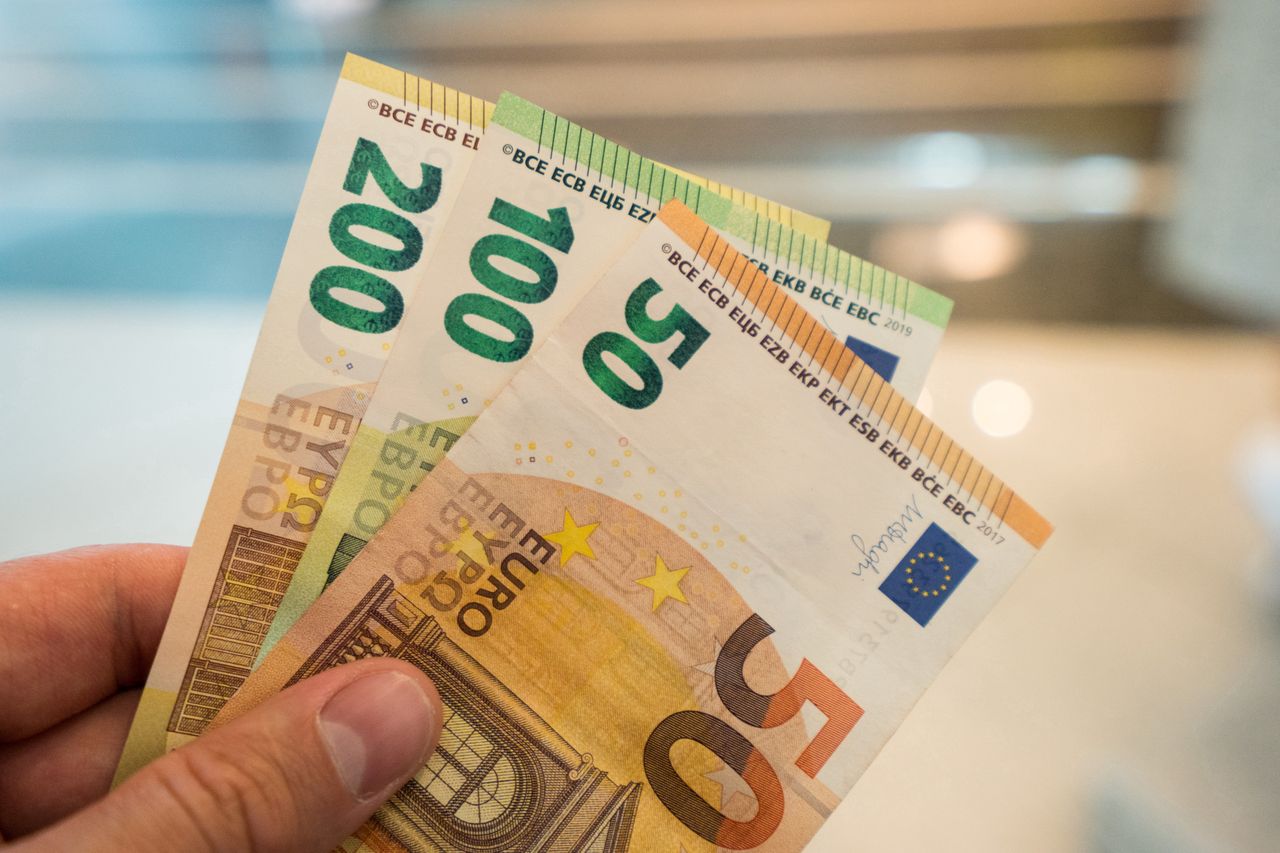
Turning to a broader economic outlook, Kotecki was asked about the potential benefits of Euro adoption. He acknowledged that the economic advantages have diminished since 2008, and emphasized that a country’s development is not solely determined by its currency. “It’s an obvious truism. We already have over twenty countries with the Euro, and each develops differently,” he said. He added that Poland’s strong economic performance in recent decades is not attributable to its non-Euro status.
“We simply have a dynamic, diversified economy, entrepreneurial people, relatively cheap labor for most of this period, a lot of luck, and reasonably good economic policy. It certainly wasn’t dramatically wrong,” Kotecki stated.
The balance of costs and benefits of joining the Euro is decidedly different than in 2008. Only no one knows exactly what it is today. There are no strong reasons to cry that for political reasons we cannot enter the Eurozone, although there may be different opinions on this. The right has a different opinion, business has a different opinion, banks have a different opinion.
Kotecki’s assessment, coming from a former government advisor on Euro adoption, is a notable shift in perspective.
“It’s not surprising at all – I’ve been saying this for several years. The economic benefits are smaller – and the political opposition to the Eurozone is significant. The costs are also different,” he explained.
He stressed the need for a thorough analysis of Euro adoption, noting that it’s currently lacking within both the government and the NBP. He reiterated that Poland’s membership in the Eurozone, with a derogation allowing it to postpone adoption, means the issue will eventually need to be addressed. “Theoretically, we should eventually join the Eurozone, because we are a member with a derogation,” he said. “It depends on us when the derogation should be removed.”
Looking ahead, Kotecki cautioned against complacency, emphasizing the need for careful consideration of the long-term implications. He noted that the current favorable economic conditions may not persist indefinitely.
“If we tried to join the Euro before the global crisis in 2008, would our economic trajectory have been significantly different?” Kotecki posed. “That’s too difficult a question – and no one really knows the answer. But I’ll say this: a country’s development doesn’t depend on the name of its currency. That’s an obvious truism.”
The balance of costs and benefits of introducing the Euro is definitely different than in 2008. Only no one knows it today. There are no strong reasons to cry that for political reasons we cannot enter the Eurozone, although there may be different opinions on this. The right has a different opinion, business has a different opinion, banks have a different opinion.
Kotecki acknowledged that Poland’s recent economic success is attributable to a combination of factors, including a resilient economy, entrepreneurial spirit, relatively low labor costs, and favorable political conditions.
“Were all our governments with different options leading a good economic policy, or rather not hindering?” he asked rhetorically. As a liberal, he responded, “very strongly not hindering. But they also didn’t make bigger mistakes.”
Kotecki drew a parallel to the fairytale of Goldilocks, describing Poland’s current economic situation as “just right.” However, he cautioned that a significant “elephant” – representing public finances – is lurking within this seemingly balanced system.
“The elephant is still fitting in, and if you’re not in this house yourself, you can’t see it. But something will have to be done with it,” he warned. He highlighted the need to address fiscal adjustments, which may not be painless for the economy, particularly given the recent loose fiscal policy.
He noted that Poland successfully brought inflation down to its target level with minimal cost to the economy, benefiting from favorable external conditions. “We have inflation like in a fairytale – nice, on target,” he said. However, he cautioned that fiscal adjustments will be necessary in the future and may not be cost-free.
![Poland is the 20th economy in the world. It's a pity that it doesn't bring anything new to our lives [OPINION]](https://v.wpimg.pl/M2NjY2E1YlMvCC8BakpvRmxQe1ssE2EQO0hjEGoAfwp-EnZULF0oQCsaNhwiQzhCLx0pHDVdYlM-A3ZEdB4pWz0aNVM8HihfLA89HXFVfQN7DDhXaAZ5C3pHbVB3B2AKeQ46H3AEewEtCTpTcAQvB2wX)
Looking ahead to 2025, Kotecki anticipates continued economic growth, potentially reaching around 4%, with favorable inflation prospects. However, he warned that 2027 will bring challenges, particularly with elections looming and the need to address the growing fiscal deficit. “In the near future, we will have to adjust the current state and take the elephant out of the house,” he said.
He pointed to the need for spending cuts and potential tax increases, referencing a recent analysis highlighting Poland’s high spending and low tax rates.
Kotecki previously advocated for a “war tax” and suspension of certain benefits, and now sees a health tax as a potential solution to address funding gaps in the healthcare system. He noted that spending has increased significantly in recent years without a corresponding improvement in healthcare access and quality.
“The money simply sinks into costs. We added a lot of money to the system, but the effects, although visible, are still unsatisfactory. And, unfortunately, there is still not enough money,” he said.
Citing data from the FPP’s “Monitor Ochrony Zdrowia,” Kotecki noted that the number of healthcare services increased by 9% since 2016, while costs rose by 64%.
Kotecki expressed opposition to a health tax, favoring adjustments to the existing contribution system. He emphasized the importance of transparency and accountability in healthcare funding.
Experts have projected a potential 7% GDP gap in healthcare by 2060, with the current contribution model covering only 42% of expenses. Kotecki stressed the importance of initiating a serious discussion about this issue.
“We are in a situation like Goldilocks from the fairytale,” Kotecki said, referencing the story of Goldilocks and the Three Bears. “But in this little house with the three bears – mom, dad, and the child – there’s an elephant that’s growing and roaring louder and louder.”
“What will happen if we don’t deal with this elephant?” Kotecki asked. “It will grow so big that the little house will be too small. The roof will fly off or the walls will warp.”
He noted that some within the government previously warned of a Greek-style scenario, but now a Romanian scenario is more relevant. He cautioned that fiscal consolidation in Romania has led to high inflation and sluggish economic growth.
Kotecki pointed to a recent ratings agency warning as a sign that markets are becoming concerned. “The markets have already given us a signal in the form of a lowered rating perspective,” he said. “Investors may not necessarily be withdrawing from Poland, but they have stopped coming to treasury auctions as strongly.”
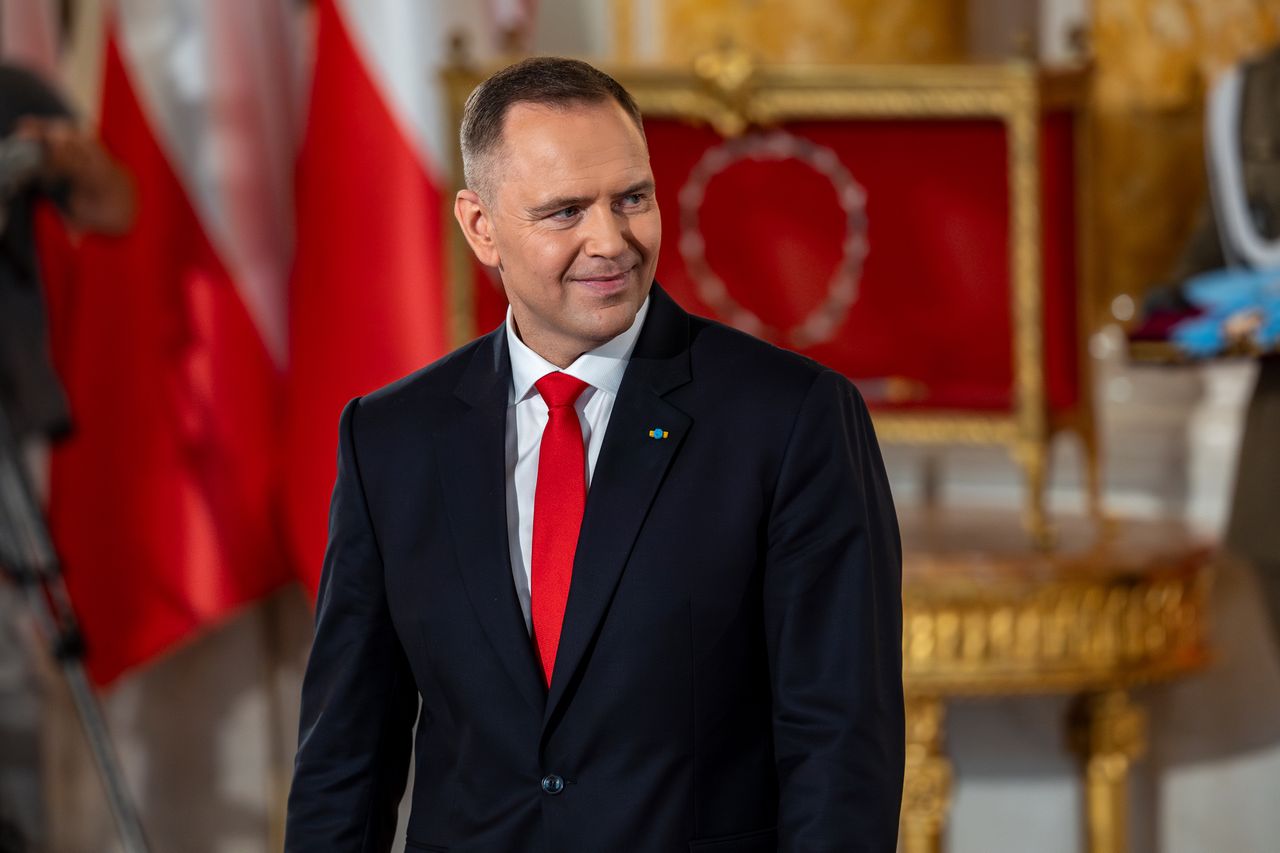
“What will happen if this doesn’t happen?” Kotecki asked. “It will happen only when there is no other choice. When you have to do it in a year, not in four.”
So, everything is fine, except for that elephant? That growing elephant that is starting to roar louder and louder and will require some diet.
Kotecki concluded on a cautiously optimistic note, highlighting Poland’s strong economic growth, its membership in the G20, and its overall positive trajectory. However, he reiterated the need to address the looming fiscal challenges.
