
Nuclear fusion is emerging as a potentially transformative energy technology, attracting increasing attention from governments and investors worldwide. Even as long considered a distant prospect, recent advancements are positioning fusion as a strategic technology with implications for decarbonization and energy independence.
A shift in political and economic dynamics is driving this momentum. Investor optimism, fueled by research breakthroughs, is coinciding with growing concerns about climate change, prompting national governments to declare fusion strategies with long-term commitments to decarbonizing energy systems. These plans combine political and financial support for fusion research, legislative changes, and private sector engagement to accelerate the development of commercial fusion power plants.
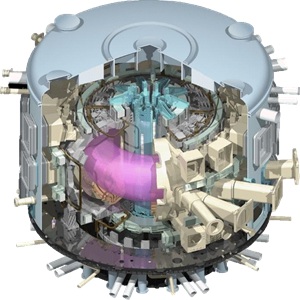
Through 2023, the majority of public funding for nuclear fusion was directed towards basic and applied research, and the construction of the international ITER reactor, designed to experimentally demonstrate the technical feasibility of high-performance fusion reactors. The ITER project is significant not only for its research value but as well for the development of supply chains for fusion technologies, the training of specialized experts, and the accumulation of experience necessary for building the first fusion power plants.
Recently, fusion research has expanded beyond open academic inquiry into the realm of technology development with defined outputs, timelines, and commercial potential. This expansion is driven by three key political objectives:
- Building and commissioning demonstration facilities producing electricity via nuclear fusion within 10 years.
- Initiating electricity generation at pilot fusion plants within 10 to 20 years.
- Establishing a regulatory and investment framework to enable the rapid construction of the first generation of commercial fusion power plants.
These declarations are accompanied by the creation of new political institutions, government strategies, and roadmaps.

Energetický reaktor DEMO (kredit EUROfusion)
European Union
The European Union has long been a global leader in fusion research. Public support has primarily focused on research related to the DEMO demonstration fusion power plant, coordinated by the EUROfusion consortium of European fusion laboratories, and the construction of the international ITER reactor, managed by the European agency Fusion for Energy (F4E). This support, including contributions to the ITER project, has reached approximately €1 billion annually. However, targeted support for building European demonstration facilities to prove electricity generation capabilities has been lacking, a shortcoming now recognized as a mistake that needs to be addressed.
In 2012, European fusion laboratories outlined a plan, Fusion Electricity: A roadmap to the realization of fusion energy, to commission the first DEMO fusion power plant by 2050. The EUROfusion consortium was tasked with preparing the project, with technology verification to occur within the ITER project and construction managed by F4E. Plans are now accelerating. In 2025, the European Commission initiated the development of a new fusion strategy, EU Fusion Strategy. A key component of this strategy is a European pilot plant, with construction slated to begin within ten years, funded by a budget in the tens of billions of euros through a combination of European funds, national contributions, and industrial investment. The document will also determine whether fusion plants will be regulated under existing nuclear legislation or a new, separate legal framework, potentially streamlining approval processes and reducing associated costs.
Germany presents a specific case, having disrupted its energy grid and failed to meet its climate commitments through an ideologically driven energy transition, Energiewende. Fusion research enjoys strong support in Germany. Last year, the German government adopted an action plan, Deutschland auf dem Weg zum Fusionskraftwerk (Germany on the Path to a Fusion Power Plant), allocating up to €2.5 billion in public investment by 2029 for the development of fusion facilities, with a focus on demonstration facilities, basic research, collaboration between academia and industry, training of experts, public awareness, and necessary legislative changes. Details of the action plan can be found here.
Bavaria, in particular, is strongly supporting the construction of fusion power plants, planning to commission a demonstration facility around 2031 and the first commercial fusion power plant by 2040. The region plans to build three fusion plants: a demonstration plant with a tokamak in Garching near Munich, a commercial plant with a stellarator in Gundremmingen, and a commercial laser plant in southern Bavaria, utilizing the infrastructure of decommissioned nuclear power plants.
United States
In 2024, the U.S. Department of Energy (DOE) established a dedicated Fusion Office to coordinate American fusion research, infrastructure, and collaboration with the private sector, elevating fusion to a standalone strategic program.
The U.S. Federal budget for fusion research has reached $1–2 billion annually in recent years, allocated to basic research, investments in large-scale facilities, contributions to the ITER project, and new programs focused on technological demonstration of fusion concepts. In 2025, the DOE released a ten-year fusion research roadmap, Fusion Science & Technology Roadmap, outlining the following goals:
- By 2028, build small and medium-sized test facilities, demonstrate the functionality of proposed fusion reactor concepts, and select candidates for pilot plants.
- By 2030, begin construction of pilot plants.
- By 2035, commission pilot plants.
The plan anticipates that pilot plants will be built by private companies, with the DOE playing a role in co-financing infrastructure construction and sharing commercial risks.
China
China has consistently pursued a coordinated national fusion strategy, including participation in the ITER project and extensive national research activities. In 2025, China established the state-owned China Fusion Energy Co.(CFEC) to manage, coordinate, and commercialize the national fusion program. A key project for CFEC is the CFETR (China Fusion Engineering Test Reactor) technology demonstrator, which will be smaller than ITER but will demonstrate electricity generation on a limited scale. CFETR will follow the commissioning of the CRAFT (Comprehensive Research Facility for Fusion Technology) and the BEST (Burning Plasma Experimental Superconducting Tokamak) test reactor. Construction of CFETR is expected to begin by 2030 and be completed by 2035.
Following CFETR, China plans to build the CFEDR (China Fusion Engineering Demo Reactor) demonstration fusion power plant, with construction beginning by 2040 and commissioning expected by 2050.
South Korea
At the end of 2025, the South Korean government announced the Direction for the Development of Core Nuclear Fusion Technologies plan, focusing fusion research on eight key technologies, aligning with the priorities of the European Fusion Roadmap: reactor operating scenarios, divertor, fuel heating, superconducting magnets, breeding blanket, fusion materials, fuel cycle, safety, and licensing. Technology development is expected to be completed by 2030, with experimental verification by 2035.
Subsequently, the government approved the 2026 Nuclear Fusion Research and Development Implementation Plan, which proposes doubling financial support for research, strengthening collaboration between academia and industry, integrating artificial intelligence into research, and supporting the construction of demonstration facilities, particularly the KIFR (Korean Innovative Fusion Reactor). KIFR is expected to be commissioned by 2035 and will demonstrate electricity generation on a limited scale, followed by the construction of the K-DEMO demonstration fusion power plant, expected to be commissioned by 2050.
Japan
In 2025, the Japanese government updated its national strategy, Fusion Energy Innovation Strategy, aiming to bring the commissioning of the first fusion power plants closer. Government support will focus on the commercial construction of demonstration facilities, to be commissioned by 2040, and the integration of fusion facilities into power grids.
India
India’s national plan, India’s Strategic Roadmap for Nuclear Fusion Energy Development, continues to aim for the construction of a DEMO demonstration fusion power plant by 2060, with no recent changes.
Russia
The Russian government does not support fusion research, funding only its commitments to the ITER project.
Conclusion
The current phase of nuclear fusion research is characterized by an unprecedented level of political and institutional engagement. Countries with advanced fusion research, including the European Union, the United States, China, South Korea, and Japan, are clearly emerging. In these nations, fusion is increasingly viewed as a long-term strategic investment with high potential, becoming a priority for political representation.
Governments aim to create a fusion ecosystem comprising academia, private research firms, and industry, integrating nuclear fusion into the energy sector with government support in the near future.
Lecture on Fusion

