
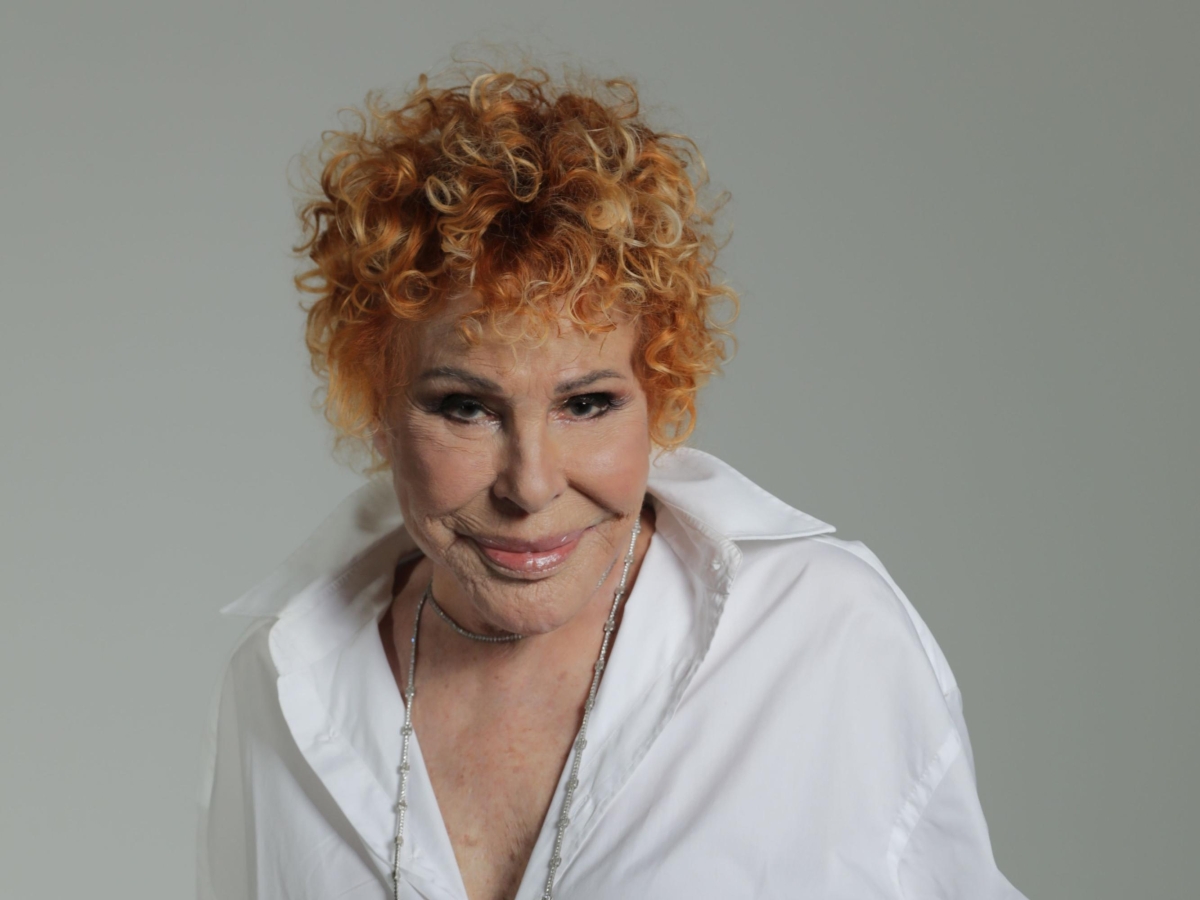
Ornella Vanoni: A Portrait in Her Own Words – key Themes & Insights
This extensive interview with Ornella Vanoni paints a vivid and nuanced portrait of a remarkable artist and woman. HereS a breakdown of the key themes and insights gleaned from the text:
1. Life, Happiness & Melancholy:
* The Wave of Emotion: Vanoni views life as a cycle of happiness and unhappiness, a constant ebb and flow. She doesn’t shy away from acknowledging both sides.
* Melancholy as a Hallmark: She embraces melancholy not as a negative, but as a characteristic of intelligent and sensitive people. She finds beauty in sadness, exemplified by her love of rain.
* Joy and Suffering Coexist: Even in joyful Brazilian music (Bossa nova), she recognizes an undercurrent of melancholy.
2. Mental Health & Resilience:
* inherited Depression: Openly discusses her struggle with depression, acknowledging a familial link.
* Seeking & Finding help: She sought treatment and relies on psychopharmaceuticals, acknowledging the need for lifelong management.
* Acceptance & Stability: The medication allows her to “slip into sadness” without falling into debilitating depression, signifying a degree of control and stability.
3. Social Consciousness & Observation:
* Early Activism: Her past involvement with charitable work (Caritas, Don colmegna) demonstrates a concern for social issues.
* Critique of Modern Milan: She expresses disappointment with the focus on money and expense in modern Milan, contrasting it unfavorably with its past and other cities like Rome and London. She mourns the loss of something intangible in the city’s evolution.
* Environmental Awareness: she hints at larger concerns about humanity’s impact on the planet, noting the Earth is “tired of us.”
4. Spirituality & Mortality:
* A Broadened Faith: While raised Protestant and having explored the Bible, her faith centers around Jesus, but with an open mind towards interpretation.She accepts the need for interpretation due to the Bible being “a science fiction novel.”
* Awe of Spiritual Leaders: She expresses deep respect and even a sense of intimidation from Cardinal Martini, praising his humility and intellectual depth.
* Acceptance of Death: She isn’t afraid of death, stating she’ll know when it’s “time to go,” when she is no longer useful.
* Euthanasia & Agency: She firmly believes in the right to choose how and when to die, even if not legally sanctioned, highlighting a strong sense of personal autonomy.
* Belief in Energy: She envisions the afterlife as a continuation of energy, dismissing traditional notions of angels and hell. Her reasoning for not going to hell is delightfully pragmatic – low blood pressure and aversion to heat!
5. Art, Legacy & Reflection:
* Continued Creativity: At 90, she continues to record music, embracing modern arrangements of her older works.
* Love of Performance: She enjoys her TV appearances, preferring a natural, unscripted approach.
* Pride in Grandchildren: She expresses pride in her grandchildren’s individual paths, especially valuing her granddaughter’s non-materialistic aspirations.
* Simple legacy Desire: Her wish to be remembered with a flowerbed speaks to a desire for lasting beauty and a connection to nature.
* Nostalgia for the Past: She mourns the loss of the “great Milan” of the post-war period and expresses fondness for her long-time friend, Adriano Celentano, now in self-imposed isolation.
Overall Impression:
Ornella Vanoni comes across as a fiercely self-reliant, thoughtful, and deeply human individual. She’s a woman who has lived a full life, experiencing both joy and sorrow, and who remains deeply engaged with the world around her, even in her ninth decade. her honesty, wit, and pragmatic outlook are notably striking. The interview is a powerful testament to a life lived with passion, resilience, and an unflinching gaze at both the beauty and the complexities of the human experience.
Italian music icon Ornella Vanoni has died in Milan at age 91. Here, we republish her final interview, reflecting on a life lived in the spotlight and the complexities of fame and relationships.

Ornella Vanoni, a defining voice in Italian music, passed away Friday, November 21st, in Milan. This is a republished version of an interview conducted by Aldo Cazzullo in September 2024.


Ornella Vanoni lived in a small but bright and peaceful home in the center of Milan, surrounded by works from artist friends: Melotti, Novelli, Enzo Cucchi, and Arnaldo Pomodoro. “My previous house, in Largo Treves, was much more beautiful, but I had to sell it.”


Why?
“I was left with just thirty euros in my account.”


How did that happen?
“Family reasons. Paying this, paying that… but I don’t care about it.”


You come from an upper-class family.
“But then the war came. My father’s two factories were bombed. We evacuated to Varese.”


What are your memories of the war?
“As a child, you don’t grasp the concept of death. It was a tragedy for my parents, but I enjoyed myself. When the air raid sirens went off at school, we’d run and skip class. In the afternoons, I’d go to my uncle’s park with a carriage, horses, and four male cousins who would tease me.”


But Varese was also bombed.
“Instead of going to the shelters, risking the same fate as the mice, my father would take us to the fields and throw himself over me to protect me from the shrapnel.”


A good father.
“But he complicated my relationships with men. I was convinced they would all sacrifice themselves to protect me. But no one ever did. Maybe I didn’t want to be protected, or maybe I did, but I never did anything to make it happen.”


What do you remember about the arrival of the Americans?
“The waiter shouted frantically: they’re coming! We went out into the street. They all seemed so handsome: short hair, white t-shirts, the smell of Palmolive; so different from our poor soldiers. They threw cigarettes, chocolate, and gum. They seemed like gods. They liberated us, but now they’ve been making us pay for it for years.”


Who was your first love?
“Giorgio Strehler.”


Was that your first time?
“No, I’d been with other men before. But I discovered love with Giorgio. Before that, I didn’t know what it was. When he told me, ‘I love you madly,’ it was like something broke inside me. I thought, I want to be with him. I truly felt loved to madness; and being loved to madness is beautiful. Although Giorgio was very shy at first.”


Strehler, shy with women?
“With those he really cared about, yes. I’d get on the tram, he’d follow me in the car, then when I got off, he’d disappear… Everyone was against it.”


Everyone who?
“My family. People. Milan was outraged. The bourgeoisie considered the theater a place of sin; in reality, you work incredibly hard there.”


Why did things end with Strehler?
“Because of his vices.”


What vices? Women? Drugs?
“Various vices.”


Did you suffer a lot?
“No. You either follow your man, or you leave him. If your man is doing cocaine, you can’t scold him every time: either you join him, or it’s over. It can’t be like in Pulp Fiction, where one is ecstatic because he’s on coke and the other is down because he smoked a joint… It was a scandal at the time. Then Milan became the kingdom of cocaine.”


And you?
“That’s not for me: I need to be calmed, not excited. So I left Strehler and went to Spoleto, which was Visconti’s world. There I had a brief fling with Renato Salvatori, from Poor But Beautiful.”


A double betrayal: artistic and romantic.
“It was a meaningless affair, but Strehler called, desperate: ‘I can’t live with you, I can’t live without you!’”


How many men have you had?
“A few.”


How many were you truly in love with?
“Four. Strehler, Gino Paoli, and two others. And I’ve stayed in touch with all of them. Well, with Strehler until he died.”


And your husband, producer Lucio Ardenzi?
“I never loved him.”


Why did you marry him then?
“Because I thought that sooner or later you have to get married. I had tuberculosis. Right after Strehler; but he didn’t give it to me, let’s be clear! I lived for a year and a half in the mountains, near Sestriere, with two dogs, a wolf, and a cocker spaniel. It was a good time: I came back feeling like a flower. But I needed affection, hugs.”


A son was born, Cristiano.
“I rebuilt the relationship with him over time. He thought I was always abandoning him for the glamorous world of show business. I think that happens to all mothers: it’s hard to explain to a child that you have to work, but that doesn’t mean you prefer work to them.”


Gino Paoli told me that he learned how to make love thanks to you.
“That’s true, he told me. But he also says that because of me he started drinking and smoking. And I assure you, that’s not true.”


You met at the Ricordi publishing house, Paoli was playing, you leaned against the piano, with your large hands…
“And I asked him to write a song for me. That’s how ‘Senza fine’ (Without End) was born.”


Paoli also recounts that at a hotel in Viareggio he went down for breakfast in the garden and found you and his wife Anna, sitting on the swing, and they told him: ‘You have to choose, one or the other.’
“Anna told me: without Gino I’ll die, I can’t live without Gino; and I stepped aside. But don’t think Paoli even noticed all this? He was focused on himself. He says I left him. I didn’t leave him; I walked away: it’s different. And I already sensed Stefania was on the horizon.”


Did you know Sandrelli?
“No. It was a premonition. Gino went to the Bussola club, surrounded by women: success helps success. Stefania moved to Rome, and Gino wanted me to go with him to visit her: ‘I want you to participate in my life…’ He’s also sadistic! (Vanoni smiles)”


Did you and Sandrelli become friends?
“Let’s not exaggerate: we saw each other two or three times, and she didn’t talk much, she was very quiet. But I always liked her.”


And with Mina, were you friends?
“Good acquaintances. We alternated on TV on Milleluci. I proposed: ‘You’re stronger than me, why don’t we do the show together?’ She agreed. I was on vacation in Paraggi, Gigi Vesigna gave me the news: Mina is doing the show with Carrà? I called her: ‘Mina, is it true what they say, that you’re a coward?’ And she said: ‘Is it war?’ ‘No, it’s an observation.’ And she hung up.”


Did you make peace later?
“Of course, we even sang together. She told me: ‘You look a little worn out…’ Then she would whisper: ‘You should be the one telling me you look a little worn out.’” (Vanoni perfectly imitates Mina).


Why did she retire, in your opinion?
“She told me: the further I get away from the glitter, the happier I am.”


And you, Ornella?
“At ninety years old, where do you want me to retire to?”


When Gino Paoli shot himself in the heart, you went to see him in the hospital.
“At night, to avoid being photographed and avoid gossip: who shot himself? ”


Who shot himself?
“This he must ask himself. Gino was in a hyperbaric chamber and was laughing like crazy. He tousled my hair and said about me: ‘She looks like a setter, but she’s a boxer!’”


What did he mean?
“The setter has style, elegance. The boxer is a loudmouth in need of affection and tenderness.”


But you, Ornella, are a setter or a boxer?
“I can be both.”


And Tenco, why did he shoot himself?
“Maybe he wanted to imitate Gino. He was definitely on pronox and had drunk a bottle of Calvados. I was there at Sanremo. When I saw him, I ran to him, he looked up, his pupils were dilated, I understood. That’s why I warned Dalida and her entourage to be careful. I don’t know if theirs was true love. Luigi was also shaken because the RAI had censored his song. His roommate found him: it was Lucio Dalla. I was in another hotel and they didn’t tell me anything, otherwise I would have refused to sing.”


Let’s go back to Milan after the war. What was it like?
“Fantastic. Even though there wasn’t a single tree left: the Milanese had burned them all to keep warm. It was hard at first. But you could have wonderful encounters.”


For example?
“Giorgio Gaber: a man of infinite sweetness, talented, ironic. After him I met Enzo Jannacci: every time I saw him, my mood exploded. He sang ‘When the Gypsies Arrived at the Sea,’ and Gaber said: ‘I don’t know if Enzo is a genius or an idiot.’”


How did the songs of the underworld come about?
“It was Gino Negri’s idea: let’s make songs from the neighborhood. Strehler corrected him: it’s weak, let’s call them songs of the underworld. We started going around to taverns. In the end, though, ‘Ma mi’ was written by Giorgio, and ‘Le mantellate’ we wrote together. It was the time when Laura Betti was singing Pasolini’s songs. Everyone thought: when those two meet, it’ll end in a fight.”


Instead?
“We hugged and became friends. I also became friends with Dacia Maraini. And I fell in love with Pier Paolo.”


Intellectual love?
“No, no, when he spoke my heart beat fast. He had a gaunt face that reminded me of Eduardo De Filippo.”


And he?
“He would never touch a woman, because he saw his mother in every woman. But you can also love without sex, you know? Pasolini’s verses to his mother are wonderful. I’ve always been apolitical, but for Pier Paolo I argued with both the right and the left. Everyone hated him. He was our Cassandra. The things he sensed were real and future.”


What do you think happened with his death?
“They did him in. And Pelosi is involved as much as my grandfather.”


Why do you say you’re apolitical? Weren’t you friends with Craxi?
“I found his pauses extraordinary. He let the words fall. We even went to Senegal together, him with his wife Anna, me with my boyfriend at the time, Giorgio Tocchi.”


The third man you loved?
“Yes. A total hunk: superficial, always cheerful, cooked very well. After so much suffering, I had four years of vacation with him.”


And the fourth who is it?
“A lawyer from Venice.”


Have you ever been in love with a woman?
“Yes. But I don’t like female sex. It’s a tragedy.”


Let’s get back to Craxi.
“Bring him back! Bring back the hunchback too!”


Andreotti?
“He. With all his flaws, with all the horrors, he was someone who knew how to run the country. Do the math. Understand an artist. I was struck by a TV interview with Di Pietro. He said: they chose me not because I was the best, but because I was the most ignorant, and therefore I would speak to people in a way that everyone would understand. It seemed like an act of humility, almost of repentance. Today we have Sangiuliano.”


What do you think of Meloni?
“She’s small. Cute. Prepared: she’s been doing politics with the Flame since she was a girl. But she hasn’t managed to create a team of quality. When I heard they wanted to take over La Scala and the Piccolo, with La Russa’s son, I was ready to lie down in front of the entrance, in the middle of winter.”


And Schlein?
“She’s not prepared, and I’m sorry. On the left they didn’t have a woman with more body, more wisdom, more political culture? The left really put all their effort into getting the right to vote. They really applied themselves.”


Berlusconi?
“I was just thinking about him. He always hovers in the air. He’s a living dead.”


Did you know him well?
“The first time he came to dinner with my then-boyfriend, who worked at Rothschild. Berlusconi was just an entrepreneur, he had a beautiful face and an immediate sympathy. Then I went to work at Mediaset, but I didn’t like the sketches they had prepared. He summoned me: ‘Those who don’t do my sketches don’t work for me.’ But they weren’t his, they were by the authors! For Berlusconi, though, it was all the same.”


So you weren’t friends.
“When he bought the Manzoni theater, I told him it was a bourgeois theater: it had the boxes and not the balcony, where the warmth comes from, the place of the children of paradise. They were performing Maria Stuarda by Zeffirelli; I told him I didn’t like Zeffirelli’s work, he filled the stage too much, there wasn’t room for a pin…”


And Berlusconi?
“He complained to Montanelli: ‘Vanoni certainly has a temper…’”


What about Dario Fo?
“He was very nice (Vanoni perfectly imitates Dario Fo). With Franca Rame we went to Caritas to bring donations, to help Don Colmegna. There was also the young Sergio Cusani.”


You’ve experienced depression.
“My father was depressed, and I inherited it from him. It’s something you carry inside. I felt sorry for him, and I wanted to help him, but I couldn’t. He took ansiolytics, went to bed at 9, was awake at 6 and didn’t know what to do.”


How many depressions have you had?
“Two or three. I was so bad that I gave up everything and went to San Rossore, with Cassano. He told me: you haven’t slept in six months, no wonder you’re depressed. They treated me. Now, thanks to psychopharmaceuticals, I can slip into sadness, but I don’t fall into depression. But you have to take them for life.”


But you’ve had a happy life.
“Very happy, and also very unhappy. It’s like a wave: happiness comes, comes, comes; and then unhappiness comes, comes, comes.”


In fact, your songs expressed the unease, neurosis, and melancholy of Italy after the euphoria of the 60s.
“An intelligent and sensitive person is necessarily also melancholic. For example, I love the rain: it gives me peace… maybe I should have lived in Dublin. But I also sang cheerful songs. Think of Bossa Nova.”


But even there is melancholy.
“But in Brazil, joy always prevails. On that record, for the first time, Vinicius speaks: ‘My friend, you walk and think of me, and your breasts fill with milk…’ How I would like to return to Bahia, to throw white flowers into the sea…”


Now you’ve recorded a new album, at 90 years old.
“They used my voice from now, to make me re-sing old hits, arranged by DJs in a disco style.”


Will you return to TV with Fabio Fazio?
“Of course! I get along very well with him. It’s a breeze. There are no scripts: while I’m driving there, I think of things to say.”


You have two grandchildren.
“Matteo works in advertising. Camilla lives in the world, she has a chef’s and diving certificate, she doesn’t care about becoming rich and famous, she just wants to be free.”


What’s the secret to longevity?
“Genetics. You have organs that work longer than others. But infinite old age is a false myth. There are scientists who go to Sardinia to study a 106-year-old man who plows. But these people have lived a different life, they’ve breathed a different world.”


Don’t you like Milan today?
“It focuses everything on money, and nothing else: there’s no other topic. Everything is too expensive; and it’s not London. Rome is at least less hectic. Stendhal must have been high when he said that the landscape of Lombardy was the most beautiful in the world: Milan from above is covered by a yellowish haze. Maybe they really should have leveled the Turchino pass, to let the air in.”


Do you believe in God?
“I believe there’s something bigger above us, so big that we can’t even name it. I pray to Jesus. My God is Jesus. When I went to the Protestants, I read the Bible: a science fiction novel. I talked about it with Cardinal Martini, who replied: the Bible must be interpreted.”


What was the cardinal like?
“He was the only man who embarrassed me with his charisma, more than David Bowie… A giant. I remember his Letters from Jerusalem: I’m dying, my faith is great, but I’m a man, and I’m afraid.”


And you, Ornella, are you afraid of death?
“No. I’ll know when it’s time to go, when I’m useless to life and life is useless to me. I don’t want to be like my aunt, who lived to 107. It was a torment.”


Why?
“She had a clear mind and an infirm body. She couldn’t die and was desperate. She would look at the ceiling and murmur: ‘Lord, take me away…’ I can’t wait to see Almodovar’s film.”


But euthanasia isn’t legal in Italy.
“You always find a way to decide when and how to leave. If it doesn’t exist, you invent it. Aren’t there suicides?”


What do you imagine the afterlife is like?
“We are energy, and energy will remain in circulation. There won’t be angels singing. But I can’t go to hell.”


Why, don’t you deserve it?
“No. Because I have low blood pressure, and I couldn’t stand all the heat. I also have a medical justification.”


How would you like to be remembered?
“With a flowerbed.”


A flowerbed?
“What’s left of the great Milan of the post-war period?”


Only you and Celentano.
“Adriano is a delightful person, it’s a shame he doesn’t leave the house anymore. They say he’s afraid of viruses, and he’s right: the earth is tired of us. I read that in the future it will be dominated by birds or insects. I’d prefer birds, at least they’re colorful.”


Let’s go back to how you’d like to be remembered.
“The Lirico theater was dedicated to Gaber, the two Piccolo venues to Strehler and Grassi, the Liberty Villa to Fo and Rame, the Studio to Melato. Nothing has been left for me. That’s why I appeal to Mayor Sala: dedicate a flowerbed to me in the center.”
