
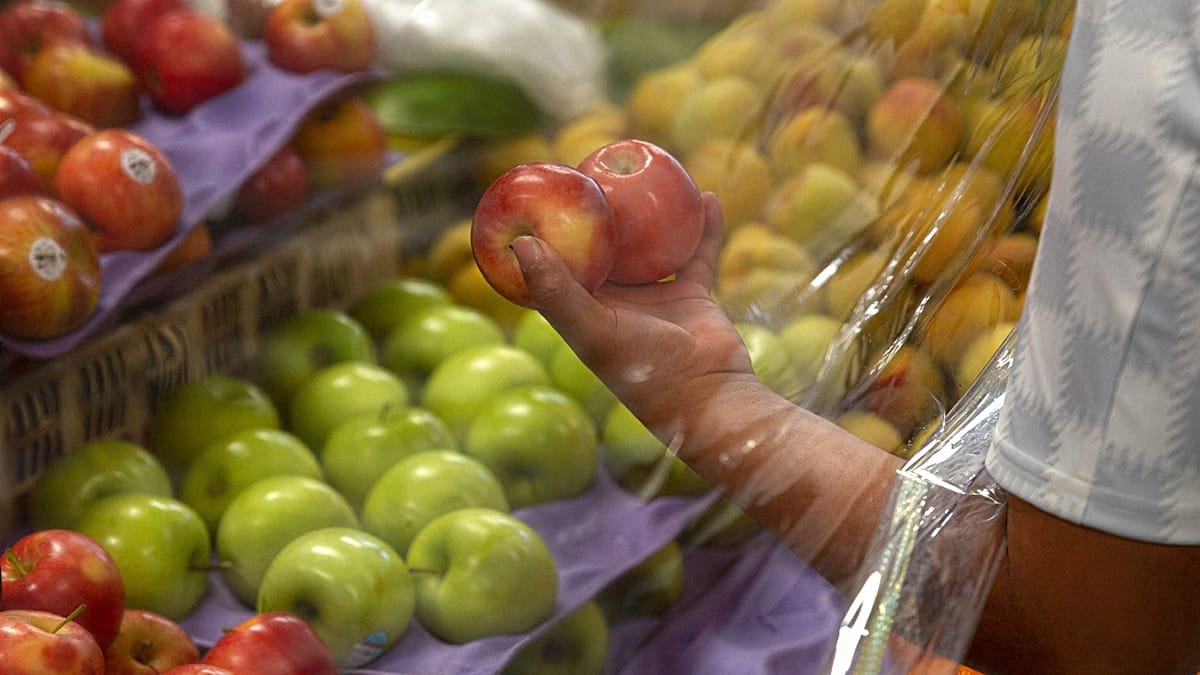
An apple a day may not keep the doctor away, according to a new report raising concerns about pesticide residue on the popular fruit. While often seen as a symbol of healthy eating, a recent investigation casts a shadow on that perception, highlighting potential health risks associated with consuming conventionally grown apples.
 PUBLICITÉ
 The study, published this week by Pesticide Action Network Europe (PAN Europe) in collaboration with thirteen organizations across the continent, analyzed apple samples purchased from supermarkets and markets in September 2025. Researchers found that 80% of Spanish apples contained residues from multiple toxic pesticides, while the European average reached 85%.
On average, each apple contained three different pesticides. In some cases, up to seven substances were detected. The findings were particularly concerning in eight of the thirteen countries studied – including Germany, Poland, the Netherlands and Croatia – where all samples tested showed multiple pesticide residues. Denmark (20%) and Belgium (50%) showed notably lower levels, while Spain, France, and Italy were around 80%.
Among the substances identified were pesticides categorized as particularly worrisome: neurotoxic pesticides, found in 36% of samples, and PFAS, often referred to as “forever chemicals,” present in nearly two-thirds of the apples analyzed. This discovery is significant as PFAS exposure has been linked to a range of health problems.
Fludioxonil, classified as an endocrine disruptor by the European Union in 2024, appeared in nearly 40% of cases. Captan, a fungicide considered a possible carcinogen, was detected in 61% of the samples. acetamipride, an insecticide recognized as neurotoxic by the European Food Safety Authority, was present in approximately 20% of the apples tested and can cross the placental barrier.
The study raises a critical question about the true contents of our grocery baskets and the potential impact on public health.
A Regulatory Gap Spanning Two Decades
The issue isn’t solely about the presence of pesticides, but also what regulators aren’t measuring. For over 20 years, European legislation has required the assessment of the combined impact of pesticides – known as the “cocktail effect” – but the European Food Safety Authority (EFSA) has yet to develop an official method for doing so.
Current studies analyze each substance individually, creating a significant blind spot. According to the report, the combined effect of multiple pesticides can be “much greater” than the impact of each substance considered in isolation.
Researchers highlighted that 71% of the contaminated apples contained products that the EU itself classifies as “highly toxic” and that should have been removed from the market. In some instances, their presence in European food has increased in recent years, rather than decreased. The report also noted that apple trees can be sprayed with these substances up to 30 times per year.
The report also draws attention to vulnerable populations. If the conventionally grown apples analyzed were processed into food for babies, 93% of them would not comply with European legislation, which sets a maximum limit of 0.01 milligrams of residue per kilogram for children under three years classic. In some cases, levels found were up to 600 times higher than this threshold. Pregnant women are also a concern, as some of these substances can affect fetal neurological development.
Concerns Over EU Proposals
In light of these findings, the Spanish NGO Hogar sin Tóxicos, a partner in the report, recommends prioritizing the consumption of locally grown organic apples, cultivated without synthetic pesticides. In Germany, 15% of apple production is already organic, demonstrating that a conventional model isn’t the only option.
Yet, the political momentum appears to be moving in the opposite direction. The report’s authors warn that the European Commission has proposed an omnibus proposal on food safety that, as it stands, could lower standards for protecting human health and the environment.
Martin Dermine, executive director of PAN Europe, stated: “If regulatory authorities had correctly applied the law, a number of the pesticides detected on the apples would have been banned long ago. Instead, the EU is proposing to weaken health protection. Our report highlights the need for stricter regulation, not less”.
