
Potential Breakthrough at CERN: LHC Anomaly Hints at ‘New Physics’
Physicists are closely monitoring a significant anomaly detected at the world’s largest particle accelerator, a discovery that could fundamentally alter our understanding of the universe. The findings, emerging from the Large Hadron Collider (LHC), suggest the existence of phenomena that the current laws of physics cannot explain.
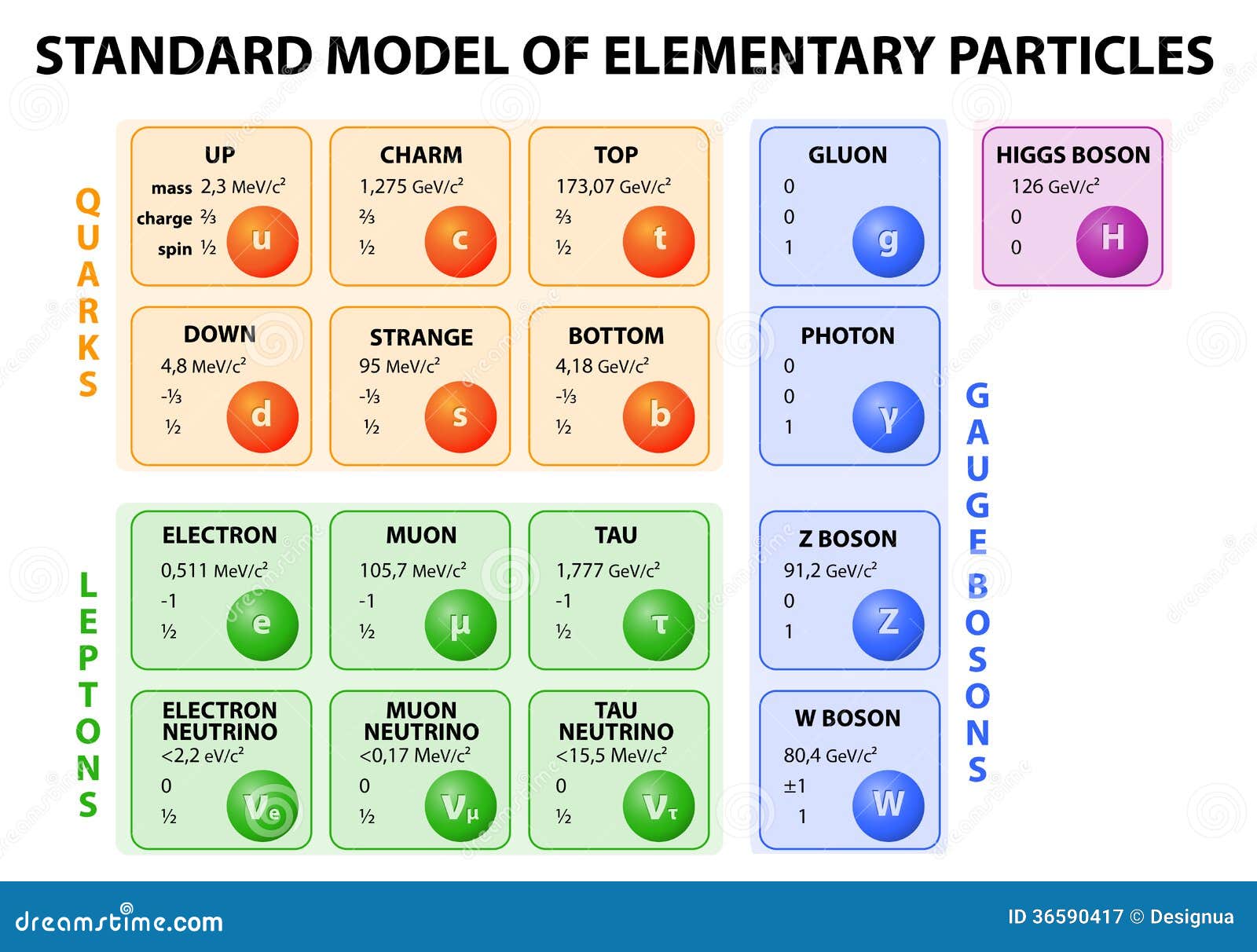
The mystery centers on the behavior of B-mesons. According to the Standard Model—the theoretical framework that describes all known fundamental particles and their interactions—these particles should decay into electrons and muons at an identical rate. This principle, known as “lepton universality,” is a cornerstone of modern physics.
However, data collected by the LHCb experiment indicates a deviation from this rule. The observed decay rates do not align with the Standard Model’s predictions, suggesting that leptons may not be treated equally by nature. This discrepancy is what has the scientific community buzzing, as it points toward the potential existence of previously unknown particles or forces.
The implications of such a discovery are profound. If the anomaly is confirmed, it would signal the arrival of “New Physics,” potentially introducing new elements like leptoquarks or a new gauge boson (often referred to as a Z’ boson) into the cosmic equation. This would represent the first major crack in the Standard Model in decades, opening the door to a more complete theory of the physical world.
While the results are promising, researchers remain cautious. In particle physics, a discovery is only officially recognized once it reaches a “5-sigma” level of statistical significance, meaning there is only a one-in-3.5 million chance that the result is a fluke. The team at CERN is continuing to analyze data to determine if this anomaly is a genuine breakthrough or a statistical irregularity.
This development highlights the critical role of high-energy physics in driving innovation. By challenging established models, these experiments push the boundaries of human knowledge and pave the way for future technological leaps in how we perceive and interact with the fundamental building blocks of matter.
