

Pierce Brosnan’s journey as James Bond was a rollercoaster of triumph and near-misses, a career chapter that defined an era whereas leaving the actor with a mix of gratitude and lingering “what ifs.” Three decades after GoldenEye catapulted him into 007 stardom, Brosnan’s reflections reveal a man who embraced the role’s legacy—even as fate dealt him a few cruel twists along the way.
The Bond That Almost Wasn’t
Long before Brosnan stepped into the tuxedo, the role of James Bond was nearly his—twice. In 1986, he was on the cusp of signing as the next 007, only to be sidelined by his NBC contract for Remington Steele. The network refused to release him, and the part went to Timothy Dalton instead. Brosnan’s second shot came in 1994, when Dalton’s exit left the door open once more. This time, fate intervened again—this time in the form of a back injury sustained during a charity soccer match. “I was in agony,” Brosnan recalled. “I couldn’t even walk, let alone run.” The injury forced him to withdraw, and the producers turned to another contender. But as luck would have it, that actor’s screen test failed to impress, and Brosnan finally got his chance.
“I was the right man at the right time,” he said. “It was meant to be.”
A Blockbuster That Redefined Bond
When GoldenEye hit theaters in 1995, it didn’t just revive the Bond franchise—it reinvented it for a post-Cold War world. Directed by Martin Campbell, the film introduced a grittier, more modern 007, one who navigated a landscape where espionage was no longer a battle of ideologies but a fight against rogue technology and corporate greed. The movie’s success was undeniable: it grossed over $350 million worldwide, becoming the highest-grossing Bond film at the time. Critics praised Brosnan’s performance, calling it a perfect blend of charm, wit, and physicality—a return to the suave, lethal spy audiences had missed.
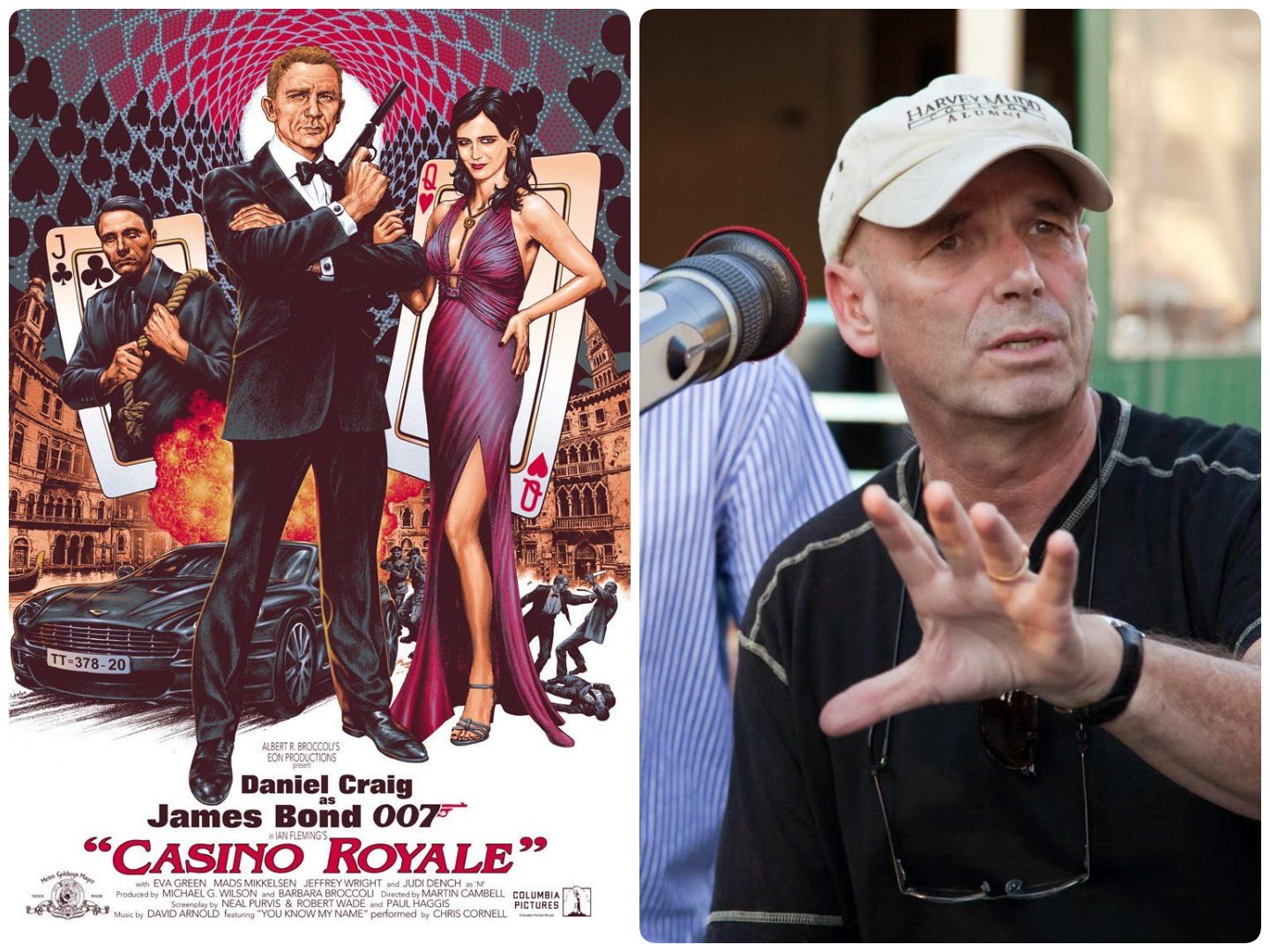
Yet Brosnan’s Bond era wasn’t without its challenges. While GoldenEye soared, his subsequent films—Tomorrow Never Dies (1997), The World Is Not Enough (1999), and Die Another Day (2002)—faced mixed reactions. Some fans felt the franchise had veered too far into gadgetry and CGI spectacle, losing the grounded tension that made GoldenEye so compelling. Brosnan himself acknowledged the shift, though he defended the films as products of their time. “You have to evolve,” he said. “But I think we lost a bit of the human element along the way.”
The Role That Defined Him—And Haunted Him
For Brosnan, Bond was more than a role; it was a cultural reset. Before GoldenEye, he was best known as the charming detective in Remington Steele, a TV star with a cult following but limited Hollywood clout. After GoldenEye, he was a global icon, a status that opened doors to high-profile projects like The Thomas Crown Affair (1999) and Mamma Mia! (2008). Yet the shadow of 007 loomed large. “It’s a blessing and a curse,” he admitted. “People see you as Bond, and it’s hard to shake that.”
His relationship with the character grew complicated over time. While he never regretted taking the role, he bristled at the idea that Bond defined him. “I’m not James Bond,” he once said. “I’m an actor who played James Bond.” Still, he acknowledged the role’s impact on his career—and his life. “It gave me opportunities I never would have had otherwise. But it also pigeonholed me in ways I didn’t expect.”
A Reunion and a New Chapter
Three decades after GoldenEye, Brosnan is still making headlines—this time for a reunion with Martin Campbell. The duo is teaming up again for a film adaptation of Ernest Hemingway’s Across the River and Into the Trees, a project that marks their first collaboration since the Bond era. For Brosnan, the reunion feels like a full-circle moment, a chance to revisit the creative partnership that launched his most iconic role. “Martin is a brilliant director,” Brosnan said. “Working with him again is like coming home.”
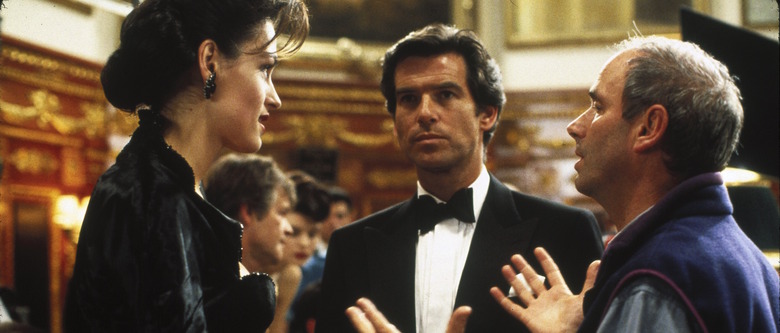
The announcement comes at a time when the Bond franchise is once again in transition, with a new actor set to grab over the role. For Brosnan, the timing feels poetic. “It’s the finish of an era,” he reflected. “But it’s also the start of something new.”
As for whether he’d ever return to the world of 007, Brosnan remains coy. “Never say never,” he said with a smile. “But for now, I’m happy to let the next generation take the reins.”
For fans, Brosnan’s Bond remains a touchstone—a reminder of a time when the franchise was reborn, and an actor found himself at the center of cinematic history. Whether he was lucky or unlucky, one thing is clear: Pierce Brosnan’s 007 left an indelible mark on the spy genre, and his legacy is as enduring as the tuxedo he once wore.
