

Declining pollinator populations are raising concerns for global food security, with approximately 75% of the world’s food crops reliant on insect pollination. This report features an in-depth interview with Ludovic Cauchard, a beekeeper with over 25 years of experience and founder of Apipol, a company working to bridge the gap between agricultural producers and the crucial world of pollinating insects. Cauchard details the mounting pressures facing these vital species – from climate change and pesticide use to habitat loss – and the potential ramifications for yields of key crops including avocados, berries, and seed production across Morocco and beyond.
EXPERT INTERVIEW
With 75% of food crops reliant on insect pollinators, their declining numbers are raising concerns within the agricultural sector. Fruit trees, avocados, berries, greenhouse crops, and seed production could all be impacted in the short term. The question now is whether conditions can still be created to support sustainable pollination.
This report features an interview with Ludovic Cauchard, a beekeeper with over 25 years of experience and founder of Apipol, a company that serves as a bridge between producers and the world of pollinating insects.
AgriMaroc.ma: As an expert, how do you analyze the current state of global beekeeping and pollination? Specifically, in the face of climate change, droughts, and other pressures on insects?
Ludovic Cauchard: As indicated by the FAO, 87.5% of flowering plants on Earth require animal intervention to complete pollination. The vast majority of this pollination is carried out by insects, especially flies, beetles, butterflies, and bees. Birds and mammals also contribute, but to a lesser extent.
Considering that 75% of food crops depend on insect pollination, their absence would significantly reduce yields. For some crops, the dependence is total – no yield is possible without pollination. For others, good pollination simply increases production.
The presence of pollinating insects is therefore crucial in most agricultural production areas. Fruit growing, forage seed production, oilseed crops, and vegetables – everything that forms the basis of human food is affected.
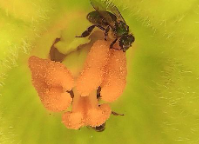
However, our pollinating insects are facing threats on all sides. In France, 40% of the 950 bee species present, mostly solitary and ground-nesting, are endangered. The European honeybee faces an average mortality rate of 20 to 30% in France, climbing to 60% in the United States.
AgriMaroc.ma: In Morocco, the situation has long been considered somewhat better than elsewhere, but bee mortality is now increasing as it is everywhere. This is also the case in Tunisia, which is experiencing a general decline in honey yields.
Ludovic Cauchard: Syrphid flies are also impacted. A third of the species present in Europe are endangered, and their situation is no better in North Africa.
Scientific studies point to multiple causes for these extinctions: reduced access to shelter and food resources, intensification of agricultural activities with a growing proportion of monocultures, pressure from parasites and predators on bee populations, pesticides, climate change, and unsuitable beekeeping practices.
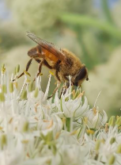
Some regions and agricultural productions, described as “entomophilous” – highly dependent on insects – are already struggling. Examples include California’s almond production and the Beauce agricultural region in France.
In Morocco, the scarcity of pollinating insects could impact crops such as avocados in the Gharb region, and berries in northern Morocco, which are currently thriving.
Greenhouse crops, like tomatoes and cucumbers in Tunisia, are highly dependent on European bumblebees for pollination. Pollination could therefore become a sensitive issue in the near future for these high-value productions.
AgriMaroc.ma: What concrete impacts should we expect regarding agricultural yields, seed quality, and fruits and vegetables?
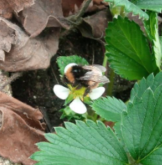
Ludovic Cauchard: The risk for producers is obtaining poorly formed fruits. Seed production can also be affected, with potentially failing germination rates.
The reason is simple: poor pollination of a flower directly results in poor fertilization of the ovules that will become seeds.
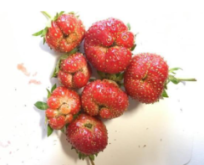
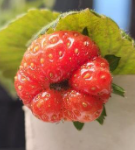
Take strawberries as an example; they are difficult to market if their appearance is compromised. Under normal pollination conditions, only 10% of the fruit is generally unsalable, which remains profitable.
However, if pollination is insufficient and poorly managed, this proportion of unsalable fruit can climb to 20% of production, significantly reducing the farm’s profit margin. And in the absence of insects, the producer may find themselves with more than 50% of unsalable fruit…
Seed production is equally affected. Yields can become zero in the case of a lack of insects for the most entomophilous crops. This is particularly true for seed crops, such as alliums (onion, leek), apiaceae (carrots, fennel, parsnip, celery) or brassicaceae.
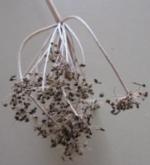
This is clearly observed by experimenting with fennel umbels: half of the umbels are covered with a net, preventing access to insects, while the other half remains accessible to foraging.
The result: the bagged umbels produced only one seed per umbel on average, often small and deformed. Whereas the umbels accessible to insects produced an average of 427 seeds per umbel, conforming to quality standards.
This experiment is easy to implement on most crops and allows producers to assess the variety’s dependence on pollination.

The important thing is to create favorable and sustainable conditions for optimal pollination.
AgriMaroc.ma: Based on your experience, what areas should training be prioritized in to improve pollination and yields in this context? What are your priorities with Apipol?
Ludovic Cauchard: Whether in fruit production or seed production, a thorough understanding of the interactions between the target plant and its pollinating insects is necessary.
Moreover, climate change is evolving these relationships, partly due to water and thermal stress, but not only.
For example, when fruit trees, such as almonds, cherries, apples, and pears, bloom earlier, they risk being out of sync with the presence of local pollinators. This is known as a “phenological mismatch.”
Some plants also tend to increase their self-pollination rate to adapt to the scarcity of insects, which can reduce genetic diversity.
The issue of heat and light intensity also affects crop yields, limiting their germination capacity and therefore the fertilization of ovules.
Intervention in pollination will become increasingly frequent, because we will sometimes no longer have the necessary resources in pollinating insects. Curative solutions are costly to implement, so it is better to identify the problem before acting!
To predict the correct pollinator coverage, it is crucial to know the specific characteristics of the crops to be pollinated. Collaboration between specialists in plant production and pollination specialists is essential. It allows for early identification of problems and implementation of the right preventive measures.
The Polapipro24 study conducted in 2024 helped optimize the number of pollinating insects needed for the pollination of an onion seed crop. The balance achieved allows for maximum pollinating efficiency of the insects, controlled costs, and a yield established beyond objectives and reproducible.
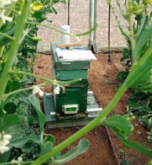
That’s why Apipol positions itself as the link between plant production and the world of pollinating insects, offering training and technical advice to both areas, on this particular moment in a plant’s life, whether cultivated or wild.
Several French and Dutch companies have been able to participate in the “mastering and succeeding in your pollination in vegetable seed production under cover and in the open field” training. In addition to the unprecedented technical knowledge acquired, these professionals return with a new approach to their crops, thanks to an increased understanding of the links between flowering plants and insects.
This training also exists for fruit productions: avocado, small fruits, pome fruits.
Apipol also conducts technical studies in collaboration with other experts, whether in agronomy, colony monitoring, bee feeding, or analysis of apicultural matrices. Together, we explore this stage of the technical itinerary, integrating external parameters, such as the water status of the soils, the impact of temperature and light, and the targeted management of native pollinating insects.
For these studies, the honeybee is an excellent intelligence agent for the plant. The plant’s message is thus transported by the insect, then captured by technology, and finally translated by humans. We thus gain a new level of understanding of the plant, always with the perspective of supporting performance and resilience.
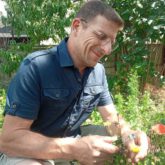 Ludovic Cauchard, Apipol
*All requests for reproduction, partial or complete, must be submitted to
To receive the AgriMaroc.ma Newsletter on:
