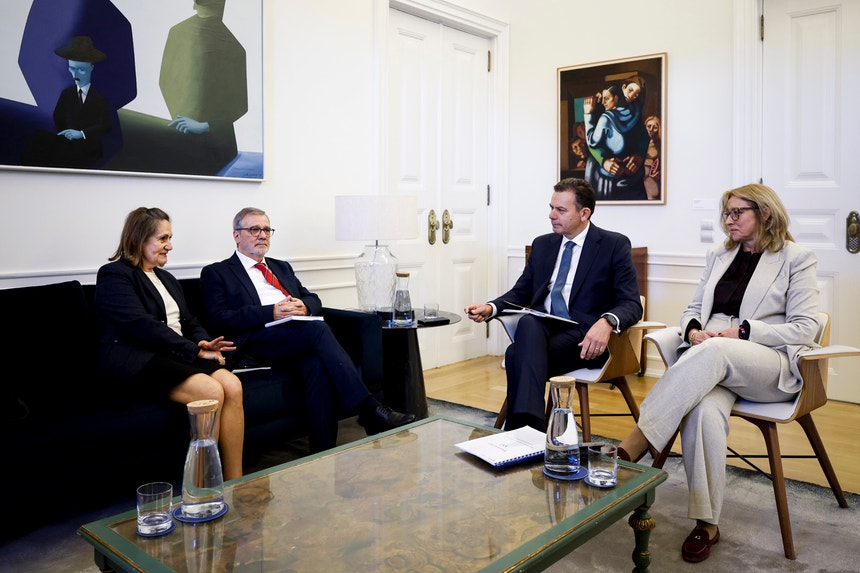
Portugal’s largest union, UGT, is moving forward with a planned nationwide strike on December 11th, despite reported progress in talks with Prime Minister Luís Montenegro, signaling continued tension over proposed labor reforms. The strike underscores growing concerns among Portuguese workers regarding job security and protections in areas like fixed-term contracts and outsourcing [[1]].Both union leaders and the Prime Minister characterized Tuesday’s meeting as constructive, but significant disagreements remain as the government seeks to address economic challenges through legislative changes[[2]].
Portugal’s largest union, the UGT, announced it will proceed with a planned general strike on December 11, despite what leaders called a “positive” meeting with Prime Minister Luís Montenegro. The strike is over labor reforms and worker protections, and comes as the government seeks to address economic challenges.
“We are very confident that this meeting was important to resume dialogue. A dialogue, a discussion, and a serious and loyal negotiation,” UGT Secretary-General Mário Mourão told reporters following the meeting. “Now we will work, each party will have to do its job, negotiation is precisely that.”
“It cannot be rushed, nor can we set limits,” Mourão added.
Mourão clarified that the purpose of Tuesday’s meeting was not to begin negotiations, but to convey to the Prime Minister the reasons behind the UGT’s decision to call a strike.
Key issues for the union include fixed-term contracts, outsourcing practices, the reinstatement of workers who have been unfairly dismissed, and parental leave policies, Mourão explained. He indicated the UGT believes these areas are fundamental to address in any labor discussions.
Both sides presented their concerns during the meeting, and Mourão said there was a shared understanding of a “willingness to continue working and negotiating.”
A previously scheduled meeting with the Minister of Labor for December 10 had been canceled at her request, given the impending strike, Mourão said. He noted the draft labor reform proposal contains “more than 100 articles, many of which are very sensitive and have an impact on workers,” and the primary goal of Tuesday’s meeting was to determine if both sides remained open to continued dialogue.
While not ruling out a potential agreement between the UGT and the government on labor issues, Mourão emphasized that “there is still a long way to go.”
Prime Minister Luís Montenegro described his meeting with the UGT as constructive, despite the ongoing threat of a nationwide strike. Speaking to reporters after a party congress, Montenegro offered a brief assessment: “There was a positive, direct, dialogic, and constructive spirit, and now we will wait,” he said, adding, “A meeting was requested and held, and it was very important.”