
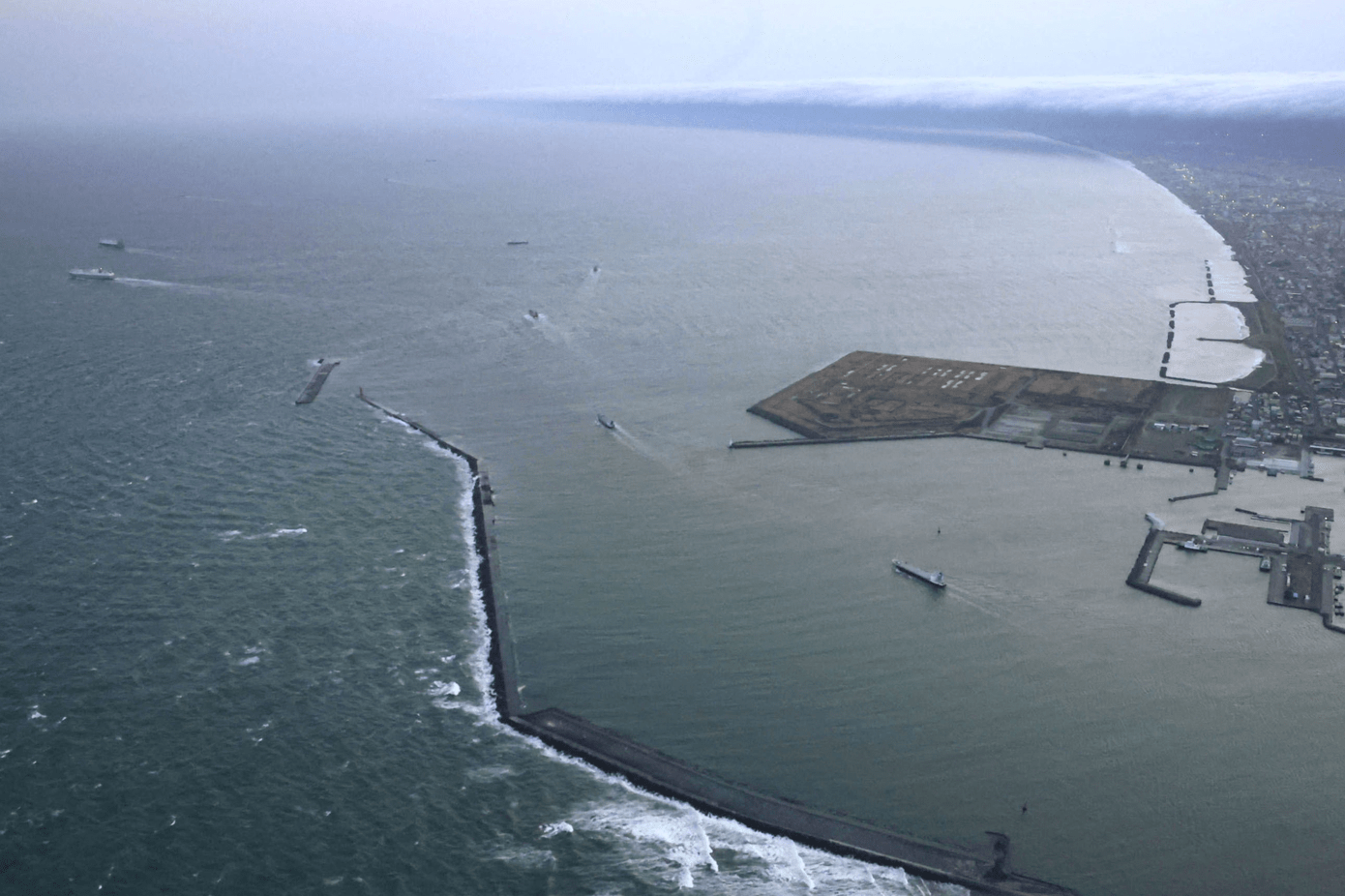
Japanese authorities issued a tsunami warning following a powerful undersea earthquake measuring 7.4 in magnitude that struck off the northern coast of Japan on Friday, March 28, 2025. The tremor, centered in the Pacific Ocean, triggered immediate alerts across coastal regions, prompting evacuation orders for tens of thousands of residents.
According to Japan’s Meteorological Agency, the quake occurred at approximately 6:14 a.m. Local time, with its epicenter located about 100 kilometers east of the Oshika Peninsula in Miyagi Prefecture. Initial reports indicated strong shaking was felt across multiple prefectures, including Fukushima and Iwate, though no major structural damage was immediately reported in urban centers.
In response to the seismic activity, officials activated tsunami advisories for the Pacific-facing coasts of northern Japan, warning of potential waves reaching up to one meter in height. Residents in low-lying areas were urged to move inland or to higher ground as a precaution, with evacuation orders affecting approximately 156,000 people across several municipalities.
Broadcast networks interrupted regular programming to deliver real-time updates, even as emergency sirens sounded in vulnerable coastal towns. Social media users shared videos showing water receding from harbors — a classic precursor to incoming tsunami waves — though subsequent assessments indicated the threat diminished faster than initially feared.
By mid-morning, Japanese authorities downgraded the tsunami warning to an advisory, noting that while sea level fluctuations continued, the risk of destructive waves had significantly decreased. Despite the reduced threat, officials maintained evacuation orders for certain areas as a safety measure, particularly where infrastructure remained vulnerable or communication lines were disrupted.
No fatalities or serious injuries were confirmed in the immediate aftermath, though local governments reported minor incidents such as fallen objects, power outages and disruptions to train services. The Shinkansen bullet train service between Tokyo and northern Japan was temporarily suspended as a precaution, with inspections underway to assess track integrity.
Japan’s location along the Pacific Ring of Fire makes it one of the most seismically active regions in the world, and the country has developed some of the most advanced early warning systems for earthquakes and tsunamis. Friday’s event served as a reminder of the ongoing risks faced by coastal communities, even as preparedness measures continue to evolve.
While the situation has stabilized, officials urged the public to remain vigilant and follow official guidance, emphasizing that aftershocks remain possible in the hours and days following a major quake. The national meteorological agency continues to monitor seismic activity and oceanic conditions in real time.
