
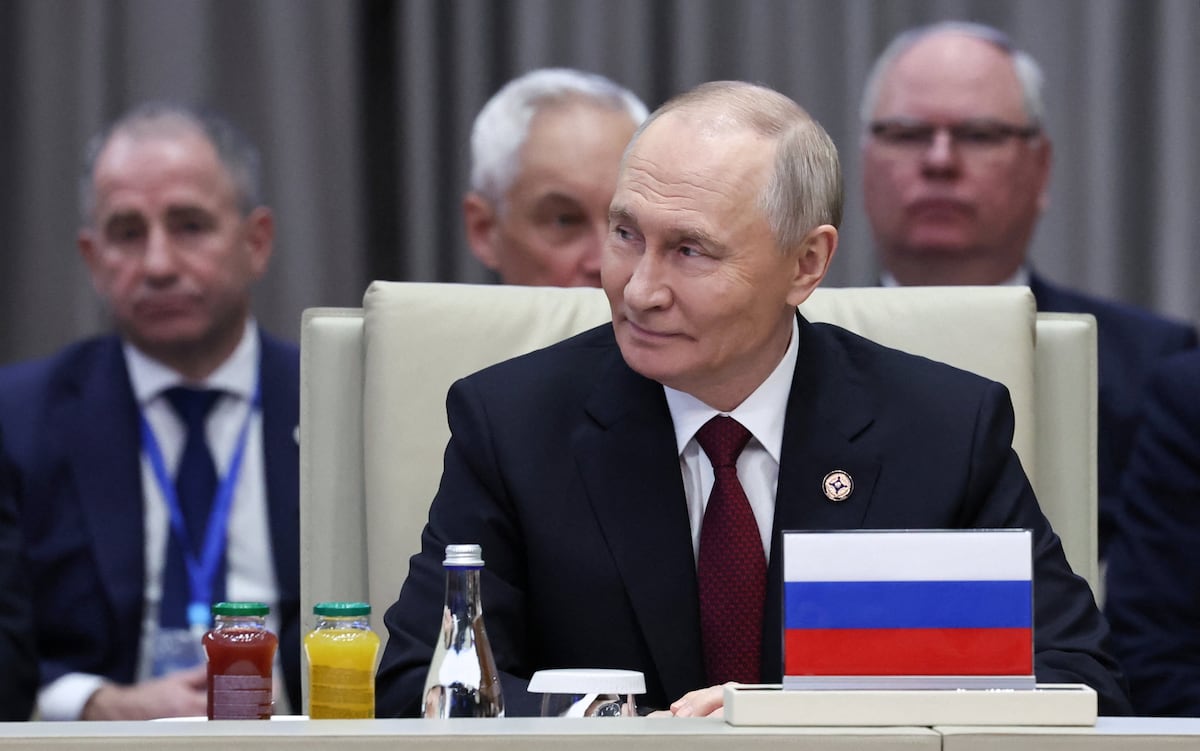
Despite ongoing diplomatic efforts to forge a path toward peace,russian President Vladimir Putin has publicly downplayed the potential for a quick resolution to the conflict in Ukraine. Speaking after a summit in kyrgyzstan,Putin challenged the nature of current peace proposals,including a reported 28-point plan,and reiterated key demands-most notably regarding territorial recognition-that present notable obstacles to negotiations [[1]]. The Kremlin’s stance comes amid reports of back-channel discussions involving U.S. envoys and Putin’s aides [[2]] and underscores the substantial hurdles remaining in mediating an end to the nearly two-year war [[3]].
Russian President Vladimir Putin has cast doubt on the prospect of a swift end to the war in Ukraine, tempering expectations raised by recent discussions surrounding potential peace plans. The Kremlin chief indicated that proposals for a resolution, including a 28-point draft initially developed by the White House and later revised in consultation with Kyiv, were not a comprehensive “peace plan” but rather a series of points for discussion.
Putin, speaking after a summit of the Collective Security Treaty Organization (CSTO) in Kyrgyzstan, suggested the path to any agreement would be protracted. “Every word of the peace plan for Ukraine must be debated seriously,” he stated.
A key element of the original 28-point proposal, according to reports, involved international recognition of Crimea, Donetsk, and Lugansk as Russian territory, alongside a potential freeze of the conflict along the current front lines in Kherson and Zaporizhzhia. This aspect has been removed from the revised draft shared with Kyiv. However, Putin insisted that such recognition remains fundamental to any viable solution.
“One thing is recognizing that certain territories are under Russian sovereignty, and if the agreements are violated, it would be an attack on the Russian Federation, with the corresponding retaliatory measures… [And another thing is] if it would be seen as an attempt to regain territory that legitimately belongs to Ukraine. These are two different things,” Putin explained. “Therefore, we need that recognition.”
The Russian leader also renewed his skepticism regarding the legitimacy of any peace document signed by the current Ukrainian government, following the postponement of presidential elections in Ukraine. Putin has repeatedly questioned the democratic credentials of President Volodymyr Zelenskyy’s administration. “Signing documents with Ukrainian leaders is useless. I believe they made a strategic mistake by fearing presidential elections, without which the president lost his legitimacy,” he said. Kyiv maintains that holding elections is impossible under ongoing invasion.
Putin’s comments come after he secured a landslide victory in Russia’s 2024 elections, widely criticized internationally as lacking genuine opposition. He also violated a constitutional mandate this year by failing to address the State Duma on the state of the nation.
Beyond Ukraine, Putin emphasized that the future security architecture of Europe is also under consideration. He offered to formally commit in writing that Russia has no intention of attacking other European nations. “It sounds amusing to say in general that Russia does not intend to attack Europe, to be honest. But if they want to hear it from us, go ahead, we will record it. There are no further questions,” he stated.
This offer arrives despite Russia’s 2014 annexation of Crimea and the subsequent deployment of troops into the Donbas region, actions that violated international law. It also stands in contrast to Russia’s full-scale invasion of Ukraine in 2022, undertaken despite prior commitments made under the Budapest Memorandum guaranteeing Ukraine’s sovereignty in exchange for relinquishing its nuclear arsenal. The development underscores the deep distrust and complex geopolitical challenges hindering progress toward a lasting peace in the region.
The discussion of European security, as Europe cautiously welcomes progress in the Ukraine peace plan, highlights the interconnectedness of regional security and the difficulties in achieving a comprehensive settlement.
