
The increasing popularity of cosmetic procedures like dermal fillers is raising concerns about patient safety and regulatory oversight. An investigation reveals that some medical professionals are cutting corners, potentially jeopardizing patient well-being in pursuit of profit and convenience. This report details lapses in required in-person consultations, inadequate informed consent processes, and challenges in ensuring timely access to medical intervention when complications arise, highlighting a critical need for stronger protections within the aesthetic care industry. These issues stem from a combination of lax enforcement and a system easily exploited by high-volume practitioners.
professionals sometimes cut corners, potentially endangering patient safety.
One key issue was the medical consultation, which must be conducted in person by a physician and result in a clear treatment plan valid for two years for a nurse or auxiliary nurse to follow.
Investigators quickly found that this rule was often disregarded. Online appointments and phone consultations without visual contact were readily available.
Some consultations were thorough,but others were remarkably brief. During one visit to a Montreal clinic, Lou had a numbing cream applied to her lips within five minutes, then was handed the phone.A physician evaluated her for 40 seconds.
This is problematic because the physician must ensure they fully explain potential complications to obtain informed consent.
The signature of a consent form is not enough to fulfill the obligation of informed consent. The physician must take the time to discuss with the patient and ensure they understand the information.
During this visit, Lou had to initiate the discussion about potential complications.
-
Lou : Are there any risks or anything I shoudl be aware of?
-
Physician X : Do you mean for the fillers?
-
Lou : Yeah, for the lips, like is there anything we should be aware of afterwards or…
-
Physician X : The advice will be given to you by the nurse, they will give you the rules.
Our expert stated unequivocally: “That clearly does not meet the requirements of free and informed consent.”
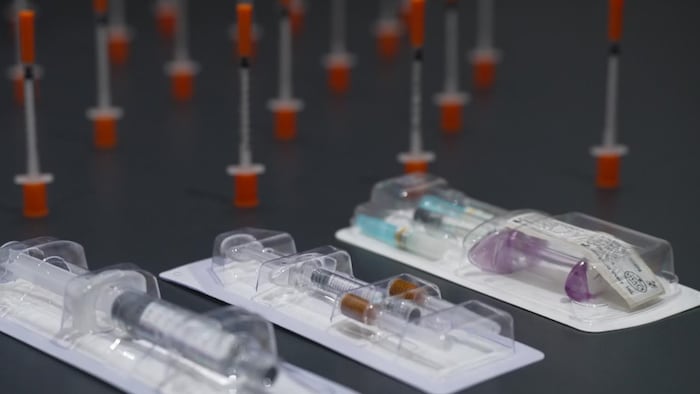
Examples of syringes used to inject dermal fillers.
Photo : Radio-Canada
15 Minutes to Act
Table of Contents
Andrée, the whistleblower physician, pointed to a trend: physicians signing prescriptions for multiple clinics and nurses across a wide geographic area.
She expressed concern about the difficulty for the physician to travel within 15 minutes to manage complications, a requirement.
The physician who wrote a prescription for injections for aesthetic purposes (botulinum toxin, dermal filler or other) must be accessible and available within the required time frame (within 15 minutes of the injection) to ensure the management of an adverse reaction, if necessary, in particular in cases of necrosis requiring intervention within minutes of treatment, or have clearly defined with his patients and colleagues an effective and efficient care pathway.
Investigators identified Dr. Andrew Gyopar, a surgeon at Anna-Laberge Hospital in Châteauguay, as a potential high-volume prescriber. He is a director at at least three aesthetic clinics and signs prescriptions for three nurses working in multiple locations, including Outremont, L’Île-Perrot, Brossard, L’Île-des-Soeurs, Repentigny, Saint-Eustache, and Longueuil.
Contacted by phone, Dr.Gyopar acknowledged the difficulty of responding within 15 minutes but added that he is readily available by phone and works closely with nurses if complications arise.
Dr. Gilardino explained why rapid intervention is so critical: Complications aren’t something you can address in two or three days. It must be treated as quickly as possible. That means within the next 15,20,30 minutes,treatment must begin immediately.
Call for Better Protection
Professional orders and the College of Physicians have the power to evaluate healthcare professionals and impose penalties.
Since 2021, in the field of aesthetic care:
-
There have been 25 convictions for illegal practise of medicine.
-
53 investigations have been conducted involving physicians, resulting in 71 issues identified and one disciplinary complaint filed.
Our anonymous physician believes changes are needed and consequences must be more severe.
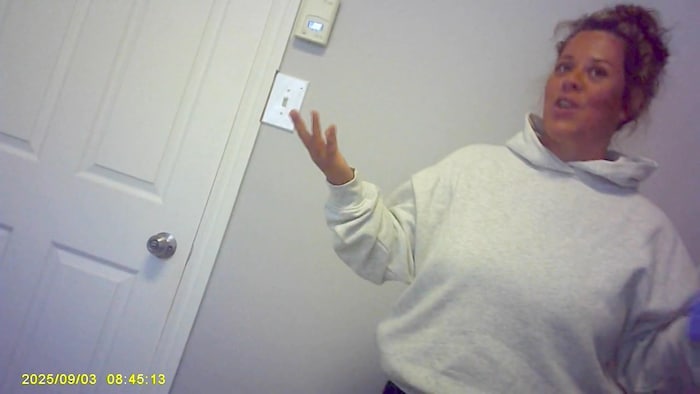
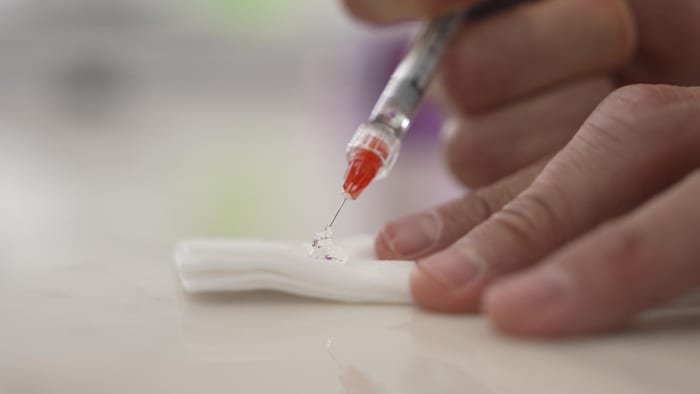
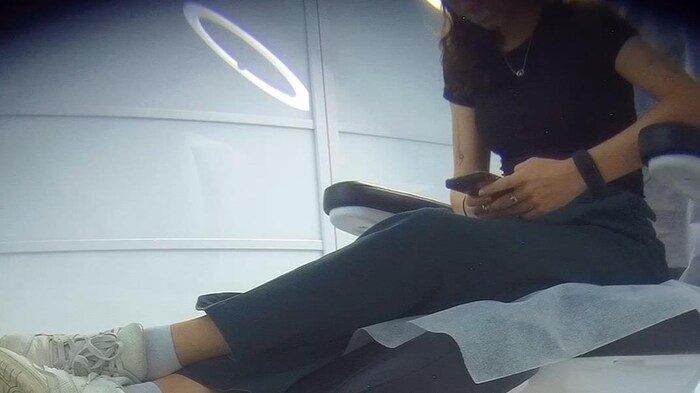
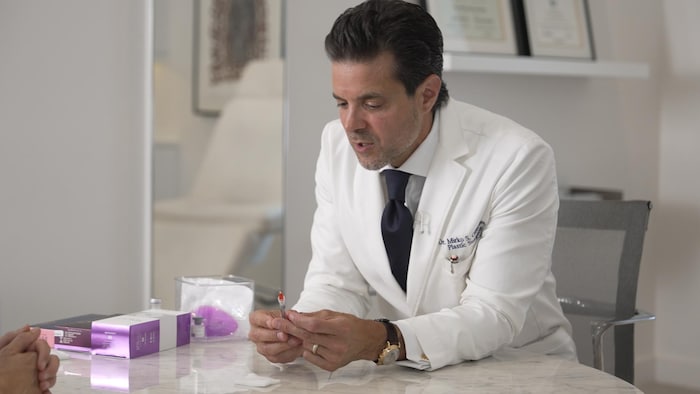
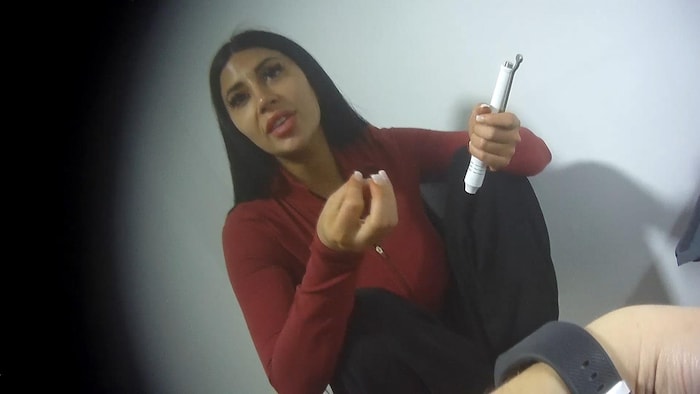
“We’ve got a virgin!” exclaimed Stacey to the clients in her aesthetic clinic in Laval, Quebec, when Justine revealed she was seeking her first lip augmentation. Justine was drawn to the clinic by a promotional offer: one milliliter of dermal filler for $300, nearly half the typical price in the greater Montreal area. The increasing popularity of cosmetic procedures highlights the importance of understanding the risks and ensuring qualified practitioners are performing the treatments. Stacey introduced herself: “I am the doctor and owner of the clinic.” She assessed Justine and suggested doubling the amount of filler to achieve a more noticeable result, citing her experience to support the recommendation. “If you really want to make a difference, not just a small change, but something people will say ‘wow, what did you do?’ you’d need 1 ml on the top and 1 ml on the bottom,” she advised. Unbeknownst to Justine, the woman evaluating her was not a medical doctor, and “Stacey” was simply a name. Simultaneously, Stacey was unaware that Justine was an investigative journalist equipped with a hidden camera. Stacey, whose real name is Anastasia Plaskasovitis. Photo : Radio-Canada / Martin Movilla Several physicians working in the aesthetic medicine field expressed concerns about practices at some clinics and a lack of oversight. These concerns underscore the need for stricter regulations and increased patient awareness. One healthcare professional agreed to speak with investigators on the condition of anonymity, fearing repercussions in a highly competitive environment. It’s a bit of an omertà in the field, but there are complications. It’s public safety that’s at stake. Multiple physicians reported treating patients who had received injections elsewhere and were experiencing complications that had gone unaddressed. “In Quebec, you need a permit to operate a restaurant. There are inspection systems. That doesn’t exist in medical or aesthetic clinics,” Andrée noted. She also observed the use of non-approved substances being injected into patients, and frequent instances of injections being administered without a medical prescription. To assess the extent of the problem, investigators sent two journalists, Justine and Lou, posing as potential patients to observe firsthand the practices occurring at these clinics. Dermal filler being dispensed from a syringe. Photo : Radio-Canada In Quebec, guidelines for the practice of aesthetic medicine outline what a qualified healthcare professional can and cannot do. Initially, a physician with training in aesthetic medicine must develop a treatment plan after an in-person consultation. They then issue a prescription valid for two years. The physician can administer the injections themselves or delegate them to a nurse or auxiliary nurse. However, only a registered nurse can assess the patient’s health status and adjust the treatment before each injection. An auxiliary nurse must defer to a physician. Recently, Quebec dentists, like physicians, have also been authorized to create treatment plans and administer injections to patients. Performing the procedure without being a qualified healthcare professional could result in criminal charges for practicing medicine illegally. The absence of any mention of a physician on the clinic’s Instagram account and during appointment scheduling prompted the investigators to visit Stacey at Luxe Beauté internationale in Laval. Like a physician would, Stacey greeted Justine and conducted her assessment. Justine explained she had lost weight and wanted to invest in her appearance. Stacey shared her own experience. “If I showed you pictures of myself before, you wouldn’t believe me. I was a completely different person. So, I understand when you say you want to change. Also, I am a doctor, I am the owner of this clinic, so my image is very important.” Justine sought clarification, asking Stacey later during the assessment: “So, you are a doctor?” Stacey responded, “I am the owner of the clinic.” One of our journalists undercover as part of our investigation. Photo : Radio-Canada / Martin Movilla She evaded the question. Further investigation revealed that Stacey’s real name is Anastasia Plaskasovitis. She is the owner of an aesthetic clinic located in the same building, but is neither a physician, nurse, nor dentist. Valentina Brum, an auxiliary nurse who is also not authorized to assess Justine’s health, entered the room, ready to begin the injections. The journalist asked to see a doctor, and was told the price would double. Despite having a numbing cream applied, Justine left the clinic. Investigators contacted the clinic owner, Christine Cercena, a registered nurse in the Ottawa region. She declined an interview and categorically denied all accusations against her clinic and employees, Stacey and Valentina. The College of Physicians declined to comment on specific cases. Investigators presented the findings to Patrick Martin-Ménard, a lawyer specializing in medical liability. If she presented herself as a doctor, after undertaking that diagnostic process, it was certainly a matter that should interest the College of Physicians. The investigation revealed that clinics offering cosmetic injections are located in a variety of settings, from surgical offices to spaces within hair salons. Regardless of the environment, the risk of complications remains. “The anatomy of the face is very complex,” explained Dr. Mirko Gilardino, a plastic surgeon at Clinique Le 1620. “First, there are very important things you must not injure, such as blood vessels, arteries, veins, and nerves. You definitely need a thorough knowledge of facial anatomy.” Beyond proper injection technique, Dr. Gilardino emphasized the critical importance of managing complications, particularly those related to dermal fillers. If you accidentally inject a product [filler] into an artery, that artery will become blocked and circulation will stop. That means an area of skin will lack circulation. Dr. Mirko Gilardino, plastic surgeon, Clinique Le 1620. Photo : Radio-Canada / Karl Boulanger Without treatment, this can lead to skin necrosis. A rapid injection of an antidote, an enzyme called hyaluronidase, is needed to dissolve the product. If the blockage occurs near the eye, a prompt consultation with an ophthalmologist is also necessary to prevent blindness. Dr. Gilardino explained that while the effects of treatments like Botox eventually wear off, complications like a frozen smile or drooping eyebrow can persist for some time. The investigation led to a large home in Repentigny, where a woman offered to inject large volumes of dermal filler into buttocks at a significantly lower price than elsewhere. Investigators found her advertising on Instagram. Soraya Kardi openly explained her lower prices during a meeting with an undercover journalist. I have a background in accounting. But I transitioned into the beauty world a year and a half ago and I love it so much more. That’s why my prices are the best: I’m not a nurse. She demonstrated her injection technique using a needle-free device known as a Hyaluropen. Its use for lip augmentation had previously prompted a warning from Health Canada due to safety concerns and a lack of evaluation. However, she offered to use much larger quantities for buttocks augmentation – 100 ml, 200 ml, or more – using a product called Jariot VIP, a non-approved brand with an unknown composition readily available online. She promoted her technique, stating: Soraya Kardi Photo : Radio-Canada / Martin Movilla Weeks later, investigators contacted her as journalists. Kardi denied offering the service in Quebec, claiming she operates in Florida. When informed that a colleague had met with her in Repentigny, she hung up and did not respond to follow-up email requests. Healthcare professionals repeatedly stressed the importance of researching practitioners to ensure they are qualified. However, the investigation revealed that obtaining this information can be challenging. Instances were found where nurses and physicians were trained by individuals not authorized to inject, adding to the confusion. Investigators examined Luxe Beauté clinique Canada, with locations in Toronto, Ottawa, and Westmount. The face of the company is “Ken,” who is frequently shown performing injections on the clinic’s Instagram account. The account also features numerous training sessions led by Ken, held at their Westmount office. Nurses and physicians are shown receiving instruction from him. Investigators attempted to verify Ken’s credentials as a healthcare professional, a task that proved difficult. His last name was never mentioned. It took several days to associate his image with his identity. A legal document revealed that Ken Hassen is the owner of a clinic in Ottawa and is currently involved in a lawsuit filed by a patient alleging negligence by an auxiliary nurse that caused severe facial damage. In his response to the legal proceedings, Hassen stated he was not involved in the patient’s treatment and is not a healthcare professional. Investigators contacted the clinic and confirmed that appointments with Ken were available in Quebec for procedures like lip augmentation. During an appointment with an undercover journalist, Lou, who had scheduled a buttocks augmentation, she was told that the clinic’s “master injector” would perform the procedure – Ken. Lou ultimately decided to take time to consider the procedure and left the clinic. Attempts to contact Ken Hassen for comment were unsuccessful. Investigators sought to understand how he could be so active in the field without being authorized. His attorney responded, stating that “his client has never claimed to be a healthcare professional, respects the regulatory framework of Quebec, does not provide any medical training, and all medical acts are supervised by physicians.” The investigation revealed that even licensed professionals sometimes cut corners, potentially endangering patient safety. One key issue was the medical consultation, which must be conducted in person by a physician and result in a clear treatment plan valid for two years for a nurse or auxiliary nurse to follow. Investigators quickly found that this rule was often disregarded. Online appointments and phone consultations without visual contact were readily available. Some consultations were thorough, but others were remarkably brief. During one visit to a Montreal clinic, Lou had a numbing cream applied to her lips within five minutes, then was handed the phone. A physician evaluated her for 40 seconds. This is problematic because the physician must ensure they fully explain potential complications to obtain informed consent. The signature of a consent form is not enough to fulfill the obligation of informed consent. The physician must take the time to discuss with the patient and ensure they understand the information. During this visit, Lou had to initiate the discussion about potential complications. Lou : Are there any risks or anything I should be aware of? Physician X : Do you mean for the fillers? Lou : Yeah, for the lips, like is there anything we should be aware of afterwards or… Physician X : The advice will be given to you by the nurse, they will give you the rules. Our expert stated unequivocally: “That clearly does not meet the requirements of free and informed consent.” Examples of syringes used to inject dermal fillers. Photo : Radio-Canada Andrée, the whistleblower physician, pointed to a trend: physicians signing prescriptions for multiple clinics and nurses across a wide geographic area. She expressed concern about the difficulty for the physician to travel within 15 minutes to manage complications, a requirement. Investigators identified Dr. Andrew Gyopar, a surgeon at Anna-Laberge Hospital in Châteauguay, as a potential high-volume prescriber. He is a director at at least three aesthetic clinics and signs prescriptions for three nurses working in multiple locations, including Outremont, L’Île-Perrot, Brossard, L’Île-des-Soeurs, Repentigny, Saint-Eustache, and Longueuil. Contacted by phone, Dr. Gyopar acknowledged the difficulty of responding within 15 minutes but added that he is readily available by phone and works closely with nurses if complications arise. Dr. Gilardino explained why rapid intervention is so critical: Professional orders and the College of Physicians have the power to evaluate healthcare professionals and impose penalties. Since 2021, in the field of aesthetic care: Our anonymous physician believes changes are needed and consequences must be more severe.
Undercover Investigation
A Regulated Field
Why Regulations Matter
Non-Approved Products in Repentigny
Do Your Research
Qualified, But Not Exemplary
15 Minutes to Act
The physician who wrote a prescription for injections for aesthetic purposes (botulinum toxin, dermal filler or other) must be accessible and available within the required time frame (within 15 minutes of the injection) to ensure the management of an adverse reaction, if necessary, in particular in cases of necrosis requiring intervention within minutes of treatment, or have clearly defined with his patients and colleagues an effective and efficient care pathway.
Complications aren’t something you can address in two or three days. It must be treated as quickly as possible. That means within the next 15, 20, 30 minutes, treatment must begin immediately.
Call for Better Protection
