
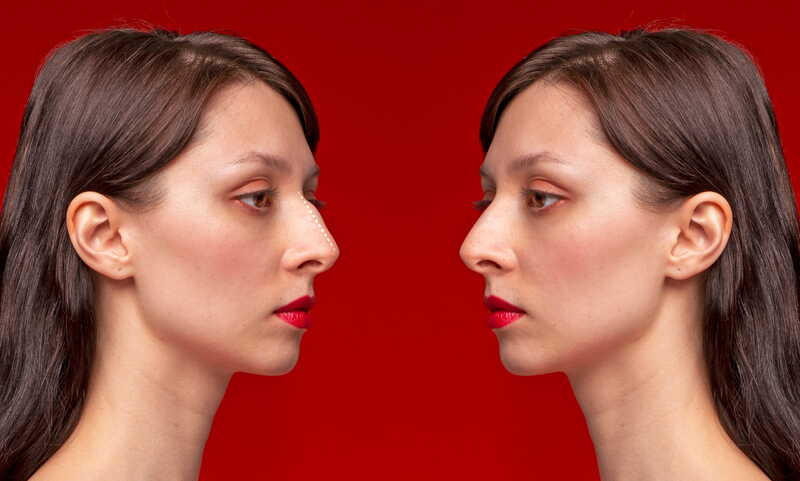

For over four decades, isotretinoin, the active ingredient in Roaccutane, has been one of the most effective treatments for severe acne. The powerful medication, strictly regulated in France, is often a turning point for patients. It’s built a solid reputation within the dermatological community by targeting both oil production and skin inflammation – two major factors in persistent acne.
But a modern trend is circulating on TikTok, claiming the medication does more than just clear skin: it can “refine” the nose. Videos showcasing before-and-after results are rapidly gaining traction, suggesting a medical treatment could alter facial features beyond clearing acne lesions. The promise is intriguing and quickly spreading across social media feeds.
Isotretinoin: A Powerful Medication, Highly Regulated in France
Isotretinoin belongs to a family of drugs known as retinoids, which are derivatives of vitamin A. In France, treatment with isotretinoin is subject to particularly strict oversight. Since 2010, the National Agency for the Safety of Medicines and Health Products (ANSM) has imposed stringent preventative measures due to the major risk of teratogenicity – or severe birth defects. Women of childbearing age must therefore follow a mandatory contraception protocol, accompanied by regular pregnancy tests.
Isotretinoin is recognized for its ability to:
So, Where Does This Impression of a Smaller Nose Come From?
The “De-Puffed” Nose: A Biological Illusion
The nose is one of the areas of the face richest in sebaceous glands. More sebum means:
- more visible pores,
- shinier skin,
- increased inflammation,
- a “swollen” appearance in cases of severe acne.
According to the European Academy of Dermatology and Venereology (EADV), chronic inflammation related to acne can temporarily alter the appearance of certain areas of the face, including the nose. When isotretinoin reduces this inflammation – sometimes by 70% to 90% according to data compiled by the French National Authority for Health (HAS) – the nose can indeed appear less bulky.
This represents an optical modification, linked to skin that is less thick, less inflamed, and less rough. It has absolutely nothing to do with structural transformation.
What Doesn’t Change (At All) the Structure of the Nose
While isotretinoin significantly improves skin condition, it does not affect the structure of the nose. It does not modify the bones, cartilage, or anatomical shape of the area. Retinoids simply have no effect on cartilage tissue, and no known biological mechanism would allow an oral medication to remodel the nose.
Reference organizations, including the World Health Organization (WHO), the European Academy of Dermatology (EADV), and the French Society of Dermatology (SFD), report no morphological changes to the nose with isotretinoin treatment. In short, the treatment can reduce inflammation and provide the impression of a less “puffy” nose, but it cannot “shrink” it.
The Risk of Normalizing a Highly Monitored Treatment
A Treatment with Significant Side Effects
According to the ANSM, the side effects of isotretinoin are frequent and sometimes significant. Among the most common are:
- severe dry skin requiring appropriate care;
- dry eyes that can interfere with contact lens wear;
- muscle and joint pain;
- mood disturbances reported in some cases;
- biological abnormalities, including liver or lipid abnormalities, requiring regular medical monitoring.
These risks explain the strict regulation of treatment in France. Self-medication is strictly prohibited, and dispensing the medication requires a prescription less than seven days old, a tangible sign of the vigilance imposed by health authorities. Using this treatment outside of a clear medical indication, simply hoping to change the appearance of the nose, exposes you to disproportionate risks.
The Real Danger of Online Purchases
Another concern is the temptation, reinforced by the virality of videos, to obtain the medication without medical supervision. The Central Office for the Fight against Environmental and Public Health Crimes (OCLAESP) reminds us that buying medication online exposes you to a high risk of counterfeiting.
These illicit products may contain random dosages, toxic substances, or non-compliant ingredients, with no guarantee of manufacturing or control. In the case of isotretinoin, which is already demanding in terms of monitoring, taking counterfeits can be particularly dangerous.
How to Recognize Reliable Health Information on Social Networks?
On social networks, where advice and anecdotes mingle, a few simple reflexes can help you sort things out:
- First, look at who is speaking: a healthcare professional, an official organization, or a content creator without medical expertise.
- Verify the existence of reliable data: the ANSM, the HAS, or the French Society of Dermatology provide validated information, useful for reframing a topic.
- Be wary of “spectacular results”: before-and-after photos often shared can be influenced by filters, flattering lighting, or different framing.
- Keep in mind that a medication is never a cosmetic product: it must be prescribed and monitored within a precise medical framework.
- Ask a specialist: if in doubt, a dermatologist is best placed to answer.
If you still have doubts, it’s always best to consult a real dermatologist, who can assess the situation accurately and recommend appropriate treatment.
GOOD TO KNOW
According to the ANSM, any treatment with isotretinoin requires a blood test before initiation, then regular checks throughout the course (liver function, lipids). This mandatory monitoring guarantees the safe use of a potentially demanding medication.


Subscribe to our newsletter
Ma Santé
