

In a chilling Cold War echo, a Norwegian research rocket launched on January 25, 1995, was initially mistaken by Russia for an incoming nuclear missile headed towards Moscow. The incident, which unfolded over more than an hour, triggered a brief but alarming crisis and prompted the Russian president to activate the country’s nuclear command system.
The incident began on a Wednesday afternoon when military technicians at a Russian northern radar station detected a rapidly ascending object following a launch from the Norwegian coast.
The immediate question was: where was the rocket going, and did it represent a threat? Tensions over potential nuclear conflict had lessened following the fall of the Berlin Wall, but the possibility remained a stark reality.
Those monitoring the skies understood the potential danger. A single missile launched from a U.S. Submarine in the area could deliver eight nuclear warheads to Moscow within 15 minutes.
SCROLL TO CONTINUE WITH CONTENT
The detected object quickly escalated into a message relayed up the chain of command, ultimately reaching Russian President Boris Yeltsin.
Yeltsin became the first world leader to activate the “nuclear briefcase,” a secure device containing the instructions and technology to authorize a nuclear strike. Since the end of World War II, nations possessing nuclear weapons have maintained a policy of deterrence, predicated on the idea that a large-scale nuclear exchange would result in mutually assured destruction.
However, in that tense moment, Yeltsin and his advisors had to quickly decide whether to retaliate.
Fortunately, the chain of events did not escalate into disaster.
The incident ultimately concluded as a minor news item at the end of the evening broadcast, accompanied by a darkly comedic rendition of Tom Lehrer’s “We Will All Go Together When We Go,” with the lyrics, “everyone will be illuminated by the glow.”
Aurora Borealis over snow-covered mountains and a fisherman’s cabin by the sea in Troms og Finnmark, Norway. (Getty Images)
The critical moments triggered volatility in global currency markets, while politicians, military commanders, and journalists scrambled for information.
BBC Newsnight presenter Jeremy Paxman reported: “Before we end the program, we must report that nuclear war has not broken out today. At 13.46, reports began to arrive in quoting the Moscow Interfax news agency that Russia had shot down an approaching missile. Journalists, who thought they might be witnessing the end of the world, immediately contacted the Ministry of Defence.”
A surprised, but composed, spokesperson stated, “I am confident that Britain did not fire any missiles at Russia.”
A Pentagon spokesperson added, “All we have is reports of reports,” according to Paxman.
The situation began to ease at 2:52 GMT when those aware of the potential crisis could breathe a sigh of relief.
Interfax corrected its report, stating, “although the Russian early warning system had detected a missile launch, it landed in Norwegian territory.”
Norwegian defense officials confirmed the launch was peaceful, part of a routine scientific research program utilizing a civilian rocket launch site to gather data on the Northern Lights, also known as the aurora borealis.
The rocket landed as planned in the sea near Spitzbergen, well outside of Russian airspace. However, a Russian defense source told Interfax that “it was still too early to determine” if the launch was simply a test of the early warning radar system.
Russia has been particularly sensitive about its air defense capabilities since 1987, when a West German teenager named Mathias Rust flew over 750 kilometers through Soviet defenses in a single-engine aircraft and landed near the Kremlin.
Despite the end of the Cold War, this incident demonstrated that some Russian officials remained vigilant against nuclear threats.
 Getty ImagesThe rocket was launched to collect scientific information about the Northern Lights, also known as the aurora borealis.
“I was remarkably surprised to hear about the attention given to our routine test launch,” said Norwegian scientist Kolbjørn Adolfsen, who was in a meeting when the panicked phone calls began.
Notably, Norway had informed Moscow of the planned launch weeks in advance, a precaution suggested by Adolfsen given that it was the first time an aurora borealis rocket had been launched on such a high ballistic trajectory, reaching an altitude of 590 miles.
“A message was sent through the foreign ministry on December 14 to all our related countries that we would be conducting a launch,” he said. However, the warning somehow did not reach the appropriate desks, serving as a stark reminder of how a missed message can have potentially catastrophic consequences.
Since the dawn of the nuclear age, numerous incidents have nearly resulted in disaster. These include major events like the 1962 Cuban Missile Crisis, which brought the U.S. And the Soviet Union to the brink of nuclear war.
In 2020, BBC Future reported on how false alarms have been triggered by everything from migrating geese to computer glitches and weather phenomena. In 1958, an aircraft accidentally dropped a nuclear bomb into a family’s garden, killing only their chickens.
In 1966, two U.S. Military aircraft crashed into a remote Spanish village; one carried four nuclear weapons. More recently, in 2010, the U.S. Air Force lost contact with 50 missiles, leaving no way to detect or stop an automatic launch.
A dangerous moment
Yeltsin’s announcement that he had used the nuclear briefcase was viewed by many in Russia as a reckless act and seen as a distraction from the ongoing Chechen war.
“I did use my ‘black’ briefcase with the button that I always carry with me yesterday,” Yeltsin told the Interfax news agency the following day.
“Perhaps someone decided to test us, because the media constantly says that our army is weak,” he added.
For a former CIA official, it was “the most dangerous moment in the missile age.”
The Newsnight report on the Norwegian rocket incident may have sounded lighthearted, but opinions varied regarding the scale of the event.
Military advisor Peter Pry wrote: “Never before has a nuclear nation’s leader seriously opened Russia’s ‘nuclear briefcase,’ in a real threat situation, and the instant decision to launch Armageddon was possible.”
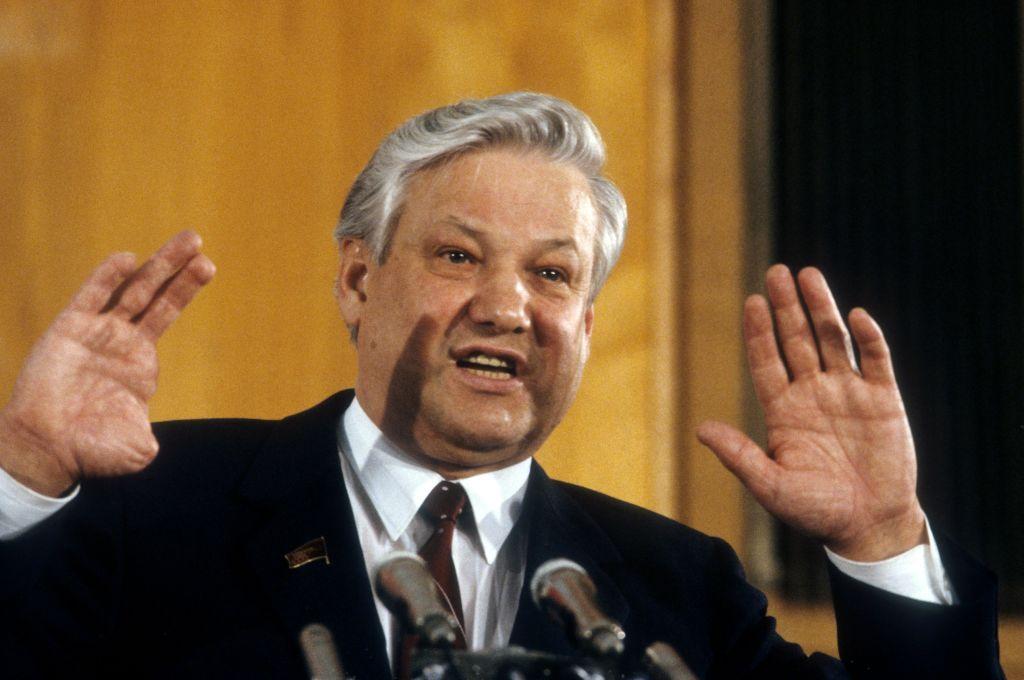 Getty ImagesBoris Yeltsin, President of Russia from 1991 to 1999.
However, UN nuclear disarmament researcher Pavel Podvig said: “If I had to rate these cases I would probably give it a three out of ten. There were far more serious incidents during the Cold War.”
He even suggested that the nuclear briefcase scenario may have been staged for Yeltsin.
Russian nuclear expert Vladimir Dvorkin said the Norwegian warning did not pose a danger. He told the Washington Post in 1998: “Even when the warning system signals a massive attack, no one would make that decision, even an irrational leader surprised by a single missile launch. I think this was a false alarm.”
Five days after the incident, a BBC radio broadcast reported that Russia blamed the incident on a “misunderstanding” that should not be repeated. A Foreign Ministry spokesperson said Norway had acted in accordance with normal procedures and there should be no resentment towards them.
Although disaster was averted, a harmless meteorological rocket was apparently enough to cause such panic.
(ita/ita)
