
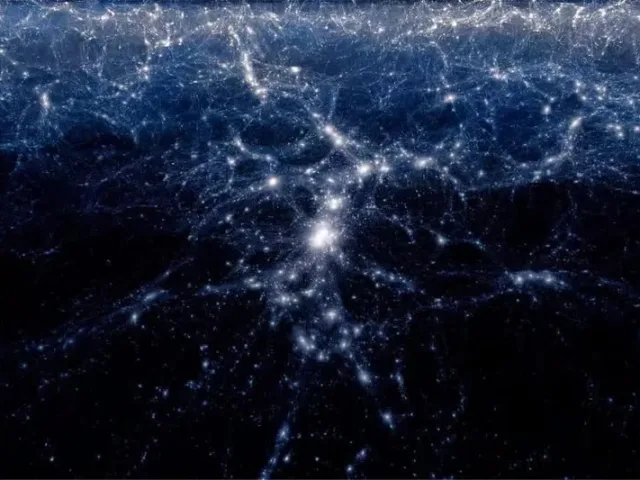
Scientists Create Largest Cosmological Simulation Ever
An international team of researchers has developed the largest cosmological simulation to date, offering modern insights into the structure and evolution of the universe. The simulation, which models the formation of galaxies and dark matter distribution across billions of light-years, represents a major advancement in computational astrophysics.
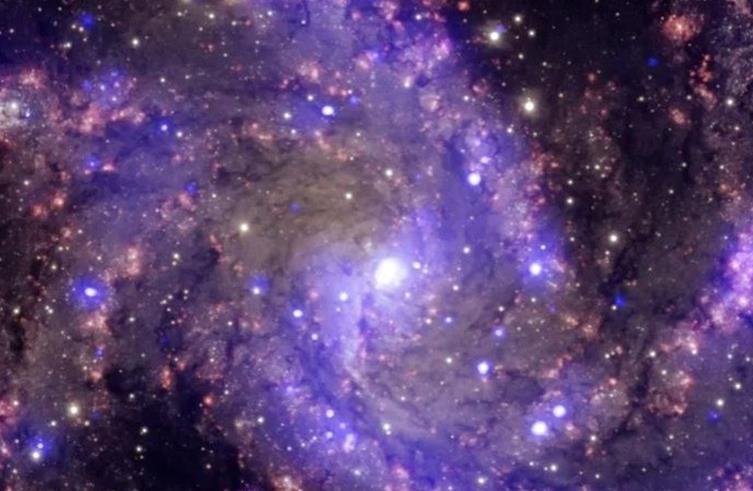
The project, led by scientists from multiple institutions, used supercomputers to process vast amounts of data, enabling researchers to study cosmic phenomena with unprecedented detail. By simulating the behavior of dark energy and dark matter over time, the team aims to better understand how the universe has expanded and structured itself since the Big Bang.
According to the research team, the simulation allows scientists to test theories about cosmic inflation, galaxy formation, and the large-scale structure of the universe in ways that were previously impossible due to computational limitations. The results could help refine models used in observational cosmology and guide future space-based telescopes and surveys.
Experts note that such simulations are critical for interpreting data from instruments like the James Webb Space Telescope and the upcoming Vera C. Rubin Observatory. By comparing simulated universes with real observations, researchers can identify discrepancies that may point to new physics or refine existing models of cosmic evolution.
The findings were released in conjunction with a series of technical papers detailing the simulation’s methodology, resolution, and scientific applications. While the simulation does not directly address health or medical topics, its technological advancements in data processing and modeling have indirect implications for fields that rely on large-scale computational analysis, including biomedical research and epidemiology.
Researchers emphasized that the project highlights the growing role of high-performance computing in scientific discovery, particularly in areas requiring the integration of complex physical laws across vast spatial and temporal scales. Continued improvements in simulation technology, they said, will be essential for tackling some of the most fundamental questions about the universe.
