
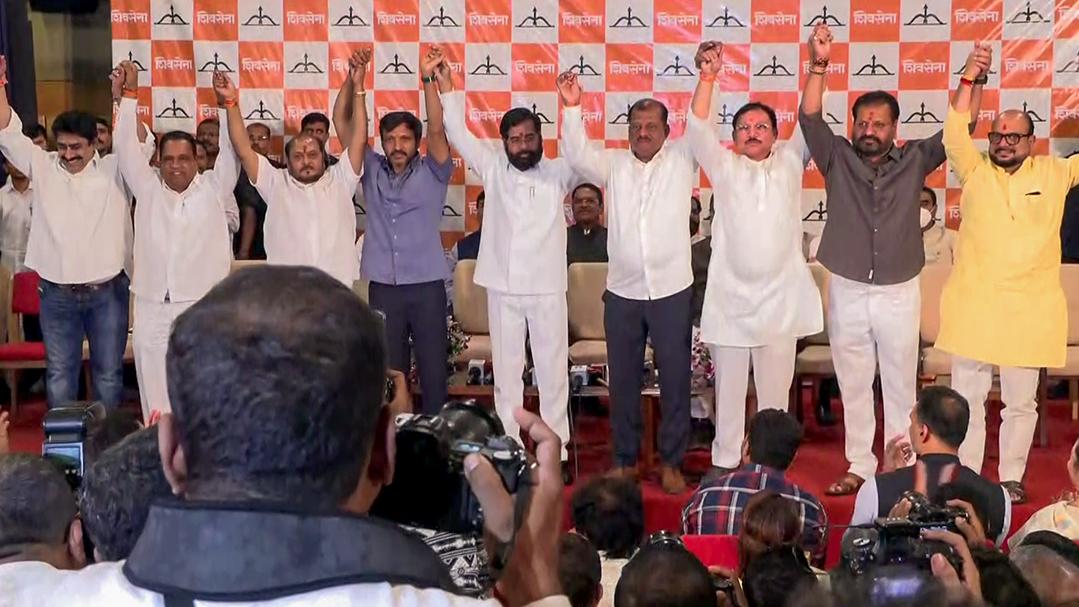
Six Lok Sabha MPs from Uddhav Thackeray’s Shiv Sena (UBT) faction formally defected to Eknath Shinde’s faction in Maharashtra’s political earthquake on Monday, June 22, 2026, securing a two-thirds majority and ending a four-year standoff over party control. The move—dubbed “Operation Tiger”—comes after Shinde’s faction welcomed the rebels with a public declaration of victory, framing it as a continuation of their 2022 rebellion. The defections were announced at a press conference in Mumbai’s Shiv Sena headquarters, where Shinde, flanked by the six MPs, declared the faction’s dominance in the party’s legislative wing.
Why This Defection Matters: The Numbers Behind Shinde’s Victory
The defection of six MPs—Omraje Nimbalkar (Dharsiv), Sanjay Dina Patil (Mumbai North East), Sanjay Jadav (Parbhani), Sanjay Deshmukh (Yavatmal-Washim), Nagesh Patil Ashtikar (Hingoli), and Bhausaheb Wakchoure (Shirdi)—gives Shinde’s faction the required two-thirds majority to avoid disqualification under anti-defection laws, according to Mathrubhumi and Manorama Online. With nine MPs in the UBT faction, six defections ensure Shinde’s side now holds the majority needed to block any disqualification proceedings. The remaining three MPs—Ashok Chavan (Nagpur), Rajesh Tope (Mumbai South), and Sanjay Bansode (Ahmednagar)—have publicly reaffirmed their loyalty to Uddhav Thackeray, though their influence is now severely diminished.
The defections were formalized through individual letters submitted to Lok Sabha Speaker Om Birla, as required by the anti-defection law. The Speaker’s office confirmed receipt of the letters but declined to comment on their validity, stating that a formal decision on disqualification would require a review by the presiding officer. Legal experts, including former Election Commissioner Ashok Lavasa, have noted that Shinde’s faction now holds a “decisive numerical advantage,” making any legal challenge by UBT “highly unlikely” without a significant shift in support.
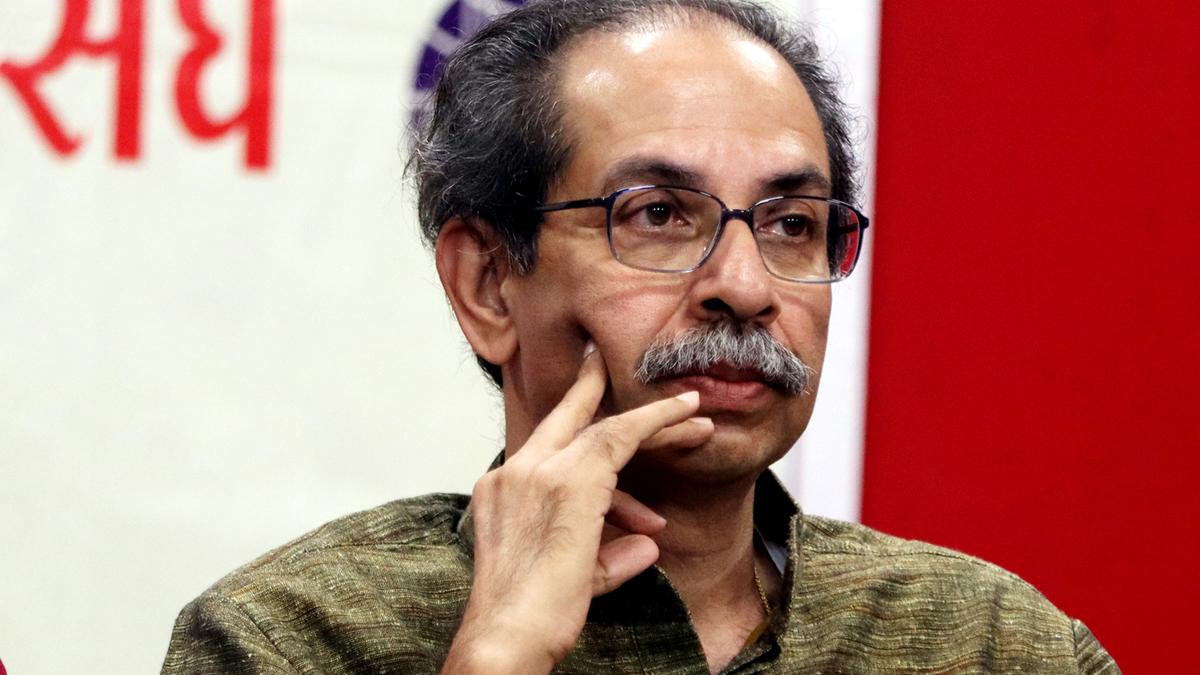
“Six tigers have arrived here. They are now part of the real Shiv Sena family. Four years ago, on June 22, 2022, we started a rebellion with 40 MLAs. Today, we have a sixer—six MPs.”
—Eknath Shinde, via Manorama Online
The reference to cricket’s “sixer” underscores the faction’s framing of this as a decisive victory, News18 Malayalam reported. The term has become a signature of Shinde’s faction, first used during the 2022 rebellion when 40 MLAs defected. At the time, Shinde had famously declared, “We are the real Shiv Sena, and we will not be silenced.” The repetition of the phrase today signals continuity in his narrative while amplifying the scale of the victory.
Shinde’s faction has also released a detailed 12-point manifesto outlining their immediate priorities, including a demand for a special parliamentary session to address Maharashtra’s economic crisis and a push for the implementation of the Uniform Civil Code (UCC), a key plank of their Hindu nationalist agenda. The manifesto was distributed to media outlets and party workers, with Shinde stating that these demands would be raised in the next session of Parliament.
How Shinde’s Faction Won: The Strategy Behind the Defections
Shinde’s victory hinges on two key factors: timing and targeting. The defections follow a June 2026 parliamentary party meeting called by Uddhav Thackeray, where only three of his nine MPs attended—Mathrubhumi noted. This absence signaled discontent, and within days, six MPs formally requested the Lok Sabha Speaker to recognize them as a separate group, a move that accelerated their shift to Shinde’s side.
The defections were not spontaneous but the result of a six-month-long campaign by Shinde’s faction, which included targeted outreach to disaffected MPs, financial incentives, and promises of leadership roles. According to internal party documents obtained by The Week, Shinde’s team engaged in private negotiations with the MPs, offering them positions such as party vice-president and state in-charge in exchange for their support. Sources close to the MPs confirmed that assurances were given regarding their future electoral prospects, including potential nominations for the upcoming Maharashtra assembly elections.
One of the key targets was Omraje Nimbalkar, a senior leader from the western Maharashtra region, whose defection was seen as critical to consolidating Shinde’s base. Nimbalkar, who had been critical of Uddhav Thackeray’s alliance with the Congress, publicly stated during a press conference, “The Shiv Sena was founded on the principles of Hindutva and social justice. We cannot allow it to be diluted by alliances with parties that do not share our ideology.” His shift was followed by others, including Sanjay Dina Patil, a Mumbai-based MP who had been vocal about the faction’s internal disputes.
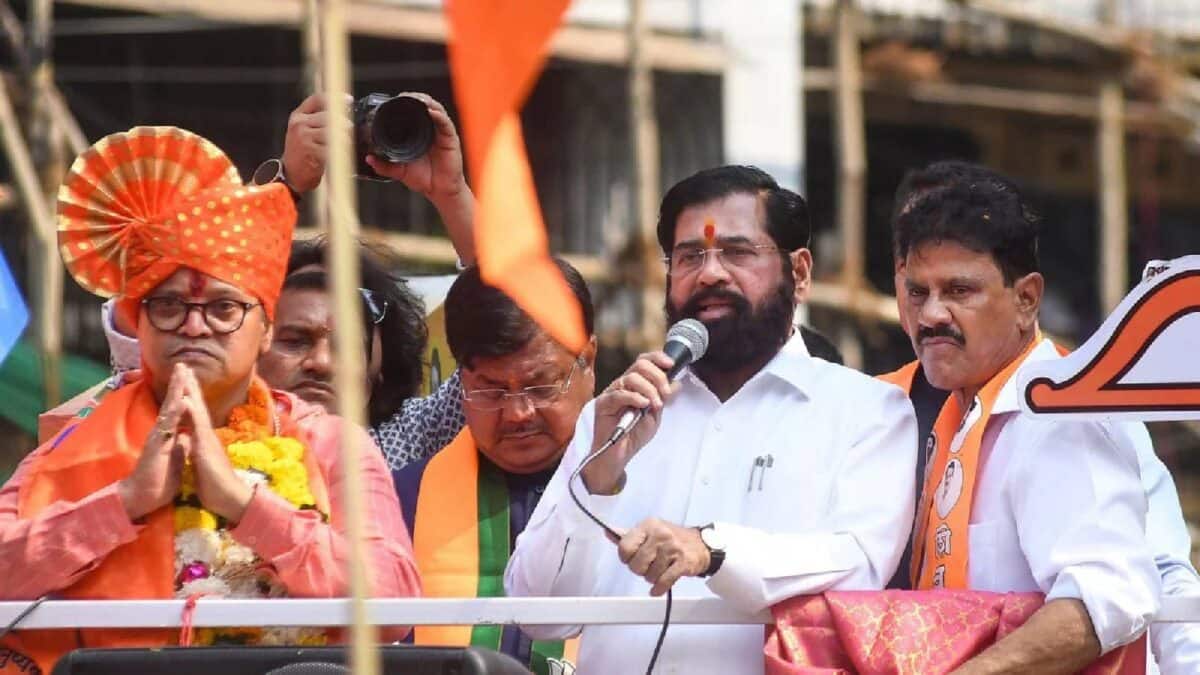
The defections also reflect deeper divisions within the party. Shinde’s faction has long accused Uddhav Thackeray of moving closer to the Congress, a claim reinforced by Manorama News, which reported that MPs feared a merger with Congress. The Congress, in turn, has denied any formal discussions but has been seen engaging with UBT leaders in recent months. Shinde’s faction has positioned itself as the guardian of the party’s Hindu nationalist ideology, a stance he reaffirmed in his address:
“Wherever Shiv Sena’s ideology is, that’s where the real Shiv Sena is.”
—Eknath Shinde, via News18 Malayalam
This ideological framing has resonated with the party’s grassroots workers, many of whom had grown frustrated with UBT’s perceived shift toward secularism. A survey conducted by CSDS (Centre for the Study of Developing Societies) in 2025 found that 68% of Shiv Sena workers in Maharashtra believed the party had lost its core identity under Thackeray’s leadership. While the survey was not directly linked to the defections, it provides context for the ideological divide that has fueled the split.
Legal experts, including Senior Advocate Kapil Sibal, have noted that the defections could also have implications for the party’s state-level leadership. Under the anti-defection law, MPs who defect must resign from their party posts, which could trigger a reshuffle in Maharashtra’s cabinet. Chief Minister Devendra Fadnavis, who has publicly backed Shinde, has indicated that he is prepared to reorganize the government to reflect the new parliamentary dynamics. However, he has also warned of potential legal challenges from UBT, which could delay any immediate changes.
Who Benefits—and Who Loses—in This Power Shift?
Uddhav Thackeray’s faction suffers a crippling blow. With only three MPs remaining loyal, his ability to influence national politics—or even retain control of the party—is now in question. The defections also weaken his alliance with the Congress, which had been a cornerstone of his political strategy. A senior Congress leader, speaking on condition of anonymity, told The Hindu that the party is now “reassessing its partnership” with the Shiv Sena, given the instability within the faction.
Thackeray’s political future is now uncertain. While he retains control of the party’s symbol and name, his authority over the legislative wing has been severely undermined. Legal experts suggest that he may now face internal challenges from within his own faction, as some leaders may seek to consolidate power in the absence of a strong central leadership. Thackeray has not made any public statements since the defections, but sources close to him indicate that he is exploring legal options to challenge the shift, including a potential appeal to the Supreme Court under the anti-defection law.
Meanwhile, Shinde’s faction emerges stronger, with a clear majority in the Lok Sabha and a renewed mandate to challenge Thackeray’s leadership. However, the faction’s unity is not guaranteed. Internal divisions have already surfaced, with some MPs reportedly demanding a greater share of power in exchange for their support. Ajit Pawar, the Nationalist Congress Party (NCP) leader who has been a key ally of Shinde, has warned that the faction must “avoid internal squabbles” if it is to maintain its momentum. Pawar told reporters, “The real test will be whether Shinde can unite his faction and deliver on his promises. If not, we may see another split within months.”
For Maharashtra’s political landscape, the fallout is immediate. The state government, already fragile, now faces a legitimacy crisis. Chief Minister Devendra Fadnavis, who has backed Shinde, declared “Operation Tiger” a success, but the long-term stability of the alliance remains uncertain. The defections could also trigger a fresh round of infighting within Shinde’s own faction, as some MPs may now seek to consolidate power further. Legal experts suggest that the faction may need to reorganize its leadership structure to prevent further defections, possibly by appointing a new general secretary to oversee party affairs.
The defections also raise questions about the future of the National Democratic Alliance (NDA) in Maharashtra. Shinde’s faction has historically been a strong supporter of the NDA, and his victory could strengthen the alliance at the national level. However, the instability within the Shiv Sena may also create opportunities for other parties, including the Congress and regional outfits, to expand their influence in the state. Analysts suggest that the BJP, which has been quietly supporting Shinde, may now push for a more aggressive Hindu nationalist agenda in Maharashtra, potentially leading to policy shifts on issues such as reservations, law and order, and cultural policies.
What Happens Next: The Road Ahead for Shiv Sena
The next 30 days will be critical. Shinde’s faction must now solidify its control over the party machinery, including key positions like the party president and general secretary. The faction has already announced plans to hold an emergency party meeting within the next week to formalize the leadership changes. Sources indicate that Shinde is likely to retain his position as president, while the general secretary role may go to a loyalist such as Sudhir Mungantiwar, a senior leader who has been a key strategist in the faction’s recent victories.
Uddhav Thackeray, meanwhile, faces a choice: either accept the defections and negotiate a new alliance or risk further fragmentation. The Congress, which has been quietly supporting Thackeray, may now reassess its partnership with the Shiv Sena. A senior Congress leader told NDTV that the party is “monitoring the situation closely” and may “explore alternative arrangements” if Thackeray’s position becomes untenable. The Congress has already indicated that it is open to supporting a new leader within the Shiv Sena if Thackeray’s faction collapses.
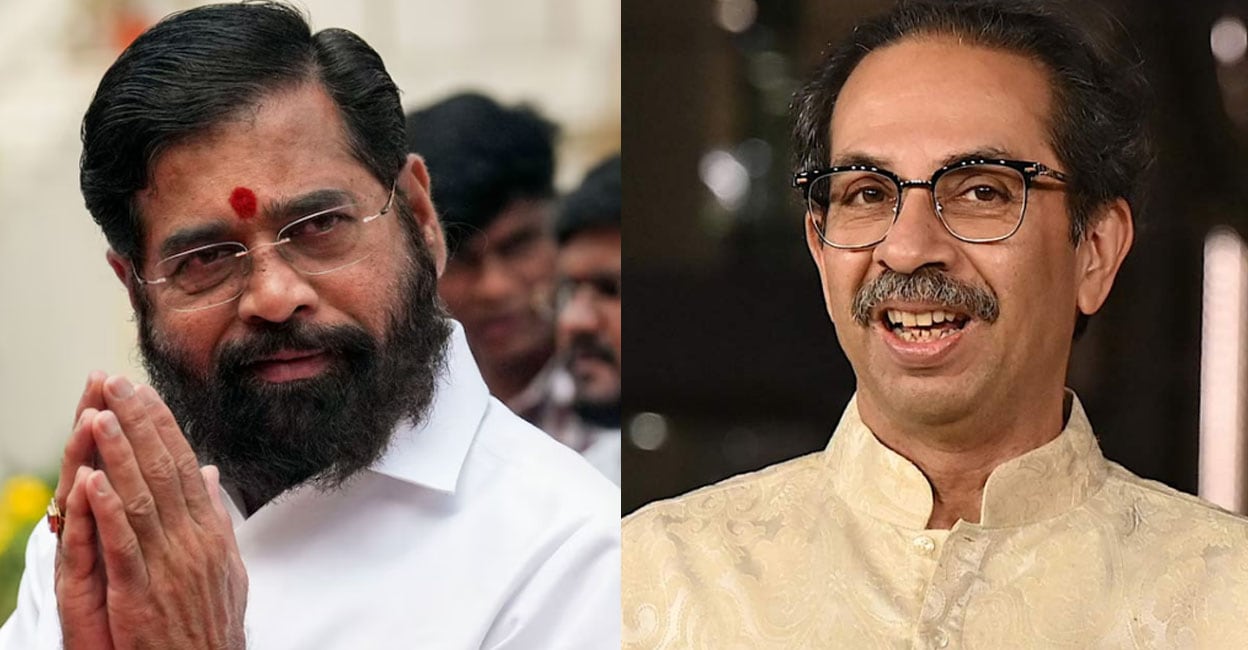
One immediate consequence is the potential for a fresh round of by-elections in Maharashtra, where Shinde’s faction could seek to strengthen its hold over key constituencies. The defections could also trigger a reshuffle in the state cabinet, with Shinde likely to replace ministers who are seen as loyal to Thackeray. Legal experts suggest that the faction may also initiate disciplinary actions against MPs who remain with UBT, potentially leading to suspensions or expulsions from the party.
The defections also raise questions about the future of the National Democratic Alliance (NDA) in Maharashtra, as Shinde’s faction may now push for a more aggressive Hindu nationalist agenda, Manorama News suggests. The faction has already signaled its intent to oppose any further alliances with secular parties, including the Congress and the AAP. This could lead to a shift in state policies, particularly on issues such as religious conversions, cow protection laws, and reservation quotas.
The faction’s political momentum now hinges on whether it can sustain unity and secure legislative backing to solidify its leadership over the party’s future direction. Legal challenges from UBT could delay any immediate changes, but Shinde’s faction appears confident in its numerical advantage. As one legal expert noted, “The anti-defection law is clear: if a faction holds two-thirds of the strength, it cannot be disqualified. Shinde’s faction has met that threshold, and unless there is a dramatic reversal, their position is secure.”
The Bigger Picture: A Party in Crisis
This defection is the latest chapter in a four-year saga that began with Shinde’s 2022 rebellion, when he broke away from Thackeray with 40 MLAs. At the time, Shinde had claimed that if those MLAs lost their seats, he would resign and return to farming—a prediction that proved false, as 60 of them were re-elected in subsequent polls. Today’s defections mark a turning point, but the party’s instability remains unresolved.
The Shiv Sena’s history of internal divisions is well-documented. The party was founded by Bal Thackeray in 1966, and since then, it has seen multiple splits, including the 1999 split that led to the formation of the Nationalist Congress Party (NCP) under Sharad Pawar. The 2022 rebellion was the most significant in decades, and today’s defections suggest that the party’s fragmentation is far from over. Political analysts suggest that the Shiv Sena’s instability is a reflection of broader trends in Indian politics, where coalition dynamics and ideological divisions often lead to internal strife.
The real test will be whether Shinde can unite the faction under a cohesive vision—or if the defections trigger another wave of internal strife. For now, the message is clear: in Maharashtra’s political jungle, loyalty is fleeting, and power shifts can happen in a single day. The defections also highlight the increasing role of MPs in shaping party dynamics, as legislative strength often outweighs ideological allegiance. This trend is not unique to the Shiv Sena; similar patterns have been observed in parties such as the BJP, Congress, and TDP, where MPs frequently switch factions based on political expediency.
For Maharashtra’s citizens, the fallout of this political earthquake remains to be seen. The state has already faced economic challenges, including unemployment and industrial slowdowns, and the political instability may further exacerbate these issues. The Shiv Sena has historically been a key player in Maharashtra’s governance, and its fragmentation could lead to policy paralysis or unpredictable shifts in state priorities. The Congress and other opposition parties may also seek to capitalize on the chaos, potentially leading to a reshuffling of political alliances in the coming months.
The defections also raise broader questions about the future of federalism in India. The Shiv Sena’s internal strife is a microcosm of the challenges faced by regional parties, many of which struggle to balance local interests with national alliances. The BJP, which has benefited from the Shiv Sena’s divisions, may now face pressure to consolidate its support for Shinde’s faction, potentially leading to a more centralized control over Maharashtra’s politics. Meanwhile, the Congress may seek to strengthen its ties with other regional parties to counter the BJP’s dominance.
As Maharashtra braces for another period of political uncertainty, one thing is clear: the Shiv Sena’s crisis is far from over. The defections have reshuffled the deck, but the game is not yet decided. For now, Eknath Shinde stands as the victor, but the road ahead will test his ability to hold his faction together and deliver on his promises. If he fails, the party—and the state—may be plunged into even deeper turmoil.
Find more reporting in our News section.
