
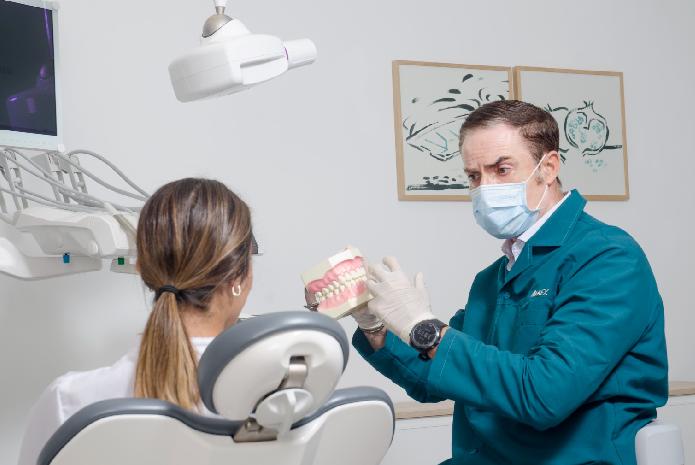
Sleep disorders or inadequate breathing during the night can contribute to dental health problems such as bruxism, muscle overload and pain in the jaw joint, increased gum inflammation, a higher risk of periodontal disease, and mouth breathing, which causes dry mouth.
World Sleep Day was observed on Friday, March 13, to raise awareness about the importance of good sleep for overall health and conditions like insomnia or sleep apnea. Adequate rest is crucial for well-being, and emerging research highlights its surprising connection to oral and facial health, particularly in children, according to orthodontist Juan Carlos Pérez Varela.
“Sleep is a fundamental time for cellular repair, hormonal regulation, and the proper functioning of the immune system,” explained Juan Carlos Pérez Varela, medical director of the MAEX Clinic in Santiago de Compostela. “However, poor sleep or improper breathing during the night can have direct consequences on the mouth and facial structure.” Many issues detected during orthodontic consultations are linked to nighttime breathing patterns, as poor sleep also impacts oral health.
Sleep disorders or inadequate breathing during the night can contribute to various dental health problems, including bruxism (teeth grinding or clenching, especially during sleep), muscle overload and pain in the jaw joint, increased gum inflammation, a higher risk of periodontal disease, and mouth breathing, which causes dry mouth. Dry mouth, common in people who breathe through their mouths while sleeping, reduces the natural protection of saliva against bacteria and acids, increasing the vulnerability of teeth and gums.
Breathing, Orthodontics, and Facial Development
Nighttime breathing also influences the development of the face and mouth, especially during childhood. According to Dr. Pérez Varela, director of MAEX Santiago, when a child primarily breathes through their mouth for extended periods, alterations in facial growth can occur. Common signs include slightly parted lips at rest, mouth breathing instead of nasal breathing, a longer and narrower face, a narrow upper jaw, a more retracted lower jaw, upper teeth protruding, and a low tongue position instead of resting on the palate. This combination of features is classically known as the adenoid face or mouth breather face and is easily recognizable during consultations. The clinic collaborates with the otolaryngology service at the University Clinical Hospital of Santiago, referring patients with breathing problems for evaluation, as it has been found that poor breathers frequently have issues with their jaws.
“Orthodontics isn’t limited to just aligning teeth; we also aim to improve respiratory function,” Pérez Varela said. Treatments used include maxillary expansion or devices that promote mandibular advancement in growing patients.
In fact, maxillary expansion in children has proven useful in improving nasal breathing in certain cases, as detailed in the scientific article Pediatric maxillary expansion to treat nasal obstruction, co-authored by Juan Carlos Pérez Varela. The article analyzed children with nasal obstruction associated with a narrow maxilla treated with maxillary expansion, concluding that it reduces nasal resistance and increases the volume of the nasal cavity, improving nasal airflow and relieving symptoms of obstruction.
The study also demonstrated that the greater the expansion achieved, the greater the improvement in nasal respiratory flow. This research reinforces the idea that a narrow maxilla can be a cause of nasal obstruction and that maxillary expansion can not only correct malocclusion but also improve nasal breathing in children.
Sleep Apnea and Health Consequences
Obstructive sleep apnea is one of the most significant respiratory disorders during rest. It occurs when breathing is repeatedly blocked during sleep, forcing the brain to briefly wake up to resume breathing. Despite spending many hours in bed, sleep is not restorative. “What we have is a problem that goes beyond sleep, as poor breathing during the night in adults can lead to constant fatigue, lack of concentration, irritability, an increased risk of hypertension and cardiovascular problems, as well as metabolic alterations. In children, it can affect growth and school performance and can be confused with some symptoms of ADHD,” Pérez Varela clarified.
Early detection is crucial in these cases, “because during growth we can modify the development of the bones and improve the space for breathing, either through maxillary expansion (widening the palate and increasing the space of the nasal cavity can improve nasal breathing) or through mandibular advancement (which is often used in children with a tendency to Class II malocclusion because it advances the jaw, helping to open the airway). In many cases, early treatment can improve breathing and facial development, something that in adults can usually only be resolved through surgery,” Pérez Varela noted.
Galicia, Slightly Below Recommended Sleep Hours
Raising awareness about sleep quality is particularly relevant considering the sleep habits of the population. According to national studies on sleep habits, the average sleep in Galicia is around 7.1 hours per day, slightly below the 7-9 hours recommended by sleep health specialists.
Pérez Varela emphasizes that sleeping well means not only sleeping longer but also breathing correctly during sleep. “There is a growing awareness that breathing, sleep, and oral development are deeply connected. Detecting these problems early, especially in children, can improve not only oral health but also overall well-being,” Dr. Pérez Varela reflected. It’s important to promote nasal breathing (rather than through the mouth), as the nose has two key functions: filtering the air (as the hairs and mucous membrane trap dust and bacteria) and humidifying and warming the air to the appropriate temperature. In fact, quiet nasal breathing reduces stress and improves rest,” Pérez Varela concluded.
