
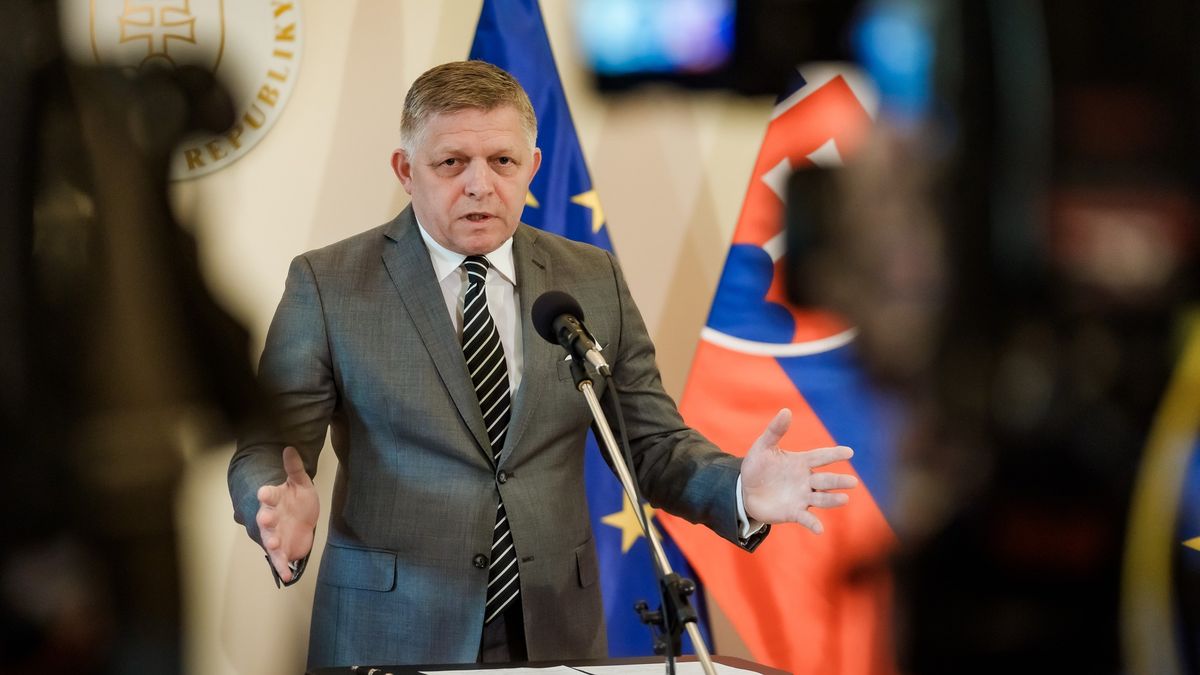
slovak prime Minister Robert Fico is doubling down on his opposition to direct military aid for Ukraine from state reserves, a position that highlights growing divisions within NATO over continued support for Kyiv. Fico, who returned to office in October 2023 [[1]], argues that prioritizing SlovakiaS own defense needs is paramount, especially as the country awaits the arrival of long-ordered F-16 fighter jets. This stance comes amid increasing pressure on NATO members to increase defense spending adn as the alliance reassesses its strategies in light of Russia’s ongoing aggression in Ukraine [[2]].
Slovak Prime Minister Robert Fico has reaffirmed his government’s opposition to providing Ukraine with military aid from state reserves, while also asserting Slovakia’s sovereign right to determine its own defense spending priorities.
The stance comes as NATO members grapple with increasing calls to bolster defense budgets in response to ongoing threats from Russia. The debate over financial contributions to Ukraine and national defense strategies is intensifying across Europe.
Fico’s cabinet maintains that previous Slovak governments weakened the country’s defense capabilities by donating military equipment to Ukraine following Russia’s invasion in February 2022. These donations included Soviet-era MiG-29 fighter jets and Kub anti-aircraft systems.
With Slovakia awaiting the full delivery of its ordered American F-16 fighter jets, allies, including the Czech Republic, have assisted in protecting Slovak airspace.
While continuing to oppose aid from state stockpiles, Fico indicated that commercial contracts for military supplies could proceed. Slovak companies have already begun investing in expanding ammunition production, with the Czechoslovak Group (CSG), a company owned by Czech businessman Michal Strnad, playing a significant role in the Slovak defense industry.
During a meeting with Dutch Prime Minister Mark Rutte, Fico emphasized Slovakia’s sovereign right to decide on the pace and structure of its military expenditures, according to a statement released by his office.
Slovakia plans to allocate two percent of its gross domestic product (GDP) to defense next year – the minimum level required for NATO membership. This commitment follows a recent NATO summit where members agreed to increase defense spending to five percent of GDP by 2035, largely due to the perceived threat posed by Russia.
