
Smart Home Owners Increasingly Seek Local Control Amid Connectivity Concerns
A growing number of smart home enthusiasts are shifting towards locally controlled systems, reducing reliance on cloud services to maintain functionality during internet outages and address concerns about manufacturer abandonment of older devices.
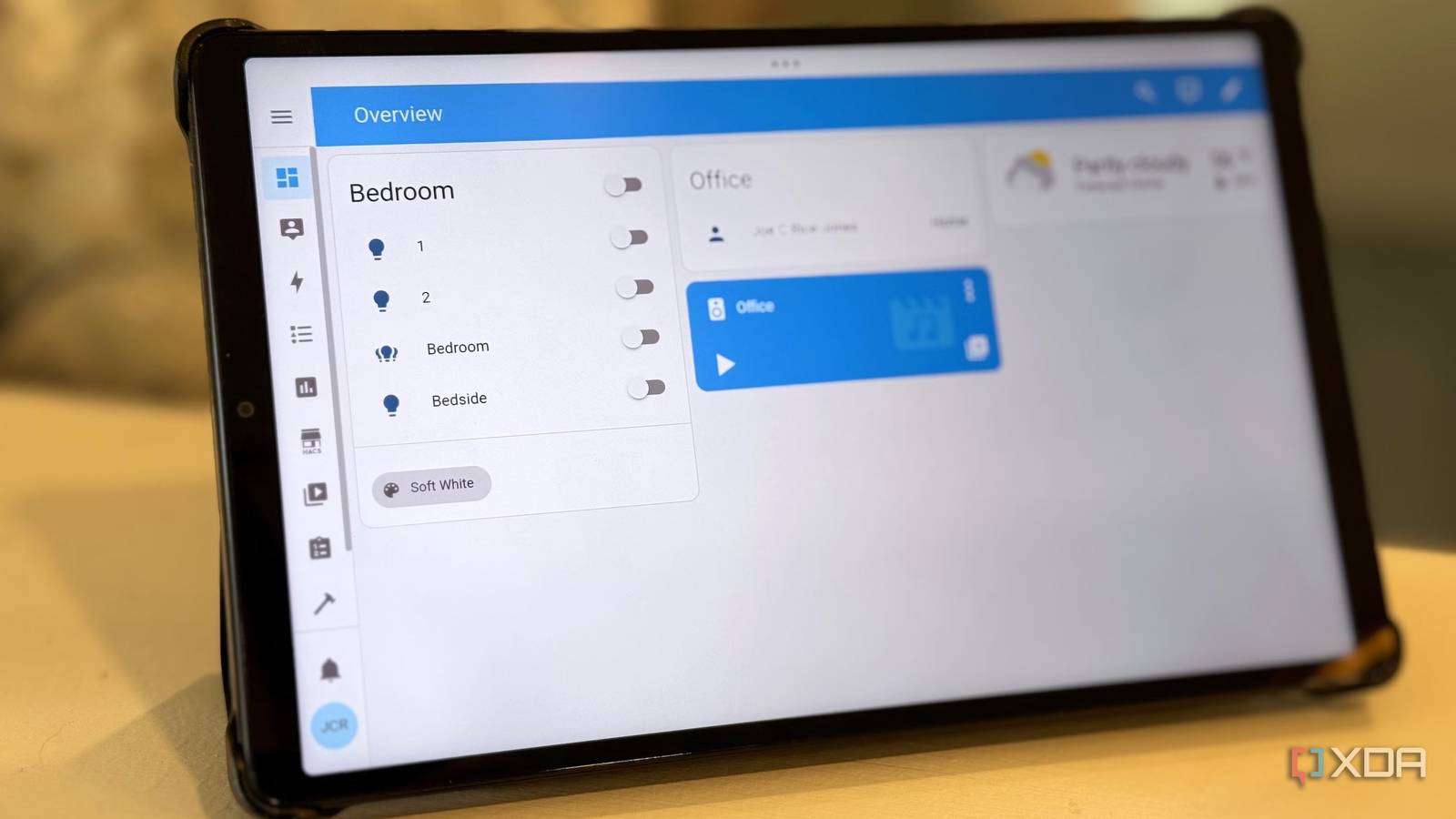
The trend is driven by frustrations with devices becoming unresponsive when cloud connectivity is lost, a common issue particularly affecting smart lighting. Users are adopting software like Home Assistant to integrate disparate ecosystems – including those using HomeKit, Google Home, and Alexa – into a single, locally managed dashboard. This allows for continued operation even without an internet connection. The increasing desire for control comes as data privacy concerns surrounding IoT devices continue to grow.
Home Assistant supports multiple communication protocols like Matter, Zigbee, and Z-Wave, and can even host local voice assistants powered by large language models. Users are also leveraging technologies like Power over Ethernet (PoE) to maintain network connectivity and data storage via Network Video Recorders (NVRs) during power outages, eliminating the need for ongoing cloud subscriptions for security footage. For more information on building a resilient smart home network, resources are available from the CNET Smart Home Security guide.
This move towards self-hosting and local control requires some technical expertise, including network configuration and firewall management, but offers increased reliability and privacy. As one adopter explained, the goal is to “decouple my smart home and its multiple ecosystems from the various clouds that it relied on, so that losing internet connectivity wouldn’t result in a vast drop in functionality.” Further details on Home Assistant’s capabilities can be found on their official website.
Experts predict this trend will continue as users prioritize data security and system resilience, pushing manufacturers to offer more robust local control options in future smart home devices.
I’ve been all-in on smart home technology for about a decade, and while I love most of the devices I own, I’ll admit that at times I’ve been left unable to control some of them due to internet connectivity issues. Not every device was designed for local control, and some of the things I own were virtually abandoned by their manufacturers as they released newer versions with better connectivity.
Nowhere is this more visible than when smart lighting refuses to change settings due to cloud connectivity issues. After one too many instances of this happening, I decided to do something about it, and either bring my smart home under local control, or, for the devices that still refused, replace them with those that would.
Home Assistant keeps my smart home in line
It’s hard to overstate just how much I love this software
Like most smart home users, I don’t have a unified ecosystem where every device is from the same manufacturer. I’m unsure whether that’s technically possible, because no manufacturer (to my knowledge) has a comprehensive product stack covering every aspect of the smart home. My outdoor cameras aren’t even all from the same brand, because they’ve been picked up along the way from what was available and on sale when I was looking.
Any devices that can use MQTT are connected that way, because it’s local-first and doesn’t rely on external connectivity to work seamlessly. I wish that the promises of Matter had materialized, because one of its core tenets was local-first control, before thinking about optional cloud-based features. But it’s been years, and Matter still doesn’t support every smart home device type, let alone have enough manufacturer buy-in to replace the existing connectivity standards.
I’ve got HomeKit-only devices, Google Home-only devices, and I think a few of my smart plugs are Alexa-only. This usually meant I was juggling multiple apps simply for basic functionality. Or at least, it did, before I put Home Assistant on a mini PC and realized that every device that had either an existing integration or a known API could be brought into my new dashboard under one smart roof.
My entire smart home is connected in one app
Moving to Home Assistant has been a revelation, both in utility and the little benefits I hadn’t considered before the switch. Things like no longer needing a couple of dozen apps on my phone because all the IoT devices in my home are now controllable from a single application. I’ve always wanted this, to decouple my smart home and its multiple ecosystems from the various clouds that it relied on, so that losing internet connectivity wouldn’t result in a vast drop in functionality.
Local integration is key
Removing my dependence on the cloud means no more service interruptions
Home Assistant isn’t just a platform to tie in existing cloud services and their connected devices. It can do that, but it also replaces the dependence on cloud services with local control. It can be a hub for Matter, Zigbee, Z-Wave, HomeKit, and multiple other communication protocols, including some proprietary ones. I also have a local-only voice assistant running from a local LLM, meaning voice commands don’t need internet access.
My robot vacuum cleaners have a local server, and I couldn’t tell you if I’ve lost any features because the most important ones are there. I can still schedule them to keep my floors clean, just like the manufacturer’s cloud-dependent app. I’ve been a Philips Hue user since they first released lights that could use Zigbee as well as Bluetooth, and with Home Assistant, I can either keep the Hue Bridge and use it completely locally, or drop it entirely and use Home Assistant and a Zigbee controller to change their settings.
None of my smart switches need access to the internet to work, and they’re blocked from communicating with the manufacturer’s cloud servers by a few OPNsense firewall rules. This one is a little bit like those whack-a-mole arcade games, because the manufacturer loves to change the cloud server IPs occasionally, and I have to change the firewall rules to suit, but I know they have local control with Home Assistant even without that.
If there is a local-first integration for Home Assistant, that’s the way I integrate new IoT devices into my smart home, because I’ve been burned too many times by internet outages stopping me from turning off the lights, and I won’t let it happen again. Self-hosting Home Assistant and the servers and services my smart home devices need to run without external internet access reduces my cloud dependency while teaching me valuable system administration skills.
Power-over-Ethernet helps
Okay, using Power-over-Ethernet for wired network devices didn’t immediately make my home network more resilient. However, it enabled me to drop the various cloud subscriptions I was using for external security camera footage and set up my first NVR, so security footage is still saved even if my internet goes away. And that footage is only limited by how much space I have on my NAS and the settings I choose for retention period, without keeping my camera subscriptions current to ensure access.
Battery backups mean I can be off-grid but still in control

Losing access to the internet is one thing, but by having a large uninterrupted power supply plugged into my network stack, PoE keeps my smart home connected even in a blackout. That’s mainly to ensure my NAS devices can store any in-transit data before they power down gracefully, but I think I’ll add a few PoE smart lights to the hallways and stairwells, so there is always emergency lighting when needed.
As long as I have power I have a smart home
My smart home stays running even when the power goes out, at least for the handful of PoE-enabled devices I already have plugged in. For everything else, I’ve been on a mission to reduce cloud dependency and have local-first control if I lose internet access.
