
A U.S.-based startup is pursuing a dramatically different approach to space access – launching payloads with a massive, gas-powered cannon. Longshot‘s enterprising project aims to significantly lower the cost of reaching orbit, possibly from an industry average of $3,000 per kilogram to just $10. The concept, echoing science fiction visions dating back to Jules Verne, faces important engineering challenges but could represent a disruptive shift in the space launch industry, or find applications beyond civilian space travel.
A French startup’s recent funding success has spurred a novel approach to space launch: using a cannon. Longshot, a U.S.-based company, is developing a system to propel projectiles into space not with traditional launchers, but with a massive gas-powered cannon. The concept, while unconventional, aims to dramatically reduce the cost of accessing orbit.
The core challenge lies in achieving the immense power needed to overcome Earth’s atmosphere and reach orbital orbit. Longshot’s solution involves a cannon exceeding 10 kilometers in length, capable of launching payloads at speeds exceeding Mach 23. This ambitious scale is key to the project’s feasibility.
Extending the cannon’s length allows for higher final velocities with reduced G-forces. As the projectile travels down the barrel, it has more time and distance to accelerate gradually. Doubling the cannon’s length halves the G-forces experienced by the payload, and also minimizes heat buildup. This is a critical factor in protecting sensitive equipment.
The potential cost savings are significant. Longshot estimates a launch cost of around $10 per kilogram of payload, compared to the current industry average of $3,000 per kilogram. While the idea may seem far-fetched, cannons have been used for centuries to launch projectiles over considerable distances, and this project seeks to apply that principle to space access.
A Space Cannon Concept
The concept isn’t entirely new. As far back as 1865, Jules Verne envisioned a similar system in De la Terre à la Lune, featuring a 274-meter cannon to launch a capsule towards the Moon. However, Verne’s design didn’t fully address the immense acceleration required to escape Earth’s gravity – an acceleration incompatible with human survival.
Early experimentation with similar technology dates back to the 1960s with the High Altitude Research Project (Harp), a joint effort between the Canadian and U.S. militaries. While not aimed at launching people into space, the project successfully used a cannon to launch projectiles to altitudes exceeding 180 kilometers – beyond the Kármán line, which defines the boundary of space.
The Harp project utilized naval Mark 7 cannon barrels welded together to create a 40-meter-long cannon with a 406.4 mm calibre. The 180-kilogram Martlet 2 projectile reached a speed of Mach 6, falling short of Longshot’s target of Mach 23. Achieving that higher velocity is crucial for establishing a stable orbit.
To mitigate the extreme forces involved, Longshot plans to encapsulate a 454-kilogram payload within a 1,360-kilogram shell. This shell would burn during ascent, reducing the overall mass and maintaining the necessary velocity for orbital insertion. This approach addresses the challenge of protecting internal components during the high-acceleration launch.
A Unique Projectile Design
Longshot’s projectile design resembles a flattened bullet, with a rounded front section housing the payload and a gradually flattened rear. Unlike traditional cannons, the system won’t use gunpowder. Instead, it will rely on compressed air, with plans to eventually transition to hydrogen.
To minimize resistance, the cannon’s initial section will be evacuated of air before firing. The compressed air will then exert pressure on the flat rear surface, accelerating the projectile. This process will be repeated along the length of the barrel, incrementally increasing velocity – a technique known as “impact propulsion.”
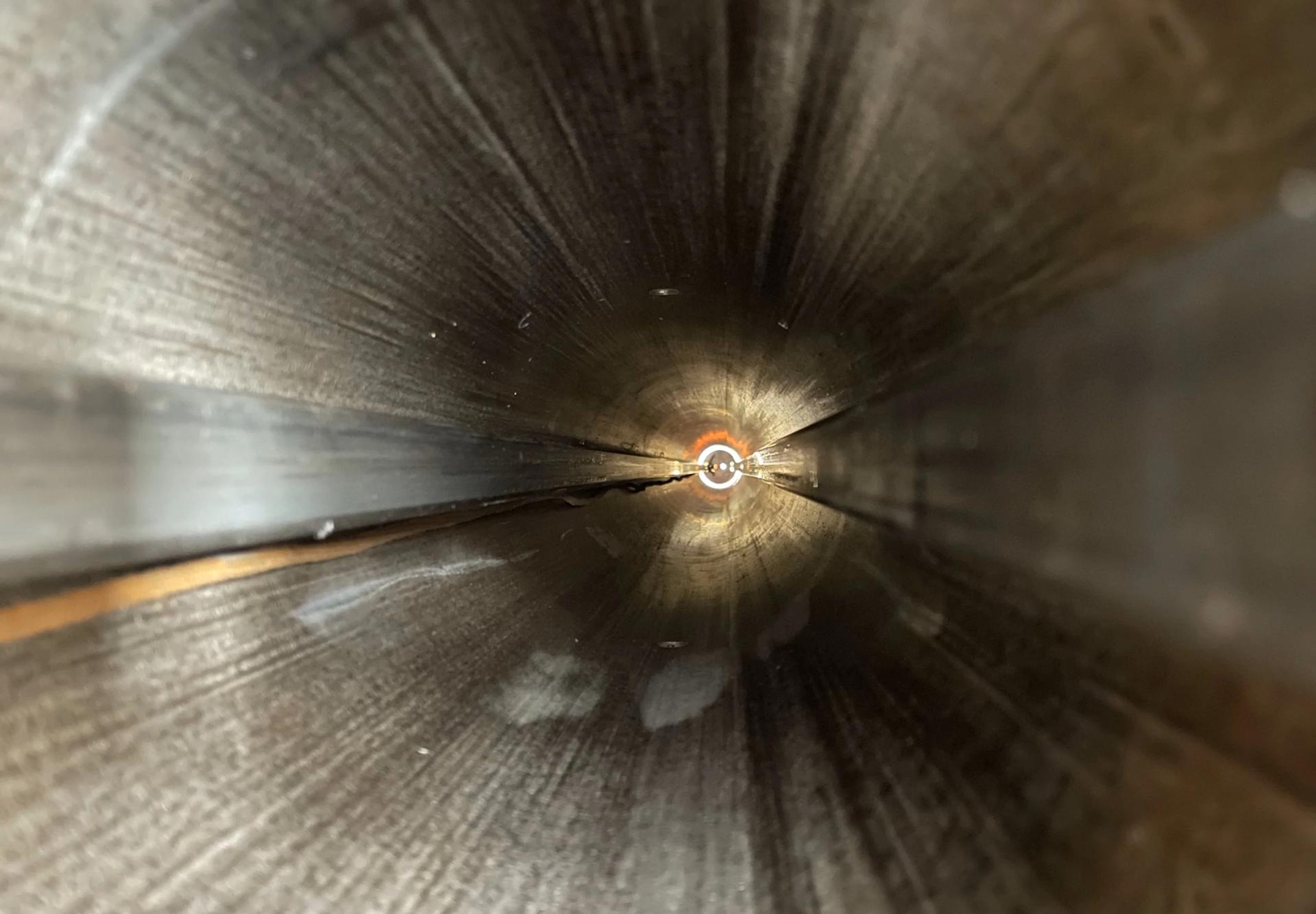
Longshot has currently built a functional 18-meter “reduced” prototype, consisting of an initial impulse stage and three booster sections. It has successfully launched a 15-centimeter diameter payload to Mach 4.2, completing over 100 test firings. The company’s next step is to finalize a 36.6-meter cannon with a 76-centimeter diameter. Ultimately, the CEO envisions a 40-kilometer-long cannon with a diameter exceeding nine meters.
While the project faces significant engineering hurdles, Longshot remains optimistic. Even if space launch proves unfeasible, the technology could attract interest from the military for other applications. The development underscores the ongoing search for innovative and cost-effective methods of accessing space.
