
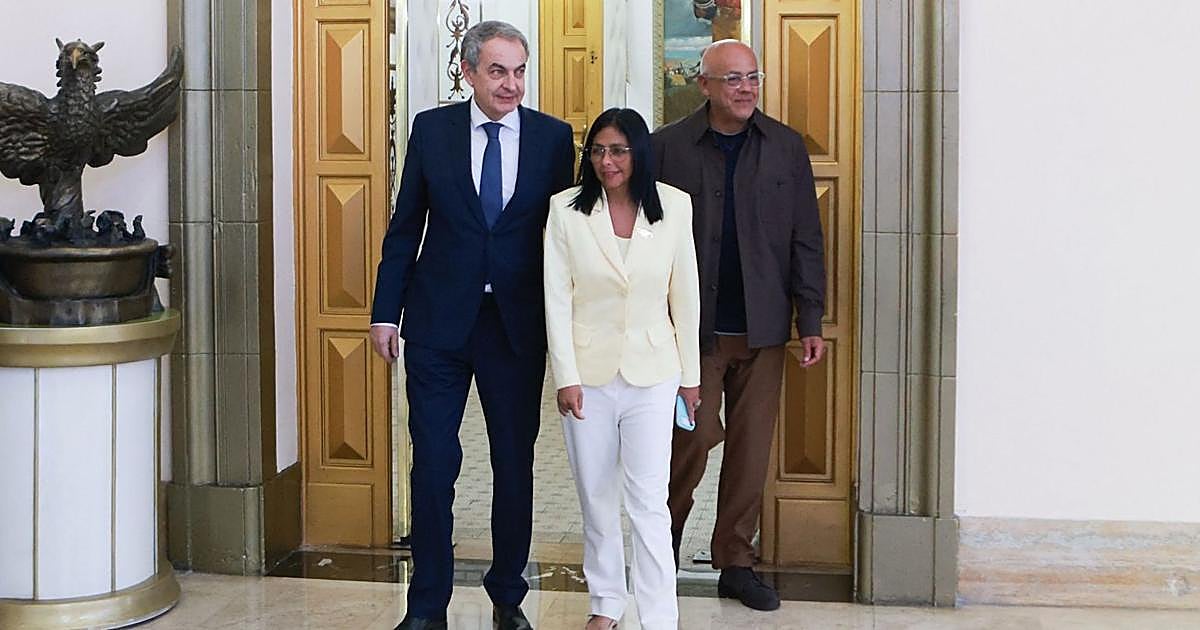
Spain’s Diplomatic Gamble: Inviting Venezuela’s Delcy Rodríguez to Madrid Summit Sparks Backlash
Spain’s government is facing a diplomatic storm after announcing it will invite Venezuela’s Vice President Delcy Rodríguez to the upcoming Ibero-American Summit in Madrid next November, despite European Union sanctions and widespread criticism from within Spain and across the bloc.
The decision, confirmed by Foreign Minister José Manuel Albares, has ignited a fierce debate in Spain and the European Parliament. While Madrid argues that Rodríguez represents Venezuela’s international standing, European lawmakers—including Spanish Socialists—have rejected the plan, insisting that sanctions against Rodríguez for human rights violations and election interference must remain in place.
The European Parliament, in a vote on September 19, 2024, overwhelmingly supported a resolution to maintain sanctions on Venezuelan officials obstructing democratic processes and violating human rights. The measure passed with 425 votes in favor, 131 against, and 63 abstentions, reflecting broad consensus on the need to isolate figures like Rodríguez.
Critics in Spain, including opposition parties and some within the ruling Socialist Party, have accused Prime Minister Pedro Sánchez and Albares of undermining EU unity and sending mixed signals on democracy and human rights. The controversy underscores the delicate balancing act Spain must perform as it seeks to host a major regional summit while navigating its complex relationship with Venezuela and the EU.
Albares defended the invitation, stating that Spain extends invitations to those who hold official representation for their countries, regardless of personal controversies. However, the move has drawn sharp rebuke from the European Parliament, where a majority of Spanish Socialists voted to uphold sanctions against Rodríguez, according to early reports.
The Ibero-American Summit, scheduled for November in Madrid, is set to bring together leaders from 22 countries across Latin America, Europe, and the Caribbean. The inclusion of Rodríguez, a figure at the center of international sanctions, promises to cast a shadow over the event and test Spain’s diplomatic influence on the world stage.
As the summit approaches, the question remains: Can Spain reconcile its desire to host a successful regional gathering with its obligations to uphold international law and human rights standards?
Why It Matters
The debate over Rodríguez’s invitation highlights the growing tensions between diplomatic protocol and human rights concerns in international relations. For Spain, the summit is an opportunity to reinforce its role as a mediator in Latin America, but the inclusion of a sanctioned official risks alienating key allies and undermining its credibility on the global stage.
“Se invita a quien tiene la representación internacional de cada país.”
