
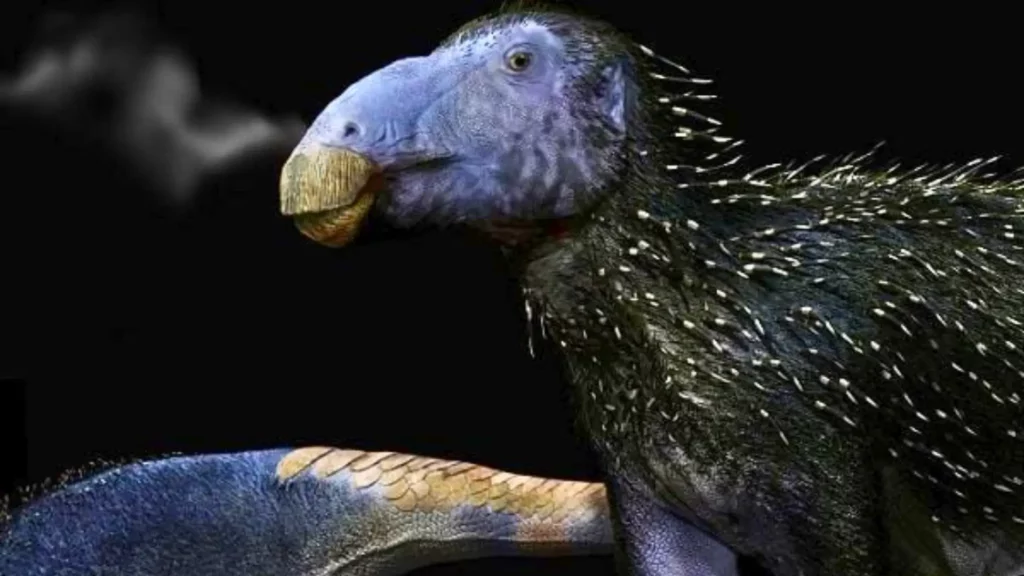
What if we told you a seemingly docile herbivorous dinosaur sported genuine, horned spikes on its skin? Surprising, right? That’s the revelation from a recent discovery in China, forcing researchers to rethink what they thought they knew about dinosaur appearances.
Fossil Discovery in China Challenges Two Centuries of Dinosaur Classification
For nearly two centuries, scientists have generally pictured dinosaurs from the Iguanodontia group as fairly typical herbivores – large-bodied with scaled skin and lacking dramatic defensive structures. This long-held view has been a mainstay in textbooks for generations. This discovery highlights how paleontological understanding is constantly evolving with new evidence.
However, the discovery of a fossil in China, dating back 125 million years, is now challenging that established understanding. The remarkably well-preserved remains belong to a juvenile individual and its skin reveals unexpected characteristics for this group of dinosaurs.
Advanced Imaging Reveals Dinosaur Skin at a Cellular Level
Researchers didn’t rely on traditional observation methods to reach these conclusions. Instead, they employed precise analytical tools capable of revealing the internal organization of fossilized tissues without causing damage. Utilizing high-energy X-rays and thin histological sections, scientists were able to identify readable skin cells – a level of preservation that is exceptionally rare for dinosaurs.
This level of detail confirms that the observed structures are not artifacts or post-mortem deformations, but rather authentic biological elements integrated into the animal’s skin. The ability to analyze fossilized skin at a cellular level represents a significant advancement in paleontological techniques.
Horned Spikes on a Herbivore: Defense, Thermoregulation, or Unknown Functions?
The presence of hollow, cornified spikes distributed across a large area of the body immediately raises questions about their purpose. The most intuitive hypothesis is deterrence – these structures likely discouraged smaller predators.
However, researchers are considering other possibilities. For example, these structures could have aided in thermoregulation, increasing the surface area for heat exchange with the environment. A sensory role hasn’t been ruled out either.
A Reminder That Science Advances by Constantly Questioning Its Certainties
this Chinese fossil serves as a fundamental reminder: in science, no certainty is absolute. Even well-studied groups can still reveal unexpected adaptations. This discovery also underscores the importance of new technologies, which allow details invisible just decades ago to come to light.
The fact that the specimen is juvenile further complicates interpretation. Were these spikes temporary? Did they develop further with age? Or were they dependent on a specific developmental stage?
