
Following the 2025 murder of actress Diala al-Wadi, a new tragedy has struck Syria’s artistic community: actress Hoda shuaraoui was found dead in her Damascus home on Thursday, January 30, 2026. Initial reports suggest Shuaraoui, known for her role in the popular series “Bab al-Hara,” was killed by her Ugandan domestic worker, as authorities continue to investigate the circumstances surrounding her death. This latest incident highlights a disturbing pattern of violence against women in Syria, and a legacy of risk faced by figures within the country’s arts scene.
Syrians are still reeling from the 2025 murder of actress Diala al-Wadi when, on Thursday, January 30, 2026, news broke of the discovery of the body of actress Hoda Shuaraoui, murdered inside her home in the Bab Sreeja neighborhood of Damascus. Al-Wadi (who held both Iraqi and British citizenship) was strangled following an armed robbery at her home in the Malki district of Damascus, while Shuaraoui, initial investigations suggest, was killed by her Ugandan domestic worker.
The killings of Syrian actresses recall the 2021 stabbing death of actress Raefa Ahmed in the Netherlands at the hands of her psychologically disturbed husband, and the 2014 murder of Kurdish actress Shinda Khalil, who was beheaded in Denmark by her brother after refusing to lend him money. These tragedies highlight a disturbing pattern of violence against women in the entertainment industry, and beyond.
The death of singer Ruba al-Jamal (1966-2005) in mysterious circumstances also comes to mind. The Aleppo-born singer of Armenian descent met a similar fate. Despite the ambiguity surrounding her death at the time, those close to Zovinas Garabedian (her real name) claimed that figures within the inner circle of the Assad regime had introduced her to heavy heroin use. Her mental state deteriorated on stage, and after a performance at the Ebla Sham Hotel where she refused to sing for a powerful figure, she was taken to the women’s prison in Douma (rural Damascus) on drug charges. It is said she died of heartbreak within the prison walls after suffering a severe health crisis. Al-Jamal’s funeral was held in silence at the Armenian cemetery in the Syrian capital, without official attendance or farewells from her fellow artists.
Artist Sahar, a Victim of Ba’athist Officers
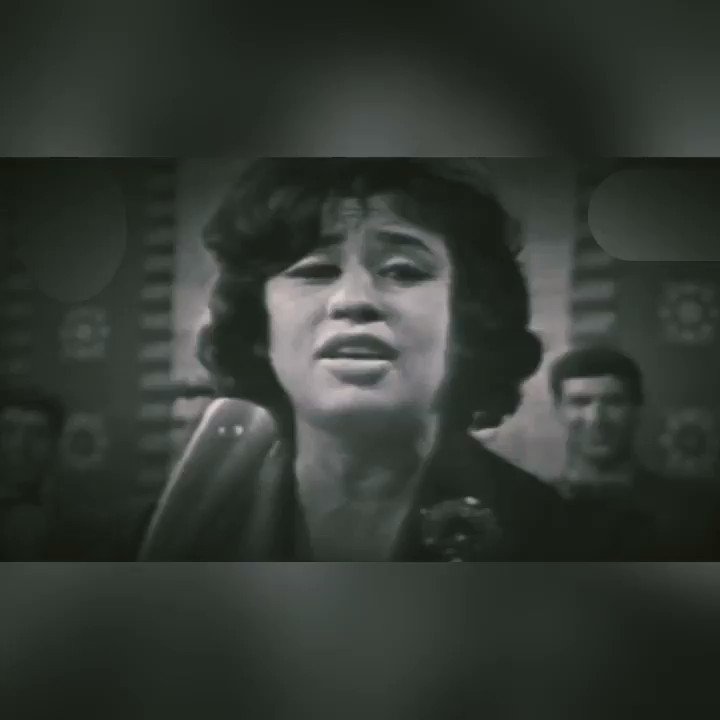
Syrian artist Sahar, a victim of Ba’athist officers (social media)
A similar fate befell singer Sahar in 1981, who died inside the Samiramis Hotel in Damascus after refusing to comply with a request from an officer close to Rifaat al-Assad (brother of President Hafez al-Assad) to sing for him. An associate of the officer from the Defense Brigades detonated a bomb that killed her and several attendees and musicians playing behind her. A grim record of Syrian artists dying violently or under mysterious circumstances has continued for decades, a complex file intertwined with criminal and political elements. This situation has taken on a heightened security dimension following the fall of President Bashar al-Assad’s regime in December 2024, especially as the country has seen murders targeting women from all walks of life. The violence wasn’t limited to stars of the entertainment world, extending to teachers, university professors, and doctors, most recently Dr. Amal al-Bustani, founder and director of “Aseel for Textiles.”
Dancers were also targeted, with armed assailants attacking the Al-Krouan nightclub in central Damascus in May 2025, killing one dancer and injuring another. Performers at another venue, “Layali al-Sharq,” were also subjected to abuse during the same month. These incidents place a heavy burden on the country’s fledgling security forces and are prompting many stars of the entertainment world and their colleagues to refrain from working within the country. Filming of several Syrian television dramas has moved to Lebanon, including the series “Sa’adat al-Majnoun” directed by Saif Subei’i, “Mawlana” directed by Samer Barqawi, and “Al-Khuruj ila al-Bir” directed by Mohamed Lotfi.

The Syrian artist Diala al-Wadi, who was killed (social media)
Even after 88 years, the circumstances surrounding the drowning of her car in a canal remain controversial. This refers to Asmahan (1912-1944), whose death is often speculated to have been orchestrated rather than accidental, particularly after the daughter of Jabal al-Arab was revealed to have collaborated with the British against the Vichy French government in Syria and Lebanon. Amal al-Atrash (her real name) remains one of the most discussed Syrian artists regarding the circumstances of her death, with the drowning of her vehicle in the 1940s being a prime example of the intersection of criminal activity and intelligence operations, and a reminder of many women who have fallen into the same trap.
Asmahan, the Victim
Asmahan’s story echoes that of Margarita Gertrude Zelle (1876-1917), known as “Mata Hari,” the Dutch dancer who was one of Europe’s most famous spies during World War I. Mata Hari documented her life in an autobiography before being executed by firing squad by the French after being discovered as a double agent for German intelligence. Thus, the Kathakali dancer met her fate after believing she was playing a game of hearts, becoming a victim of the great powers’ game in a war she had mastered the arts of the body for.
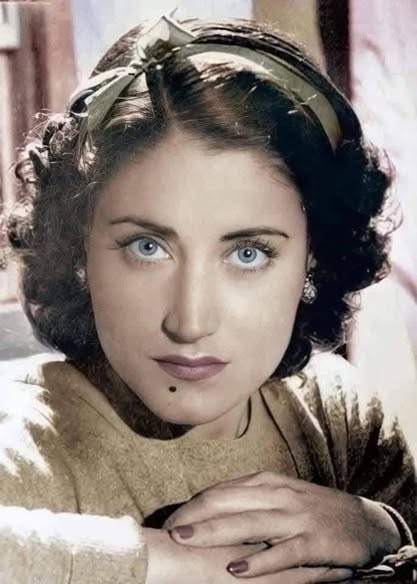
The singer Asmahan (social media)
The Syrian artistic community was shocked by the circulation of video footage from the crime scene of actress Hoda Shuaraoui’s murder, found lying in a pool of blood after being struck on the head while sleeping in her bed. Shuaraoui began her artistic career at the age of nine when actor Anwar al-Baba (“famous for the character of Um Kamal”) took her to record a child’s voice for a variety show on Damascus Radio. Since then, the star of “Bab al-Hara” has remained a fixture in the artistic scene within her country, and was among the first girls from Damascus to challenge conservative customs and traditions. Despite opposition from her family to her daughter’s work in the field of acting, Shuaraoui remained determined to pursue a world of fame and lights, establishing a presence in numerous works, most notably “Bab al-Hara” in the role of the midwife Um Zaki, in addition to roles in works such as: “A’ilat Sab’ Najum,” “Shari’ Chicago,” “Zaman al-Burghuth,” “Rijal al-‘Azz,” “Awdat Ghawar,” and “A’ilat al-Malik.” She appeared early in films from the private sector, including “Harat al-Anater,” “Tafaddal Mamnu’ al-Dukhol,” “Shati’ al-Hubb,” “Gharam al-Muharrij,” and “Ghabat al-Dhi’ab,” in addition to working in films from the General Organization for Cinema, where she played unforgettable roles in films, most notably with Mohamed Shahin in his film “Al-Shams fi Yawm Gha’im” based on a novel by the late Hanna Mina.
Read More
This section contains related articles, placed in (Related Nodes field)
The Syrian Artists Syndicate mourned the late artist, issuing a statement saying: “The Artists Syndicate in the Syrian Arab Republic mourns with great sadness the death of the great artist Hoda Shuaraoui, whose life was taken by treachery this morning between five and six o’clock, according to a report from the Criminal Security, which is still investigating the incident of her murder. The maid who worked for her is missing, which points the finger of accusation at her, and the investigation is still ongoing. This loss is a great loss for the Syrian and Arab art movement. To God we belong and to Him we shall return,” while a number of her colleagues wrote eulogies on “Facebook,” with actor and director Ayman Zeidan saying: “Your departure didn’t hurt me, Hoda, but the way you left did. What painful endings. A woman whose dreams were to leave in peace. She didn’t even get to dream of a safe departure. May your kind soul rest in peace.”
