
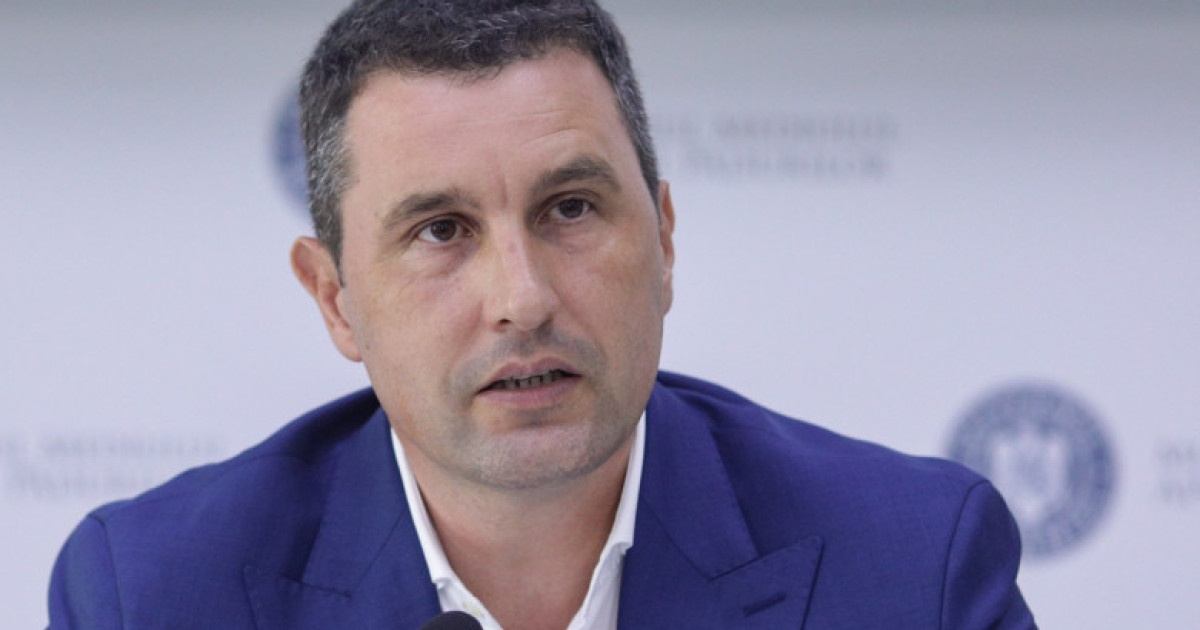
Romania‘s Deputy Prime Minister Tanczos Barna on Tuesday downplayed concerns over the recent increase in Value Added Tax (VAT), asserting its impact on consumer spending will be temporary. Barna attributed current inflationary pressures too a combination of the VAT hike, the phasing out of energy subsidies, and rising natural gas prices . Despite projections of economic difficulty in 2026 from President Nicușor Dan, Barna expressed optimism for a significant decrease in inflation by the second half of that year.
Deputy Prime Minister Tanczos Barna says the impact of the VAT increase on consumer spending is temporary, and that rising prices were also driven by the elimination of energy subsidies and increased natural gas rates. However, the official assures that the combined effects, which have contributed to increased inflation, will ease over the next two to three months. The Deputy Prime Minister also expressed optimism about Romania’s economic recovery, stating, “I believe that in the second half of 2026 we will already see inflation fall very sharply – we are talking about a very abrupt decrease.”
VAT Increase Has Temporary Impact on Consumption
The Deputy Prime Minister explained that the VAT increase will not have a lasting impact on consumption in Romania.
“Any VAT increase initially generates a reduction in consumption – it’s an effect that passes after the first two months. Things return to normal. The problem in Romania today is that the VAT increase was compounded by the elimination of those electricity subsidies. Natural gas prices have risen, and a 21% VAT has been applied to electricity. These factors overlapped and increased inflation, which in turn led to a reduction in consumption. These things are obvious, and they will improve in the next 2-3 months,” Tanczos Barna said.
The reduction in VAT revenues from September is a cyclical and seasonal effect, the minister added.
“I recommended to those who enjoyed the revenues obtained in August to wait for the months and the cyclicality, because if someone boasts about increasing VAT in August, they will have to explain why it decreased in September. October already means much more – so they have returned to a growing trend. (…) But we must also consider one element: these differences of 5, 10 or 15% increase – decrease in VAT can be easily juggled with VAT refunded and VAT not refunded. Because if VAT is not refunded immediately upon request and is postponed for a month or two, it appears as a plus. This is what happened in December last year – refunds were moved to January 2025, and that’s what happens if, instead of 2 billion that were refunded almost monthly, you go down to 1 billion – that billion will certainly appear as a plus – but you have to know that in a month or two you have to refund more VAT,” Tanczos Barna explained.
“I asked my colleagues not to slam on the brakes, that is, to refund VAT that is correctly refunded, to intensify controls for VAT refunds, to reduce the risk of fraud, tax evasion, illegal, incorrect refunds,” the Deputy Prime Minister added.
The Ministry of Finance announced Monday evening that VAT revenues in the period July-September were approximately 35.48 billion lei, out of a total of 94.75 billion lei for the first 9 months of 2025. Furthermore, compared to the period January – September 2025 vs. 2024, over 2/3 of the additional VAT revenue compared to last year was generated in July-September. ANAF collected 12,556.82 million lei in VAT in August and 12,207.44 million lei in September. The Ministry of Finance argues that August is traditionally one of the months with the lowest level of economic activity, hence the reduced revenues, despite the VAT increase from August 1st.
On Romania’s Economic Recovery: The Deputy Prime Minister: “I am Optimistic”
President Nicușor Dan recently announced that 2026 will be a difficult year, and Romania’s economic recovery will not come until 2027. Tanczos Barna has a slightly different outlook.
“I am a little more optimistic. I believe that in the second half of 2026 we will already see inflation fall very sharply, even a sharp decrease. Somewhere after five or six months we can already have a positive impact in terms of reducing inflation. Also, consumption will rebound. There was this shock to the economy in July-August, when there were also tax increases and price increases for certain goods, services, energy and so on. But after we get through this period, I believe we can lay the foundations for solid and healthy economic growth. But, once again, public spending must be at least limited, the state must cost the citizen less. If we fail to achieve an immediate reduction of 10%, 15% at least, we must keep it at a certain level so that the number of employees does not increase,” the Deputy Prime Minister explained.
Editor : C.A.
