
A 13-year-old boy in the United Kingdom suffered burns after attempting to warm a can of compressed air with a lighter, mistakenly believing its frigid temperature indicated frozen contents. The incident, reported by The Sun adn other outlets, underscores the potential dangers of aerosol can misuse and highlights a critical gap in public understanding of their properties. Medical experts are now stressing the need for increased education regarding the flammability of these common household products, especially among young people.
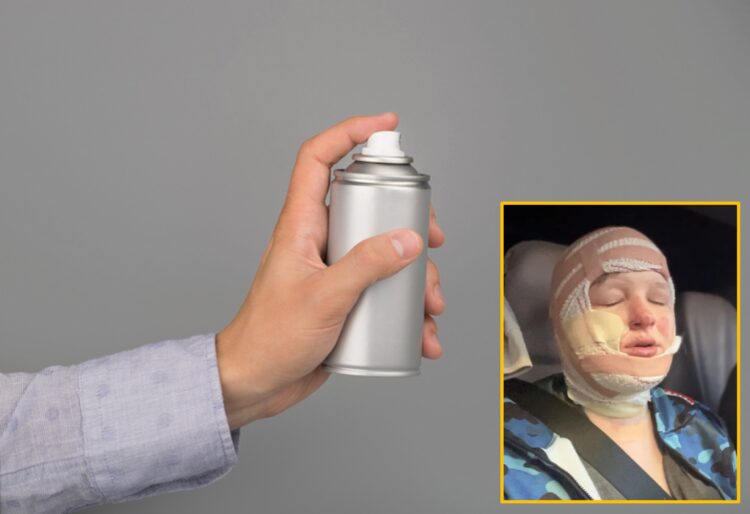
A 13-year-old boy in the United Kingdom sustained burns to his face, neck, and hands after trying to warm up a can of compressed air with a lighter, highlighting the dangers of misinterpreting how aerosol products function. Medical professionals are emphasizing the importance of home safety education following the incident.
According to reports from the British newspaper The Sun and other news outlets, Joe Mitchell of Petersfield, Hampshire, believed a can of compressed air he was using to clean a gaming console was empty. When he sprayed the can and felt an extremely cold sensation, he mistakenly thought the contents were frozen.
Attempting to thaw the can, Mitchell held a lighter near it. The flammable gas already released from the can ignited when it came into contact with the flame, causing a fire that quickly spread to his clothing.
Although the flames were extinguished in less than 10 seconds, Mitchell suffered burns covering approximately 4% of his total body surface area. He was transported to Salisbury District Hospital, where he received treatment for the burns, including the removal of some damaged skin. His burns were classified as superficial, and he was discharged after four days of hospitalization.
Medical staff stated that the boy’s father’s quick actions – immediately removing his clothing and cooling the burns with water – were critical in limiting the severity of the injuries. Current burn treatment guidelines recommend immediate cooling with cool, running water for at least 20 minutes to minimize tissue damage and reduce the risk of scarring.
Heating Aerosol Cans Poses Serious Burn Risk
Experts are warning that aerosol products contain pressurized, liquefied gases like butane, propane, and difluoroethane, and it’s crucial to understand this characteristic. These gases are in a gaseous state at room temperature but are stored as liquids inside the can, and are rapidly released as a gas when the spray button is pressed.
This rapid expansion causes a significant drop in temperature as the gas absorbs heat from its surroundings – a phenomenon known as “vapor cooling.” As a result, the nozzle, can surface, or anything the spray contacts can feel intensely cold, sometimes even forming frost. This is a normal part of how the product works, not a sign of a malfunction or freezing.
This strong cooling sensation can lead people, especially young individuals, to mistakenly believe the contents are frozen. Because people are accustomed to applying heat to melt cold objects, they may incorrectly attempt to warm up an aerosol can, which is a dangerous mistake. The contents of an aerosol can are not frozen solids, but highly flammable liquefied gases. Contact with a lighter or flame can instantly ignite the released gas, causing a fire.
The risk is even greater if the sprayed gas lingers in the air or adheres to clothing fibers. Flammable gases can spread quickly across surfaces and ignite, potentially causing flames to travel rapidly towards the face, head, and upper body. Burn specialists explain that even brief exposure in these situations can lead to facial burns or damage to the airway.
Professionals caution that attempting to heat or use any aerosol product near an open flame is a high-risk behavior that can cause explosions and severe burns. They also note that adolescents may misapply everyday experiences – such as the logic that cold things can be thawed with heat – leading to dangerous decisions. Clear education about the physical properties and flammability of aerosols is needed to prevent similar incidents.
