
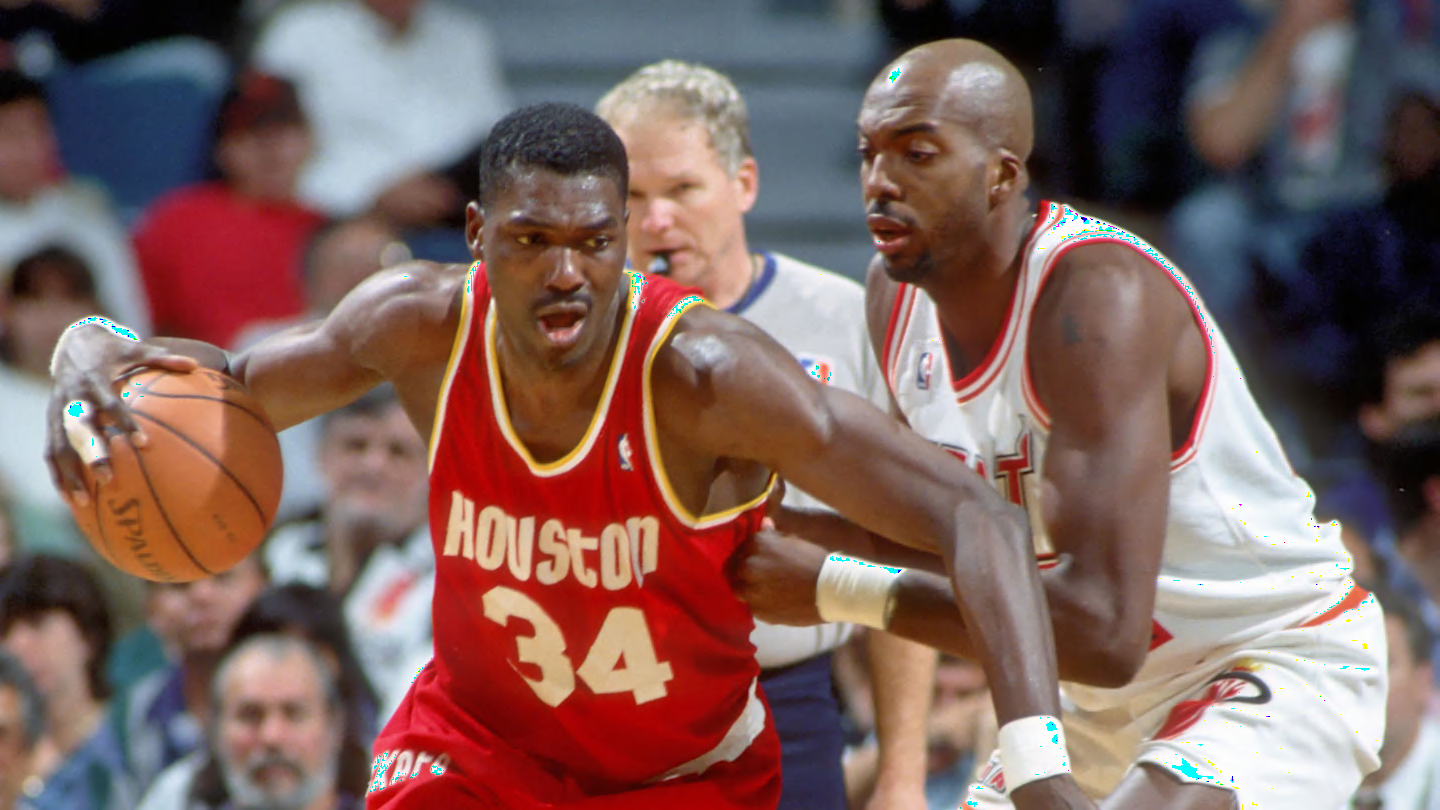
Can an underdog really win it all? Relive the improbable 1995 Houston Rockets championship run and how it defied NBA norms,setting the stage for future trends. This article analyzes the team’s improbable journey and identifies how their resilience, strategic adjustments, and reliance on key players provide valuable insights applicable to today’s NBA, revealing what the 1995 Houston Rockets foreshadowed about the ever-evolving landscape of professional basketball.
The Underdog’s Ascent: Analyzing the 1995 Houston Rockets and Future NBA Trends
The 1995 houston Rockets, a team that defied the odds, provides a engaging case study in NBA history. Their journey from a struggling regular season to a championship victory as a sixth seed is a testament to resilience, strategic adjustments, and the impact of key players. This article delves into the Rockets’ remarkable run and explores the potential future trends it foreshadows in the ever-evolving landscape of professional basketball.
The Seeds of Success: How the Rockets Overcame the Odds
The Rockets’ 1995 season was a rollercoaster. After a strong start, internal issues and a mid-season trade for Clyde Drexler reshaped the team. Despite finishing as the sixth seed, they possessed a championship pedigree, led by MVP Hakeem Olajuwon. Their playoff run was a masterclass in overcoming adversity, defeating higher-seeded teams like the Utah Jazz, Phoenix Suns, and San Antonio Spurs.
This underdog story highlights the importance of:
- Leadership: Olajuwon’s dominant performance was crucial.
- Adaptability: the mid-season trade and strategic adjustments were key.
- Team Chemistry: Overcoming internal challenges and fostering a cohesive unit.
The Rockets’ success underscores that while regular season seeding matters, it doesn’t guarantee playoff success.
The Rise of the “Superteam” and its impact
The Rockets’ victory came at a time when the concept of “superteams” was still evolving. Today, the NBA is often defined by teams built around multiple superstars. The 1995 Rockets, while having a core of talented players, weren’t a traditional superteam. This raises questions about the future of team building.
Will we see more teams prioritizing a deep roster with versatile players, or will the trend of assembling star-studded lineups continue? The answer likely lies in a balance of both.
Did you know? The Golden State Warriors, with their core of Stephen Curry, Klay Thompson, and Draymond Green, are a prime example of a modern dynasty that blended superstar talent with a strong supporting cast.
The Role of Analytics and Strategic Adjustments
Modern NBA teams heavily rely on data analytics to inform their strategies. The rockets’ success, while not driven by advanced analytics in 1995, highlights the importance of making strategic adjustments during the season and in the playoffs.
Today, teams use data to:
-
Optimize player rotations.
-
Identify and exploit opponent weaknesses.
-
Make in-game adjustments based on real-time data.
The future will likely see even more sophisticated use of analytics, perhaps leading to more unexpected playoff runs.
Pro tip: Keep an eye on how teams are using data to make in-game adjustments. This can provide valuable insights into their strategies and potential for success.
The Global Game and the Evolution of Talent
The NBA is a global league, with players from all over the world. The Rockets’ success, led by Nigerian-born Hakeem Olajuwon, foreshadowed the increasing international influence on the game.
Today, players from Europe, Africa, and other regions are integral to manny NBA teams. This influx of diverse talent is changing the style of play, with a greater emphasis on:
-
Versatility.
-
skill.
-
Adaptability.
The future of the NBA will likely see even more international players rising to prominence, further diversifying the league and making it more competitive.
The “Clutch City” Legacy and the Mental Game
The Rockets earned the nickname “Clutch City” for their ability to perform under pressure. This highlights the importance of mental toughness and resilience in the playoffs.
In the future, we can expect to see:
-
More emphasis on sports psychology.
-
Mental training for players.
-
Teams prioritizing players with strong mental fortitude.
The mental game will become increasingly important in determining playoff success.
The Future of the NBA: A Look Ahead
The 1995 Houston Rockets’ championship run offers valuable insights into the future of the NBA. The league will likely continue to evolve,with a greater emphasis on:
-
Strategic adaptability.
-
Data-driven decision-making.
-
The global influence on talent.
-
The mental game.
While the top seeds often dominate, the Rockets’ story reminds us that anything is possible.
Reader Question: What do you think is the most important factor in determining a team’s success in the modern NBA? Share your thoughts in the comments below!
