
Neurological health is increasingly a focus of public interest, driven by advancements in treatment and understanding of the brain, according to leading neurologist Conrado Estol. In a new interview with National Geographic, Dr. Estol-a prominent figure in Latin American neurology with over 170 publications-discusses the evolving field and shares insights from his latest research, including a captivating case study involving a survivor of the 1972 Andes flight disaster. His work explores the remarkable capacity of the human brain to survive against seemingly insurmountable odds and the interplay between physiology, circumstance, and sheer will.
A leading neurologist with over 170 scientific publications to his name, Conrado Estol is a prominent figure in the field in Latin America. He received his medical training in both Argentina and the United States, and in 1988, he treated some of the world’s first patients with thrombolytic drugs for stroke – a condition that remains a leading cause of death and disability globally.
Beyond directing the Breyna Center, specializing in vascular disease prevention, and the Xtend Longevity clinic, Dr. Estol is widely recognized for his ability to communicate complex medical information to the public. In a recent video call, he noted a growing trend in recent years: increased public interest in brain health and neurological conditions.
“There’s much more talk about neurology now for two reasons,” Dr. Estol explained. “First, there have been significant advances in neurological diseases. Previously, neurologists were seen as men with beards and pipes who passively observed patients, but now there are treatments. Twenty years ago, there were zero treatments for Alzheimer’s disease, and now there are doors opening. The same is true for multiple sclerosis or stroke, which is the second leading cause of death in the world. The second reason is the development of neuroscience, which fascinates everyone because it ‘explains’ how we act.”
His latest book is based on a scientific study published in The Lancet in 2006. The case study centers on Nando Parrado, one of the survivors of the 1972 Andes flight disaster.
“It all started after hearing him speak at a conference, and I thought this person should be dead,” Dr. Estol recounted. “He was in the last row of the plane – there was nothing behind him, and everyone in his row died, including his mother, sister, and best friend.”
Like assembling a puzzle, Dr. Estol connected the pieces: a head injury from the plane’s impact, 72 hours of unconsciousness, and an unexpected awakening on the third day. This case highlights the remarkable resilience of the human brain and the complex interplay of factors that can influence survival.
National Geographic: Was this a miracle?
Conrado Estol: “Something like that, which is why I called the book ‘The Other Miracle.’ Let me explain the theory: the head injury caused a skull fracture, which acted as decompression. The impact caused brain inflammation, as can happen with an ankle or the face. Many people die because when the brain swells, it hits the skull and can’t expand outward, damaging vital centers. His friends said his head was like a pumpkin. I speculated about the fracture and felt an irregularity on the right side when I touched him, which was the fragmented skull. He says he could feel fragments moving in his head. He also had black eyes, like bruises, which is a classic sign of a skull fracture. I confirmed this with a CT scan in 2008.”
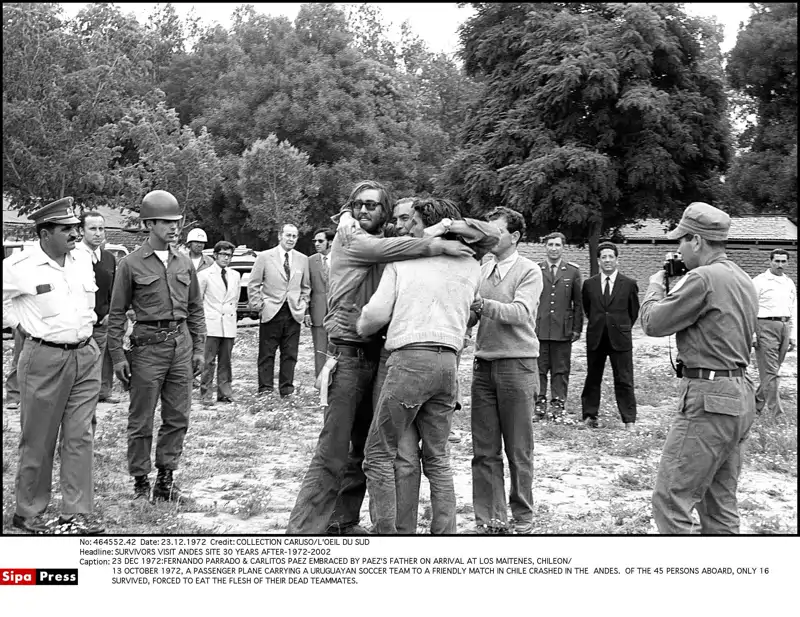
With a fractured skull and after being in a coma for 72 hours, Nando Parrado was one of the Andes survivors who walked through the mountains until he found people.
National Geographic: The book also mentions that it was an advantage that his companions believed he was dead.
Conrado Estol: “Because they thought he was dead, they left him at the entrance of the fuselage on the snow, where he was exposed to sub-zero temperatures. Hypothermia protects the brain. Metabolism, the body’s and the brain’s oxygen and energy requirements, decreases. Therefore, it consumes less oxygen and can survive longer. There’s a case of a little boy who was revived after being underwater for 2 hours in Canada because hypothermia protects neurons. Additionally, they restricted his water intake, which was good because hydration contributes to swelling. And finally, being in a coma meant he wasn’t agitated, as often happens after a head injury, which causes increased oxygen consumption. That’s why we often induce comas in people with strokes to keep them sedated and reduce oxygen demand. In conclusion, in 1972, before the invention of intensive neurological care, nature produced a fracture that decompressed the inflamed brain, caused hypothermia, and helped his organs withstand more time, reduced fluid, and kept him in a coma so his body didn’t demand more oxygen.”
It sounds incredible. Listening to you, I think the body is more prepared to survive than one might think.
Conrado Estol: “I would say yes, but we can also add the mental part. A 20-year-old believes he is immortal. That’s why young people do crazy things. And I think that helps. If the plane had ordinary passengers, they would all have died. They had to be young people with a purpose in life and optimism, which gave them energy for 72 days in the mountains.”
Are young people more health-conscious today?
Conrado Estol: “In the United States, the population segment that invests the most in health is Gen Z and Millennials because they know they are going to live to 99 years old and don’t want to be like those who are that age today. You have to start in your 20s, 30s, and 40s. It’s never too late. Many studies have been published showing that people over 75 who do what they need to do will have a greater life expectancy and with more quality.”
What habits do you find in patients who visit a longevity clinic?
Conrado Estol: “I confirm what a Mayo Clinic study showed: less than 5% of people follow healthy lifestyle habits. Almost everyone has excess fat, from severe to moderate. A very high percentage of young people have undiagnosed high blood pressure. A longevity clinic today is predictive, preventative, and precision medicine. You want the patient to avoid those diseases that kill people.”
There is a great interest in neuroscience and sleep, what do you usually recommend?
Conrado Estol: “Humans need to sleep 7 hours. That seems to be the magic number. This is a study from the UK Biobank on one million people. Less increases mortality. We sleep 7 hours and dream 25% of the time. It’s very restorative, processes emotions, and consolidates memories. Interestingly, chimpanzees sleep 10 hours and have only 5% REM sleep. We could speculate that we have evolved compared to a chimpanzee because we need to sleep less and have more REM.”
How is sleep in the modern era?
Conrado Estol: “In the 17th century in the United Kingdom, people would wake up, go back to sleep, wake up again, read, have intimacy, and go back to sleep. The internet is on 24 hours a day. We need to figure out how to fit the amount of activities and effectiveness because sleep is non-negotiable. On the other hand, artificial intelligence appears, which makes you more effective and creative. Changes are happening very quickly. You have to sleep before midnight in total darkness. There are studies published in scientific journals about the importance of not having even a minimal light. The light from the router in the bedroom that illuminates you at night increases the risk of cardiovascular problems and arrhythmias. Eye masks and blackout curtains can help. I would also say it’s important to eat away from bedtime, in the American style. Food should be light, and be careful with drinks: preferably nothing with caffeine and it’s best to avoid sugary drinks and alcohol. After that, exercise during the day and meditation help reduce stress, which we all have to some degree.”
What is your routine at 65?
Conrado Estol: “I get up at 6 a.m. and I’m in the gym at 7 a.m. I do 35 minutes of weights and cardio, and then I do 30 minutes of swimming to increase oxygen consumption, which is called VO2 max. I spend the whole morning in an intensive care unit with patients with strokes and arrive at my medical center at 1 p.m., where I stay until 7:30 or 8 p.m. On weekends, I mix tennis and cycling with spending time with my children, writing, and preparing conferences, books, or scientific articles.”
