

Chinese Automakers Showcase AI and Smart Tech at 2026 Beijing Auto Show
BEIJING — The 2026 Beijing International Auto Show kicked off on April 24, becoming a battleground for Chinese automakers to flaunt their latest advancements in artificial intelligence, smart driving, and high-efficiency powertrains. Two of the country’s largest automotive groups, SAIC Motor and Jianghuai Automobile Group (JAC), stole the spotlight with groundbreaking product launches and technology demonstrations that underscored their push toward global leadership in intelligent mobility.
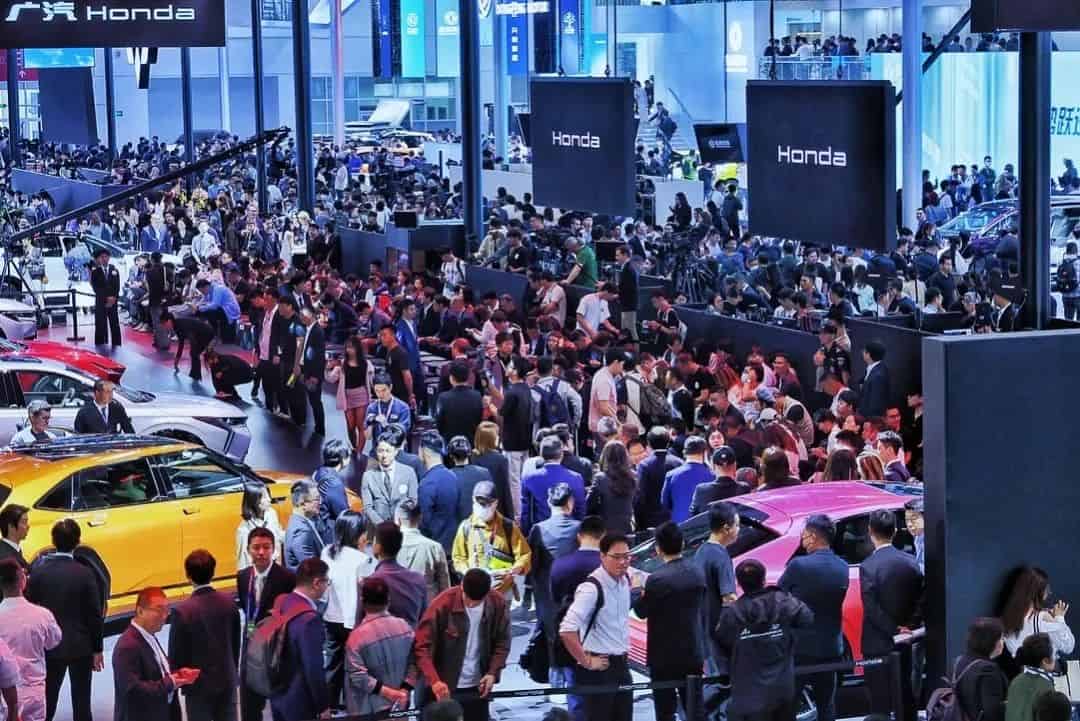
With over 1,451 vehicles on display and 181 world premieres, this year’s show marked a shift away from traditional concerns like range anxiety toward a fierce competition in smart technology and user-centric innovation. Industry observers noted that the event reflected a broader trend: Chinese automakers are no longer playing catch-up but are now setting the pace in defining the future of automotive intelligence.
SAIC Motor Bets on “Understanding the User” with Smart Tech Ecosystem
SAIC Motor, one of China’s automotive giants, made a bold statement at the show by emphasizing its philosophy of “understanding the car and understanding you.” The company showcased a diverse lineup of over 100 vehicles, each designed to integrate cutting-edge intelligence tailored to modern consumers.
At the heart of SAIC’s strategy was a deep collaboration with leading tech partners. The IM LS8, a flagship electric SUV, stood out with its adoption of Momenta’s latest “Flywheel” AI model, paired with a 520-line laser radar and NVIDIA’s Thor chip. The vehicle also introduced an industry-first all-wheel steering system, previously reserved for ultra-luxury models, now democratized for mainstream markets. “This isn’t just about having the most advanced hardware,” a company representative said. “It’s about making sure that technology is accessible and meaningful to everyday drivers.”
SAIC’s partnership with Huawei also took center stage, with the Rising Z7 and Z7T models featuring Huawei’s full-stack smart driving solutions. The integration of HarmonyOS and the Qiankun ADS system was designed to align with the digital habits of younger consumers, offering seamless connectivity and intuitive interaction.
Meanwhile, the Roewe Jiayue 07 concept car offered a glimpse into the future of AI-driven mobility. Developed in collaboration with ByteDance’s Volcano Engine, the vehicle represents the first instance of a major automaker embedding a large language model directly into its decision-making architecture. The AI system is designed to learn from drivers’ habits and routines, evolving into a personalized co-pilot for daily commutes and long-distance travel.
JAC Unveils Industry-First AI Quality Inspection Model
Jianghuai Automobile Group (JAC) made headlines with its theme, “Technology JAC, Globally Connected Intelligence,” and a product lineup that showcased both innovation and practicality. The company introduced several high-profile models, including the Refine S800, the DEFINE-X and DEFINE-S concept cars, the Refine RF8 plug-in hybrid MPV, and the Hantu PHEV, a plug-in hybrid pickup positioned as the world’s first electric hybrid truck with 1,000 Nm of torque.
The DEFINE-X and DEFINE-S, built on JAC’s globally recognized DEFINE platform, highlighted the company’s focus on safety and intelligence. The DEFINE-S, with its supercar-inspired design and tri-motor powertrain, pushed the boundaries of performance, while the DEFINE-X combined rugged aesthetics with advanced autonomous driving features, including the latest version of JAC’s ADS system for effortless long-distance travel.
The Refine RF8 series targeted the family market with a focus on comfort, space, and efficiency. Equipped with a smart hybrid system and German-engineered chassis tuning, the MPV was positioned as a latest benchmark for value in the 200,000-yuan segment. Meanwhile, the Hantu PHEV pickup leveraged JAC’s proprietary 4DHT decoupled hybrid system, offering a blend of power and efficiency for both work and adventure.
JAC’s most significant announcement, yet, was the launch of the “Maist” CV Quality Inspection Large Model, the first AI-driven computer vision system for automotive quality control in the industry. The model is part of JAC’s broader strategy to enhance manufacturing precision and accelerate its transition toward world-class standards. “This technology is a cornerstone of our ‘15th Five-Year Plan’ for innovation and high-quality development,” a company executive stated. “It reflects our commitment to leveraging AI to drive excellence in every aspect of our operations.”
Smart Driving Takes Center Stage as Industry Shifts Focus
While previous auto shows often revolved around debates over range and battery technology, the 2026 Beijing Auto Show signaled a clear pivot toward intelligence. Pure electric vehicles now routinely offer ranges approaching 1,000 kilometers, with plug-in hybrids extending that figure to 1,500 kilometers. With those concerns largely addressed, automakers are now competing on the sophistication of their smart driving systems, in-car AI assistants, and user experience.
Foreign automakers were also present, but the narrative was dominated by Chinese brands pushing the envelope in smart technology. The show underscored how rapidly the domestic industry has evolved, transitioning from a focus on cost and efficiency to a new era defined by innovation and user-centric design. As one analyst noted, “The conversation has moved beyond hardware. It’s now about how intelligently a car can adapt to its driver.”
For SAIC and JAC, the Beijing Auto Show was more than just a platform to showcase new models. It was a declaration of their ambitions to lead the next wave of automotive innovation, both in China and on the global stage.
The 2026 Beijing Auto Show is in full swing! Chinese automakers are leading the charge in smart driving tech, with SAIC and JAC unveiling AI-powered innovations that redefine the future of mobility. #BeijingAutoShow #SmartMobility
— AutoInsider (@AutoInsider) April 25, 2026
