What to know about Iceland’s vote on whether to restart talks to join the EU
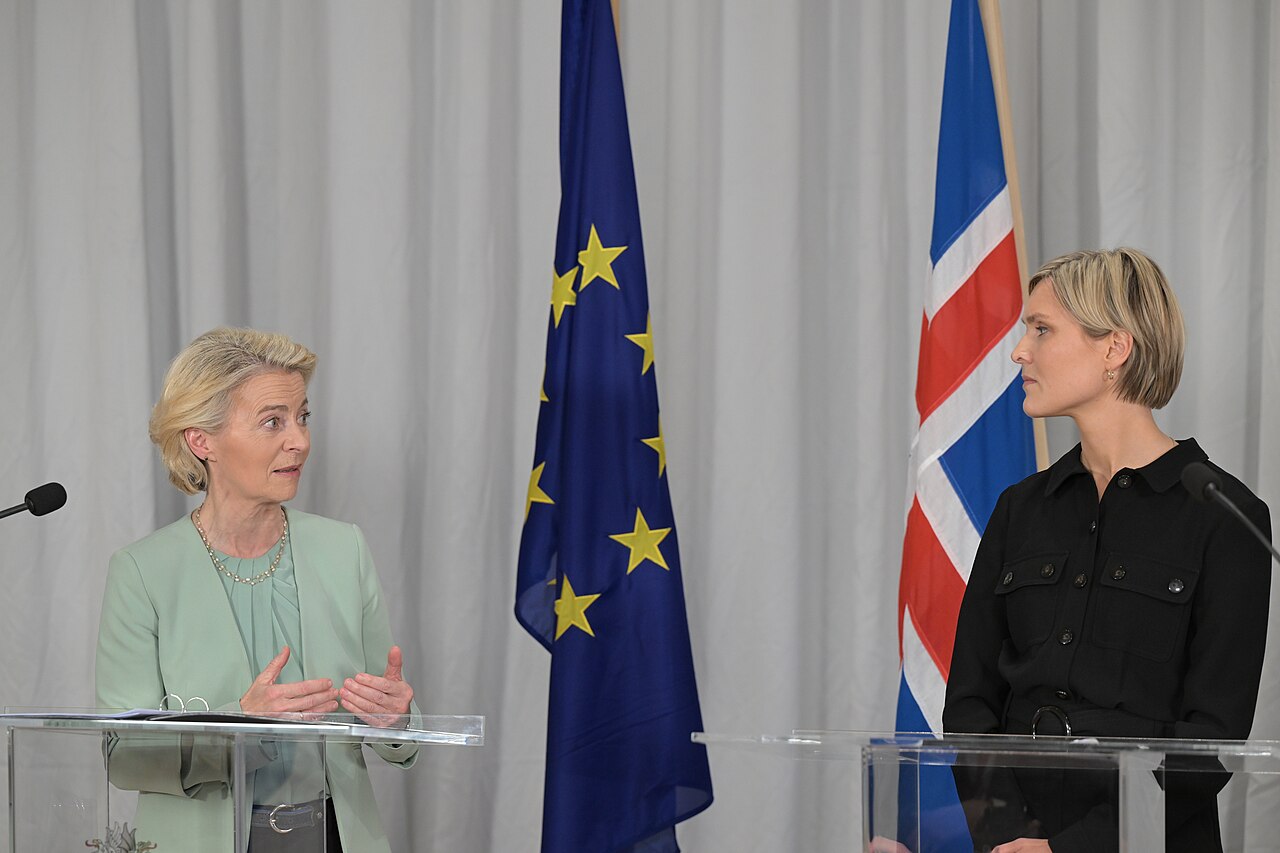
As Icelanders vote on EU talks, the shadow of a changing global order hangs over the island's cherished independence.
- Intelligence Anchor: What to know about Iceland’s vote on whether to restart talks to join the EU
- Core Takeaway: As Icelanders vote on EU talks, the shadow of a changing global order hangs over the island's cherished independence.
- Signal Velocity: 6 score across 8 independent media sources and 8 indexed articles.
- Forecast Model: Story predicted to decelerate within 24h.
The coverage curve
How fast coverage is spreading — measured hourly from article rate × source diversity. How this works →
The brief
For decades, Iceland has successfully charted its own course across the North Atlantic, maintaining control of its lucrative fisheries while participating in the European single market through the European Economic Area. Yet, as voters prepare to head to the polls in a high-stakes referendum, that comfortable status quo is being tested by new geopolitical pressures. Prime Minister Kristrun Frostadottir’s centre-left coalition government, elected in 2024, has framed the August vote as a critical moment to decide whether to restart formal accession negotiations with the European Union or shelve the prospect of full membership for the foreseeable future.
At the heart of the national debate lies a fundamental tension between economic insulation and security in an increasingly volatile world. Proponents of resuming talks argue that shifting international alliances and mounting security risks make being outside the bloc a vulnerability. That sense of unease has been sharpened by remarks from U.S. President Donald Trump, who repeatedly confused Iceland with Greenland while expressing territorial ambitions for the region. For many citizens, such unpredictable foreign policy shifts from a traditional ally have undermined trust. Pro-EU voices contend that deeper integration could insulate the country from geopolitical instability while offering the economic benefits of the stable euro currency and lower interest rates.
Conversely, opponents fiercely guard the sovereignty won from Denmark in 1944, viewing complete independence as the nation's most precious resource. Eurosceptic groups, led by voices like physics professor and Heimssýn chairman Haraldur Olafsson, argue that Iceland already enjoys the advantages of European integration without the bureaucratic drawbacks, making the surrender of law-making authority unnecessary.
Crucially, this week's ballot does not mean Iceland is joining the European Union. Even if a 'yes' vote prevails, any final agreement would likely face a second public referendum. For now, a nation of four00,000 people stands at a historical crossroads, weighing whether the protection of a larger alliance outweighs the solitary independence that has defined modern Icelandic identity.
Synthesized by headlinez.news from the headlines below under a strict no-invention contract. ✓ fact-checked: unsupported claims removed (74% supported) Updated 46d ago.
Coverage (8)
- What to know about Iceland's vote on whether to restart talks to join the EU bnnbloomberg.ca · 46d ago
- What to know about Iceland's vote on whether to restart talks about joining European Union PBS · 46d ago
- Iceland EU Vote Bluefield Daily Telegraph · 46d ago
- Iceland’s E.U. Referendum, Explained Time Magazine · 46d ago
- Is Trump driving Iceland into the arms of Europe? The Times · 46d ago
- Fish, ships and sovereignty: Iceland weighs its European future Reuters · 46d ago
- Iceland's moment of reckoning: What the referendum means for the EU Euronews.com · 46d ago
- What to know about Iceland’s vote on whether to restart talks to join the EU AP News · 46d ago
Quick answers
Does a 'yes' vote mean Iceland is joining the EU?
No, the referendum only decides whether Iceland should resume formal accession negotiations with the European Commission.
Why did Iceland suspend its previous EU talks?
Talks were suspended in 2013 and ended in 2015 after the country's economy recovered from the financial crisis and negotiations stalled over fisheries.
What is Iceland's current relationship with the European Union?
Iceland participates in the EU single market through the European Economic Area and belongs to the Schengen free-travel zone, but has no seat at Brussels' decision-making table.
Will this trend continue gaining momentum or fade within 24 hours?
Cast your anonymous vote to register reader sentiment on news cycle velocity.
Related visual coverage
Automatically selected only when the subject entities match this story. Embeds remain hosted by their original platforms.
Iceland's moment of reckoning: What the referendum means for the EU
YouTube · euronews
Topics
From around our network
Related trends
IEA warns of ‘lost period’ in global oil demand
The IEA warns that global oil demand must drop further as the Iran war delays a market surplus until 2027.
Dutch central bank moves gold bars out of New York over ‘geopolitical unrest’
The Dutch central bank quietly shifted 86 metric tons of gold out of North America, citing rising global instability.
Spain ignores EU and prepares transfer of 500 migrant girls from Ceuta
Spain is challenging Brussels by preparing urgent mainland transfers for 500 vulnerable migrant girls stranded in Ceuta.
Nauru, the world’s third-smallest country, changes its name to Naoero
The Pacific island of Nauru has officially reclaimed its traditional name, Naoero, shedding a colonial-era phonetic modification.
Can China restrain Iran? Gulf states test Beijing's influence
Gulf nations are increasingly looking to Beijing to manage regional security, testing China's diplomatic leverage over Iran amid ongoing conflict.
EU opens call for seven 'gigafactories' to train AI technologies
The European Union has launched a €10 billion initiative to establish seven AI 'gigafactories' to compete with data infrastructure in the US and China.