Jupiter Occultation Times
A waning crescent moon will swallow Jupiter before dawn, then set it free an hour later—an 11‑year rarity for skywatchers east of the Rockies.
- Intelligence Anchor: Jupiter Occultation Times
- Core Takeaway: A waning crescent moon will swallow Jupiter before dawn, then set it free an hour later—an 11‑year rarity for skywatchers east of the Rockies.
- Signal Velocity: 14 score across 5 independent media sources and 5 indexed articles.
What happened
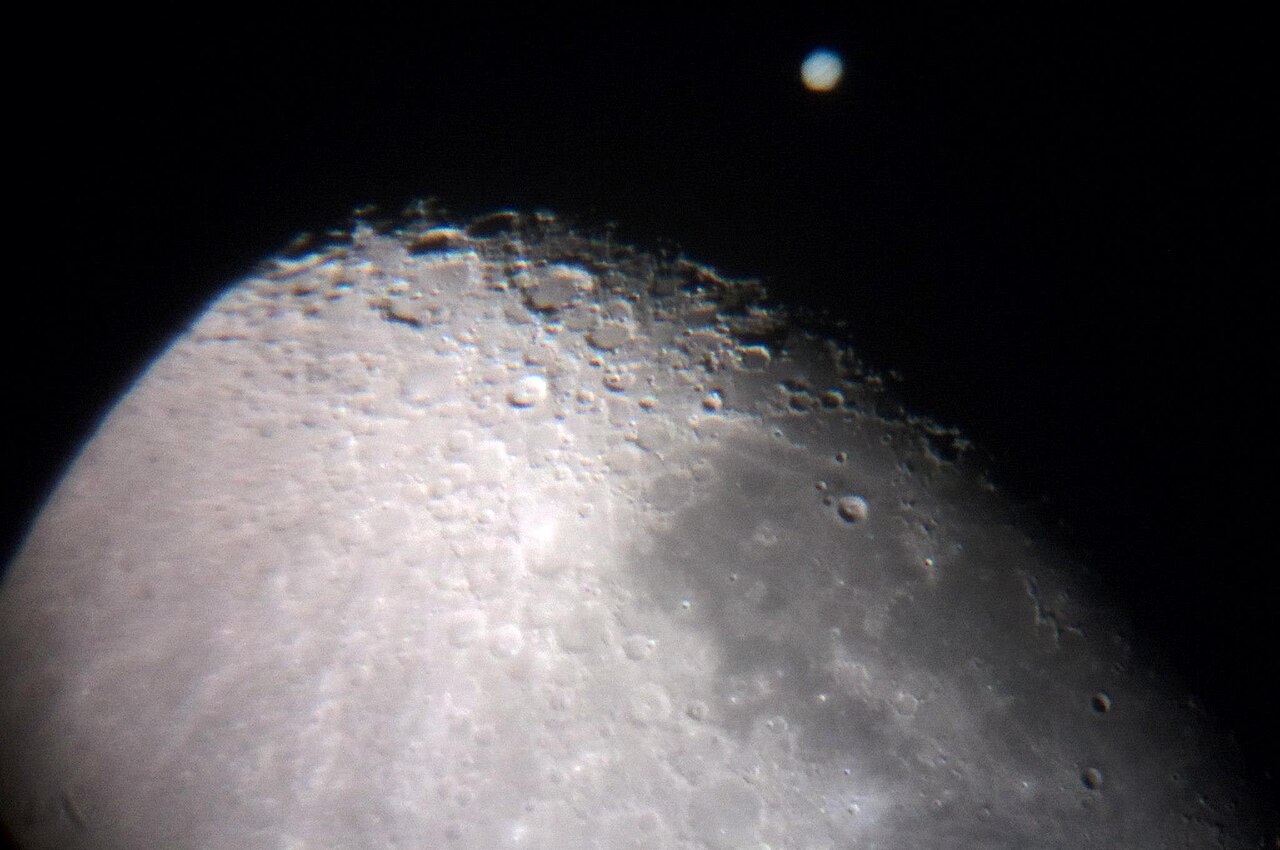
The night sky over eastern North America will host a celestial handshake that few will witness again for a decade. Within seconds Europa, Callisto, Io and finally the planet itself will slip behind the bright lunar limb, a choreography that takes about 65 seconds for the moon to cover Jupiter fully. For observers in the Caribbean and the eastern United States, the event will be visible to the naked eye because it occurs in the pre‑dawn twilight, when Jupiter shines at magnitude –1.7, outshining any star nearby.
In eastern North America the strip passes over populated regions, while across the Atlantic the same alignment unfolds in broad daylight for much of Africa, making naked‑eye viewing hazardous and impractical. Astronomers advise anyone aiming a telescope skyward to keep the Sun well out of the field of view; the Moon and Jupiter sit about 52° west of the Sun at the time, so improper pointing can lead to permanent eye damage. For the meticulous observer, a modest binocular or a long‑focus telescope will reveal each Galilean moon disappearing in succession, turning a simple disappearance into a dynamic lesson in orbital motion.
This occultation is not an isolated curiosity. It marks the second of eight lunar occultations of Jupiter that will unfold between October 2026 and May 2027, a short‑lived series that will then pause for eleven years until the next North‑American‑visible event on 27 November 2037. When the Moon is a waning crescent, its dark limb offers an especially striking backdrop for the bright planet, enhancing photographic opportunities. Astrophotographers can capture a time‑lapse of the planet’s disappearance against the Moon’s shadowed surface—a shot that simultaneously documents the motion of the moons and the lunar limb’s curvature.
Even outside the occultation path, the phenomenon provides a spectacular close conjunction: the Moon and Jupiter will rise together, appearing only a few degrees apart. This visual proximity opens a window for casual stargazers to photograph the duo, especially from locations where the full occultation is invisible. Consequently, anyone planning to watch should consult a reliable simulator like Stellarium for exact local contacts.
The broader implication is clear: a handful of hours this Tuesday will deliver a rare, low‑tech astronomical spectacle that can inspire both seasoned astronomers and curious beginners. As the Moon slides across the planet’s face, it reminds us how the solar system’s clockwork can produce fleeting moments of wonder, provided we look up at the right time and place.
Synthesized by headlinez.news from the headlines below under a strict no-invention contract. ✓ fact-checked: unsupported claims removed (75% supported) Updated 51m ago.
Questions people are asking
What are the exact disappearance and reappearance times for a major U.S. city?
In New York City Jupiter’s main body disappears at 4:22 a.m. and reappears at 4:25 a.m. local time.
Do I need a telescope to see the occultation?
No, the Moon and Jupiter are bright enough for naked‑eye viewing, but a telescope or binoculars greatly enhances the experience by showing each moon’s clip behind the lunar limb.
When will the next lunar occultation of Jupiter be visible from North America?
The next one observable from the continent will occur on 27 November 2037.
Who reported it (5)
- Jupiter and the moon meet Tuesday morning before dawn WTOP News · 7h ago
- Rare Sight Ahead! Watch the Moon Occult Jupiter on October 6th skyandtelescope.org · 7h ago
- The moon and Jupiter are about to do something that won't happen again for 11 years Live Science · 7h ago
- Don’t Miss The Total Eclipse Of Jupiter: The Sky This Week Forbes · 7h ago
- Jupiter Occultation Times spaceweather.com · 7h ago
Momentum
How fast coverage is spreading — measured hourly from article rate × source diversity. How this works →
Will this trend continue gaining momentum or fade within 24 hours?
Cast your anonymous vote to register reader sentiment on news cycle velocity.
Related visual coverage
Automatically selected only when the subject entities match this story. Embeds remain hosted by their original platforms.
MOON swallows Jupiter AGAIN😱(October 6, 2026) Lunar Occultation
YouTube · The Escape Edit: CTRL + ALT + ESCAPE
Topics
Related trends
Europa’s Hidden Ocean May Be Even Harder to Reach Than We Thought
New measurements indicate the ice shell covering Europa’s hidden ocean may be significantly thicker than previously understood.
Finding no evidence of life in Enceladus’s ocean could be almost as scientifically important as finding it — because a world with liquid water, internal heat, phosphorus and complex organic chemistry but no detectable biology would suggest that the ingred
New research evaluates the accessibility and biological potential of subsurface oceans on Jupiter’s moon Europa and Saturn’s moon Enceladus.
Juno takes temperature of Jupiter's fiery moon Io
NASA's Juno spacecraft has mapped subsurface heat on Jupiter's moon Io, identifying unexpected thermal signatures beneath the volcanic landscape.
An asteroid shattered near Jupiter’s gravitational gateway 800 million years ago; scientists say the debr
Scientific analysis suggests a massive asteroid fragmentation near Jupiter 800 million years ago triggered a significant bombardment of the inner Solar System.
See The Milky Way At Its Best As Planets Glow: The Night Sky This Week
July’s night sky offers rare celestial displays—from the Milky Way’s peak brilliance to planetary alignments
In 1610, Galileo spotted a small, smooth moon circling Jupiter and wrote it down; four hundred years later, scientists confirmed it likely holds the largest ocean in the solar system, buried under ice and never once touched by sunlight
Jupiter’s moon Europa’s hidden ocean just revealed its deepest secrets—400 years after Galileo’s first glimpse