Tesla plans $3.3 billion Cybercab boost for Germany's troubled auto sector
Tesla's €3 billion Cybercab bet in Grünheide arrives as German rivals shrink, but the 2029 start date and missing regulatory approvals make it a wager on a future that doesn't yet exist.
- Intelligence Anchor: Tesla plans $3.3 billion Cybercab boost for Germany's troubled auto sector
- Core Takeaway: Tesla's €3 billion Cybercab bet in Grünheide arrives as German rivals shrink, but the 2029 start date and missing regulatory approvals make it a wager on a future that doesn't yet exist.
- Signal Velocity: 28 score across 8 independent media sources and 8 indexed articles.
Velocity
How fast coverage is spreading — measured hourly from article rate × source diversity. How this works →
The story so far
Tesla announced Monday it will invest €3 billion ($3.3 billion) to expand its Grünheide Gigafactory near Berlin, adding a dedicated production building designed to build up to 1 million Cybercab robotaxis annually starting in 2029. The commitment runs counter to the retrenchment at Volkswagen, Mercedes-Benz and BMW, which are cutting jobs and idling plants as Chinese competition erodes their home market. Yet the timeline reveals the distance between announcement and reality: Tesla must file a building-permit application by year-end, begin construction in the first half of 2027, and then complete a factory capable of a novel vehicle type within roughly two years. André Thierig, Tesla's senior director of manufacturing for the site, called it the company's most technologically advanced plant on LinkedIn, but the permit process in Grünheide has a history of environmental challenges and public debate that could compress or stretch that window.
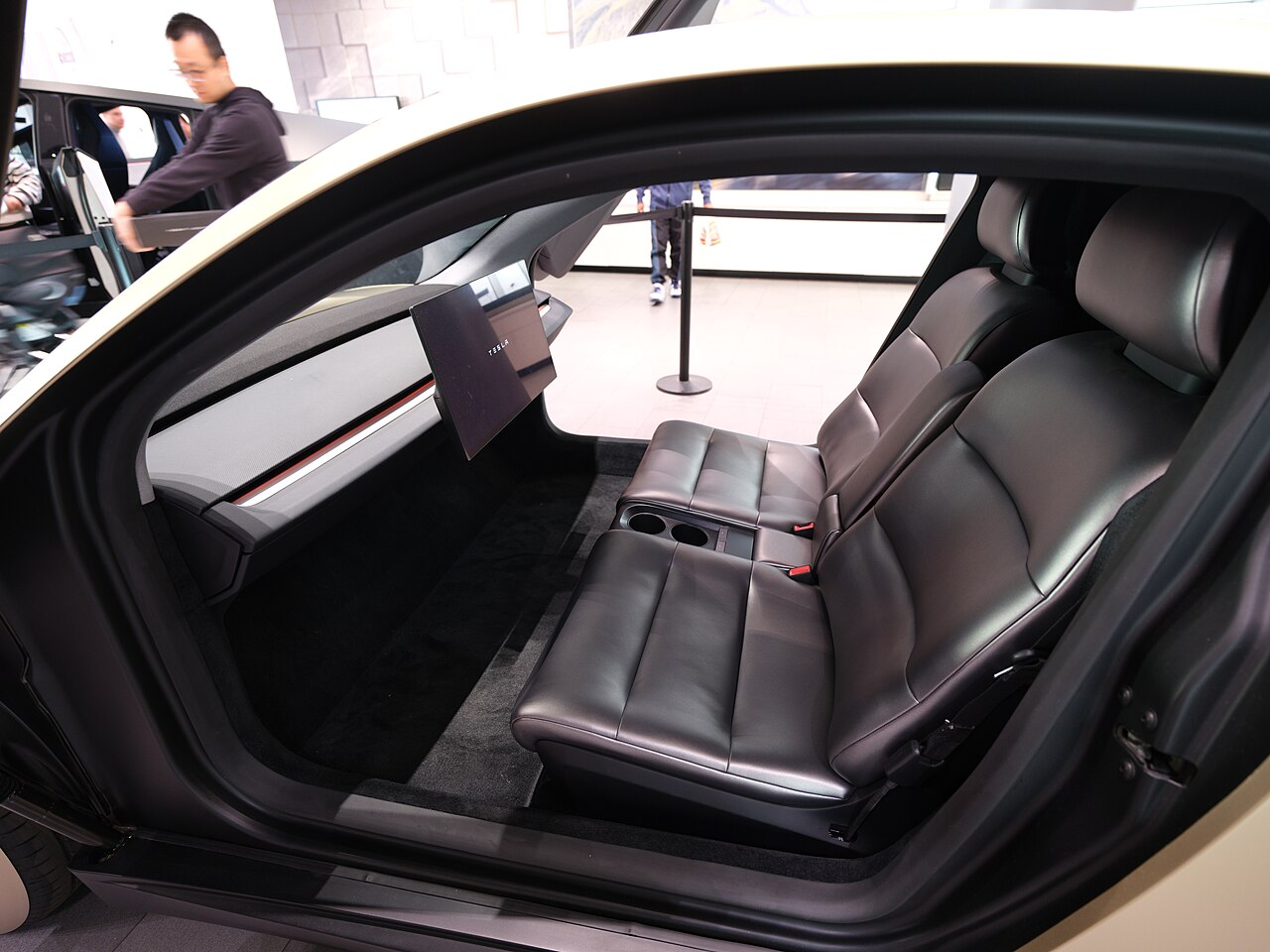
The Cybercab itself remains a regulatory orphan. The steering-wheel-free, two-seat vehicle launched publicly in the U.S. in September, but federal investigators are examining how Tesla self-certified it against safety standards that still require manual controls. In Europe, Tesla's supervised Full Self-Driving system — now rebranded as Tesla Assisted Driving — took more than 18 months to clear Dutch regulators and still lacks EU-wide approval. A German factory does not resolve where its output can legally operate. Meanwhile, Tesla is shrinking its conventional lineup: the Model S and Model X are retired, the Cybertruck is slated to end production in Texas by summer 2027 to make room for Cybercabs, and the cheapest Model Y variant was dropped this month. The Roadster, promised for 2028, fills a halo niche but not the volume gaps.
Analyst Matthias Schmidt framed the question that hangs over the investment: how much of the €3 billion translates into sustainable, long-term employment versus automated, low-labor production? Tesla says several hundred new workers will be hired for the first phase of construction and production planning, but the plant's design philosophy leans heavily on the "unboxed" manufacturing process Musk has described for the Cybercab — a radical simplification that could further reduce headcount per vehicle. The expansion also includes an additional wastewater-treatment plant, a line item that signals Tesla expects close environmental scrutiny after years of protests over water use at the site.
For now, the announcement is a capital commitment with a three-year fuse. The permit application due by December 31 is the first hard milestone. If German authorities move at the pace that defined the original factory's approval, the 2027 construction start could slip, pushing the 2029 production target further out. And even if the building rises on schedule, the Cybercab's commercial fate depends on solving autonomy at a level no regulator has yet blessed for driverless deployment at scale. Tesla is building a factory for a vehicle that cannot yet be sold in its most important markets, betting that the law will catch up to the hardware before the paint dries.
Synthesized by headlinez.news from the headlines below under a strict no-invention contract. ✓ fact-checked: all claims supported by sources Updated 14m ago.
The reporting (8)
- Cybercab Giga Berlin 2029: 0 Tesla Confirmations shattered.io · 6h ago
- Tesla to invest 3 bn euros to expand German factory Yahoo Finance · 6h ago
- Tesla to invest about €3 billion to build Cybercabs in Germany Quartz · 6h ago
- Tesla To Invest 3 Bn Euros To Expand German Factory Barron's · 6h ago
- Tesla goes all-in on the Cybercab with upcoming €3B Berlin Gigafactory expansion TechCrunch · 6h ago
- Tesla planning €3BN investment in German factory to produce Cybercabs DW.com · 6h ago
- Tesla to Invest Over $3 Billion to Expand German Factory in Cybercab Bet WSJ · 6h ago
- Tesla plans $3.3 billion Cybercab boost for Germany's troubled auto sector Reuters · 6h ago
The obvious questions
When will the first Cybercab roll out of the new Grünheide building?
Tesla targets 2029 for production start, but that depends on filing a permit application by December 31, 2026, and beginning construction in the first half of 2027 — a schedule with no margin for German permitting delays.
Can the Cybercab legally operate in Germany or the EU today?
No. The vehicle lacks a steering wheel and pedals, and Tesla's supervised driving system (now called Tesla Assisted Driving) only has national-level approval in the Netherlands after 18 months of review. EU-wide approval for driverless operation is still pending.
Why is Tesla building a dedicated wastewater-treatment plant as part of the expansion?
The Grünheide site has faced years of environmental protests over water consumption and contamination risks. Including a new treatment plant in the €3 billion budget signals Tesla expects regulators to impose stricter water-management conditions this time.
Will this trend continue gaining momentum or fade within 24 hours?
Cast your anonymous vote to register reader sentiment on news cycle velocity.
Related visual coverage
Automatically selected only when the subject entities match this story. Embeds remain hosted by their original platforms.
Tesla News - Berlin Ramp, Cybercab Specs, 16 GW Energy Deal
YouTube · Tesla News Daily Summary
Topics
Related trends
Tesla to axe Cybertruck as Musk shifts focus to robotics and AI
Tesla pulls the plug on the Cybertruck, swapping steel‑clad pickups for robotaxis and AI‑driven factories.
Tesla to wind down Cybertruck production at Texas factory as it struggles to win appeal
Tesla will halt Cybertruck builds at its Austin plant next summer, shifting the space to the new Cybercab robotaxi hopes.
Exclusive | Tesla Weighs Sale of China Business to Pave Way for Potential SpaceX Merger
Tesla is reportedly evaluating the divestiture of its China operations as part of strategic considerations regarding a potential merger with SpaceX.
EXCLUSIVE: Amazon's Zoox wins first US approval for paid robotaxis without human controls
Amazon subsidiary Zoox has received federal approval to operate and charge for robotaxi rides lacking traditional human driving controls.
Suspect arrested after 13 Teslas vandalized with 'Nazi' and 'fascist' writings, Irvine police say
An Irvine man is in custody following the targeted defacement of 13 Tesla vehicles with political graffiti.
Tesla's 2026.26 Summer Update Lets You Video Conference on Google Meet, Teams & Discord
Tesla's 2026.26 Summer Update integrates video conferencing platforms and introduces specialized terrain traction modes for select vehicles.