
Former President Donald Trump is signaling a sharp departure from diplomatic tradition by planning to personally curate the guest list for the next Group of 20 summit, and perhaps host it at his own Miami golf resort .The move, which already includes the announced exclusion of South Africa despite its current G20 presidency, raises questions about the future of the international forum and the potential for the U.S. to prioritize domestic political aims on the world stage. Concerns are mounting among G20 members as they weigh the implications of attending a summit potentially leveraged for political gain.
Former U.S. President Donald Trump has indicated he will personally decide who will be invited to the next Group of 20 (G20) summit, which he plans to host at his golf resort in Miami, Florida. The move raises concerns about a departure from established diplomatic protocols and the potential for the international forum to be used for domestic political purposes.
On November 26, Trump announced on social media that South Africa would not be invited to next year’s summit. The decision comes despite South Africa currently holding the G20 presidency this year, and follows previous expressions of dissatisfaction with the country.
Allowing a summit host to dictate attendance, and holding the meeting at a privately owned property, would represent a significant break from tradition. However, Trump has consistently demonstrated a willingness to disregard established norms and multilateral arrangements.
Related: South Africa Not Invited to Next Year’s G20, Trump Announces—Relations Sour
From left, former President Trump, Treasury Secretary Mnuchin, and Miami Mayor Suarez on September 5.
Photographer: Francis Chung/Politico/Bloomberg
The composition of the summit, including which nations will attend and which will be excluded, is now a central point of contention. Trump’s actions are placing other G20 members in a difficult position, forcing them to choose between potentially facing retribution – such as tariffs or trade restrictions – or demonstrating solidarity by abstaining from the event.
German Chancellor Scholz commented on November 27 that the G20 “remains one of the most important multilateral forums in the world.” He also criticized the U.S. government’s absence from the recent G20 summit in Johannesburg, stating that “the United States unnecessarily relinquished influence in a part of the world where its importance is growing.”
South African officials had anticipated the possibility of being excluded from the summit, which is slated to be held at Trump National Doral in Miami. There are concerns within the government that the U.S. may seek to completely remove South Africa from the G20 altogether.
However, any changes to the G20’s membership require unanimous consent from all member nations, mirroring the process that led to the inclusion of the African Union as a permanent member in 2023.
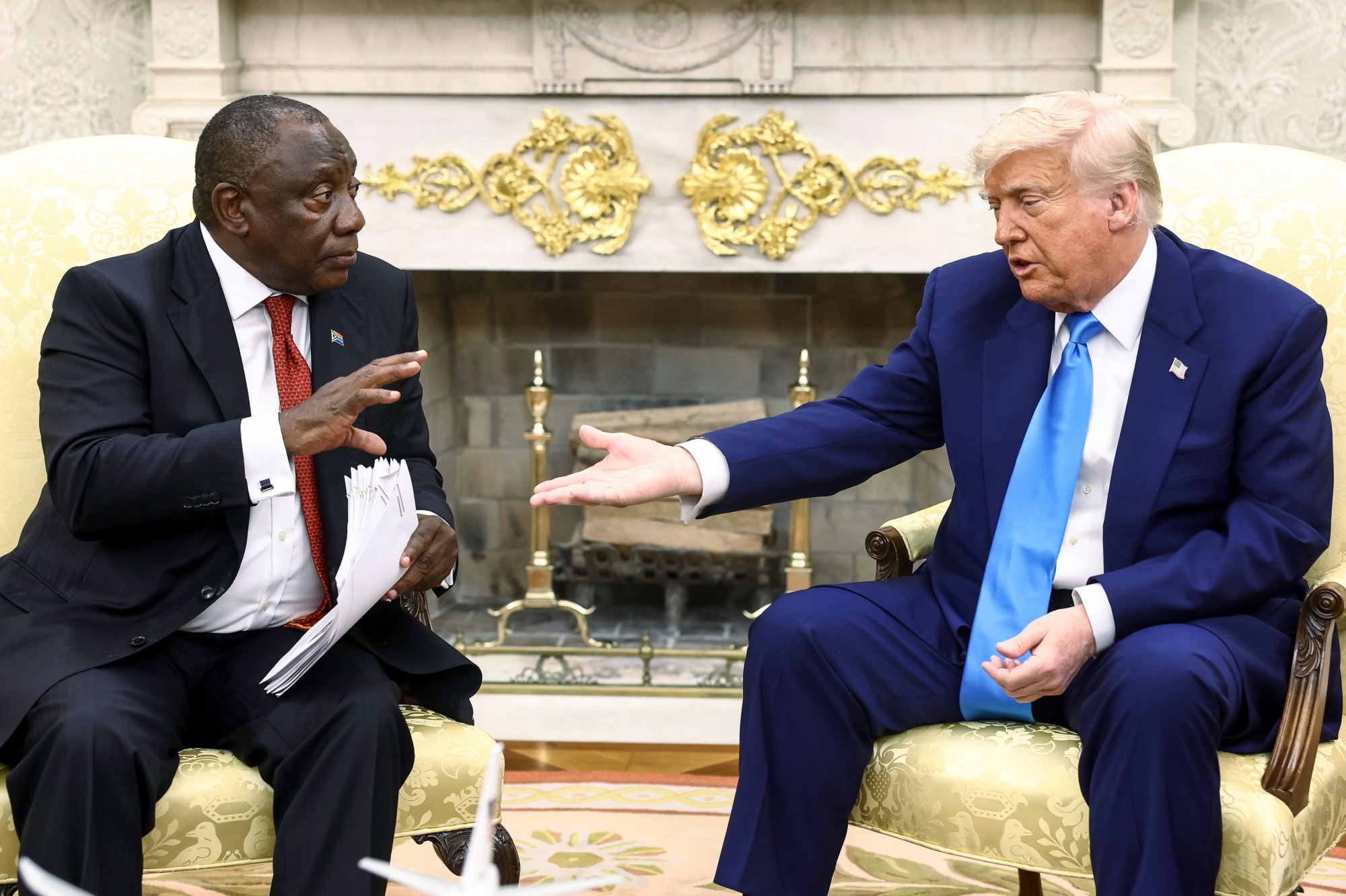
Former President Trump (right) and President Ramaphosa (May, White House)
Photographer: Jim Lo Scalzo/EPA/Bloomberg
Trump has repeatedly promoted unsubstantiated claims of a “genocide” of white people in South Africa. During a May visit to the White House, South African President Ramaphosa attempted to persuade Trump to stop spreading the conspiracy theory, but Trump reportedly showed him videos supporting his claims.
The treatment of South Africa underscores Trump’s tendency to leverage U.S. international standing for domestic political gain. The South African presidency issued a statement expressing “regret” over Trump’s remarks, stating that it “does not appreciate being lectured to by other countries on matters of global platforms.”
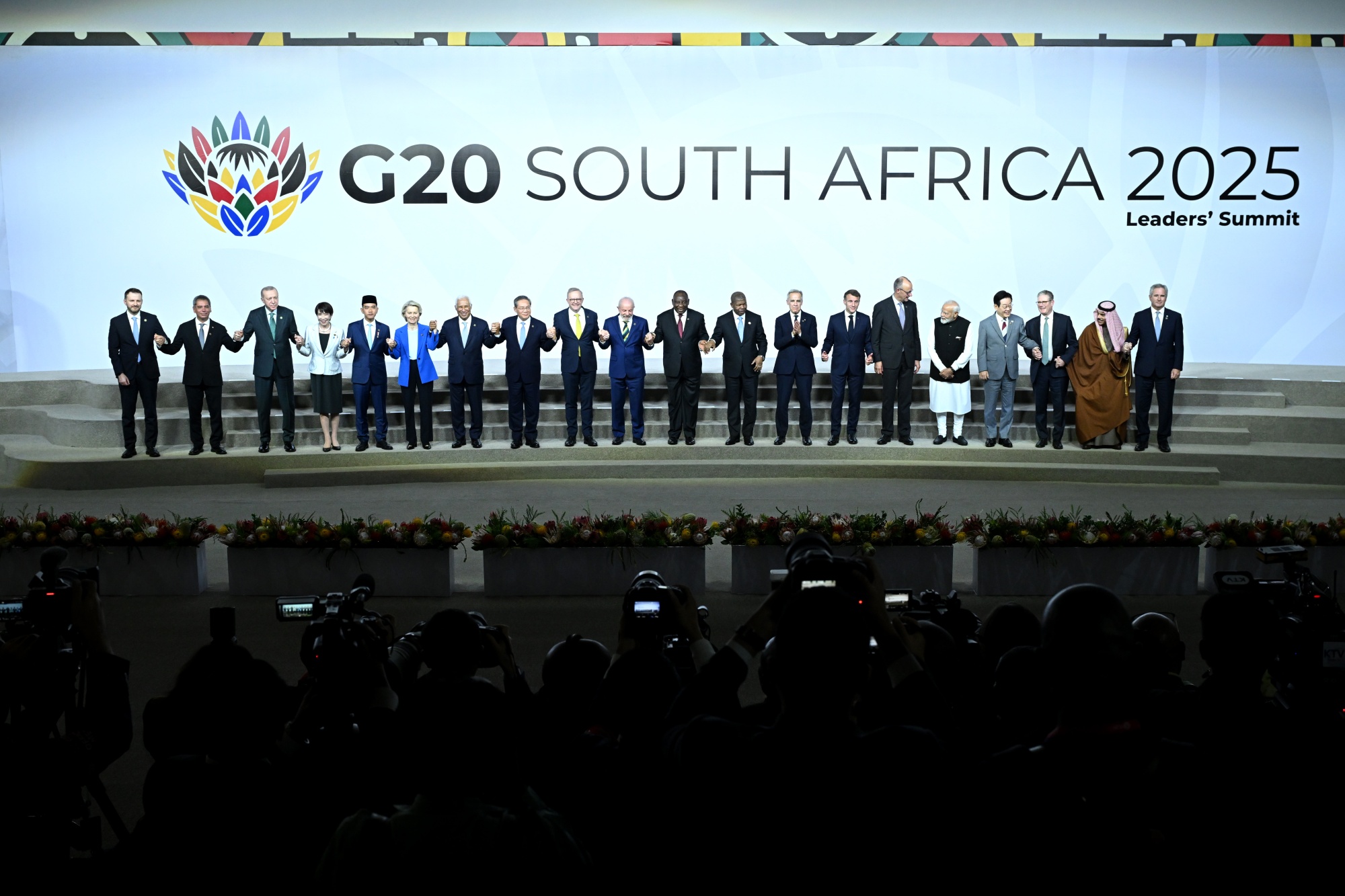
A group photo of leaders attending the G20 summit in Johannesburg.
Photographer: Leon Neal/Getty Images
As Scholz suggested, Trump’s actions could have wider repercussions. Further damaging relations with the Global South could play into the hands of countries like China and Russia, both members of the BRICS economic bloc, which Trump has frequently criticized.
The method by which the U.S. would prevent attendance remains unclear, though the State Department could potentially deny visas to officials wishing to attend. Regardless, Trump’s behavior demonstrates a disregard for consideration of other governments and aligns with his vision of reshaping the world order to suit his preferences.
The U.S. recently suggested it could allow Russia to rejoin the Group of Eight (G8) as part of a 28-point peace plan to end the war in Ukraine, surprising Ukraine and its allies. U.S. and Russia Propose 28-Point Ukraine Peace Plan—Many of Putin’s Demands Accepted Russia was expelled from the G8 in 2014 following its annexation of Crimea.
Poland, which has long sought G20 membership, is among the countries that could benefit from Trump’s approach. Trump stated in September that he would invite the country’s right-wing nationalist president, Duda, to next year’s summit, and praised him extensively.
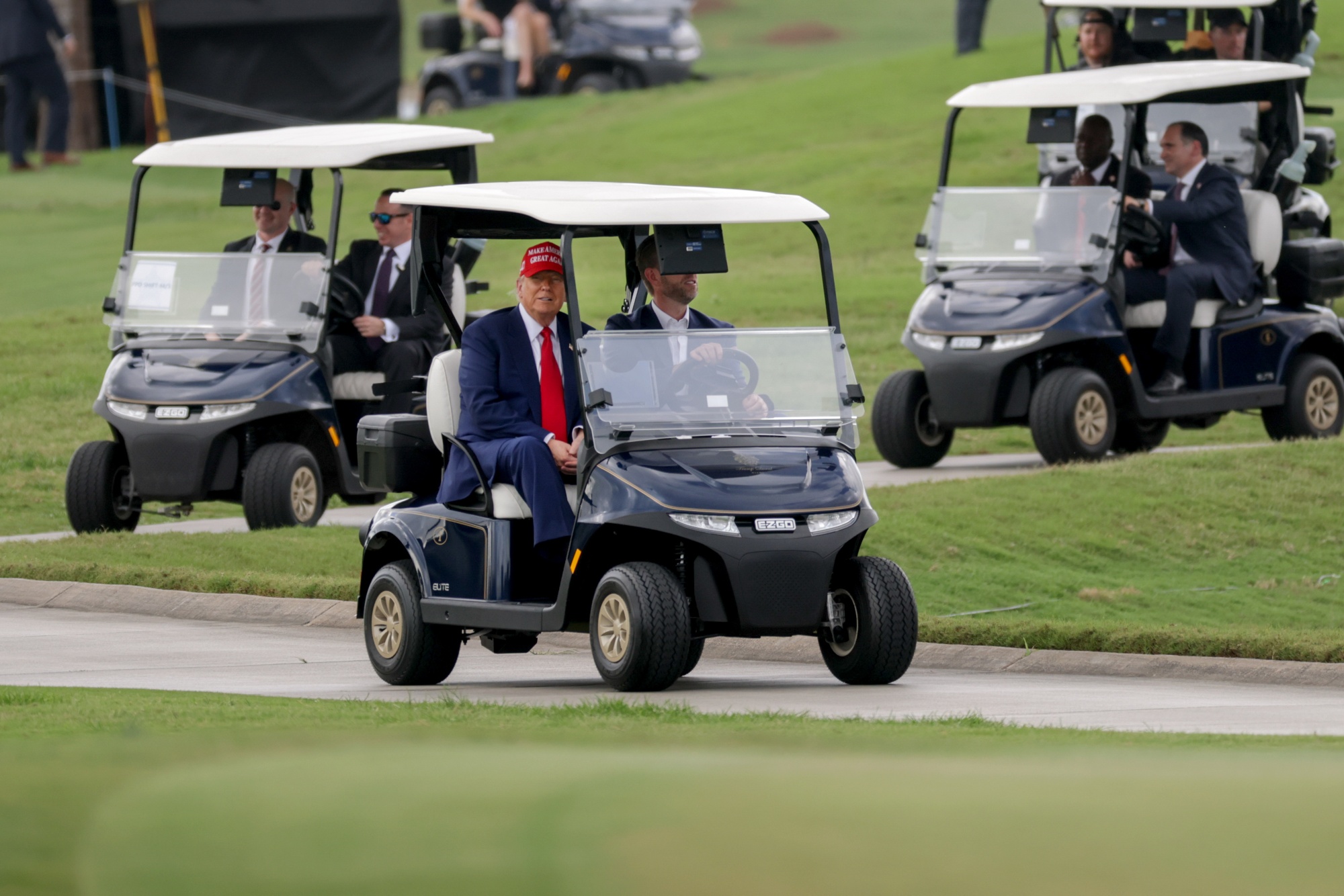
Former President Trump (April 3, at the LIV Golf tournament held at Trump National Doral)
Photographer: Joe Raedle/Getty Images
Jyanda Stuurman, a geopolitical risk analyst at the Africa Practice in Cape Town, believes the U.S. could potentially sideline priorities such as climate, health, and equality—issues that previous G20 presidencies have focused on.
“It is unlikely that the G20 events associated with Trump will be positioned or operated as a meeting of equals, but rather as a venue demonstrating the U.S. views this framework as having limited value for its own purposes,” Stuurman said.
Bill Emmott, a journalist and former editor-in-chief of The Economist, warned of a potentially more dire outcome: a disregard for multilateralism and a world increasingly shaped by agreements between Trump and Chinese President Xi Jinping. Trump is scheduled to visit China and meet with Xi in April.
Emmott described the U.S. under Trump as potentially feeling like “an intimidating ex-partner one can’t escape” for some. “An even bigger nightmare is the prospect of him clearly preferring a G2 world in which the U.S. and China divide up the globe between them,” he said.
Original article: Trump Seeks to Shape G-20 to His Tastes by Ditching South Africa (excerpt)
— With assistance from Iain Rogers
