
Following the recent U.S.military intervention and the detention of President Nicolás maduro and his wife, Cilia Flores, Washington is now leveling increased pressure on Venezuela’s Vice President Delcy Rodríguez, who is expected to assume interim leadership. President Trump has issued a direct warning to Rodríguez, demanding alignment with U.S. interests amid growing questions about the stability of the nation and the future of U.S. foreign policy in the region.Regional powers including Chile, Brazil, Colombia, Mexico, Uruguay and Spain have already issued a joint statement rejecting the U.S. military action .
The United States is increasing pressure on Venezuela’s vice president, Delcy Rodríguez, following the detention of President Nicolás Maduro and his wife, Cilia Flores, earlier this month. The developments signal a potential shift in U.S. foreign policy and raise questions about the future stability of the South American nation.
In an interview with The Atlantic, President Donald Trump issued a stark warning to Rodríguez: “If she doesn’t do the right thing, she will pay a very high price, probably higher than Maduro.”
Rodríguez is expected to assume the role of interim president following the January 3rd detention of Maduro and Flores. She has publicly maintained that Maduro remains the legitimate president of Venezuela, despite his detention in New York.
Trump responded to Rodríguez’s statements during the interview, hardening his tone and asserting that he will not accept what he characterized as a defiant rejection of the U.S. military intervention that led to Maduro’s capture. He indicated that Rodríguez must align with Washington’s interests to avoid further consequences.
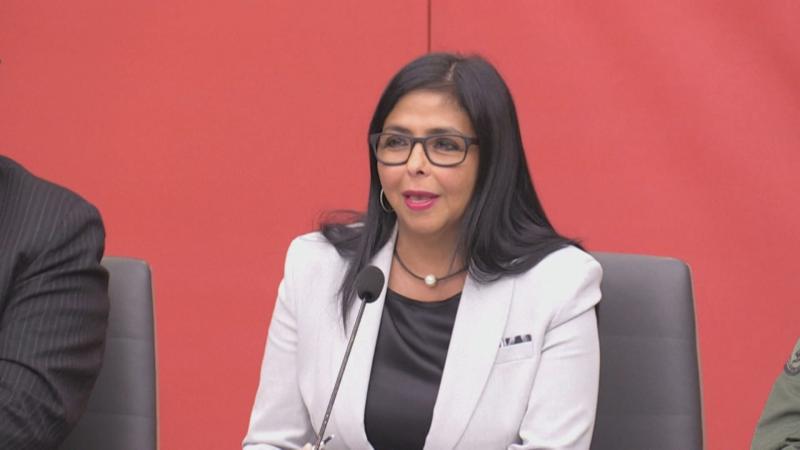
Speaking from his golf club in West Palm Beach, Trump also suggested that Venezuela may not be the only country subject to such action by the United States. He revealed a continued interest in acquiring Greenland, describing it as a territory surrounded by Russian and Chinese naval presence. The Atlantic reported on the interview.
The president’s comments mark a departure from his historical stance against “nation building” and regime change, suggesting he would now favor a reconstruction process in Venezuela over the current situation. This shift underscores the evolving nature of U.S. policy toward the country.
Lee También
Chile, Brasil, Colombia, México, Uruguay y España emiten comunicado conjunto rechazando intervención militar de EE.UU. en Venezuela
Trump’s recent statements contrast with earlier assertions made before the military operation in Caracas, when he publicly claimed Rodríguez had privately expressed a willingness to collaborate with the U.S. and that her government would temporarily lead the country. He had even indicated at the time that she was prepared to do whatever Washington deemed necessary.
