
Former President Donald Trump continues to generate controversy with a series of pronouncements ranging from personal attacks to assertive foreign policy claims. following insensitive remarks regarding the recent deaths of actor Rob Reiner and his wife, Trump has focused on projecting an image of success during his return to office, even as critics question his grasp on reality [[1]]. This report details those statements, his interventions in Latin American elections, and escalating rhetoric with Venezuela, raising questions about the trajectory of his renewed political influence and its potential impact abroad.
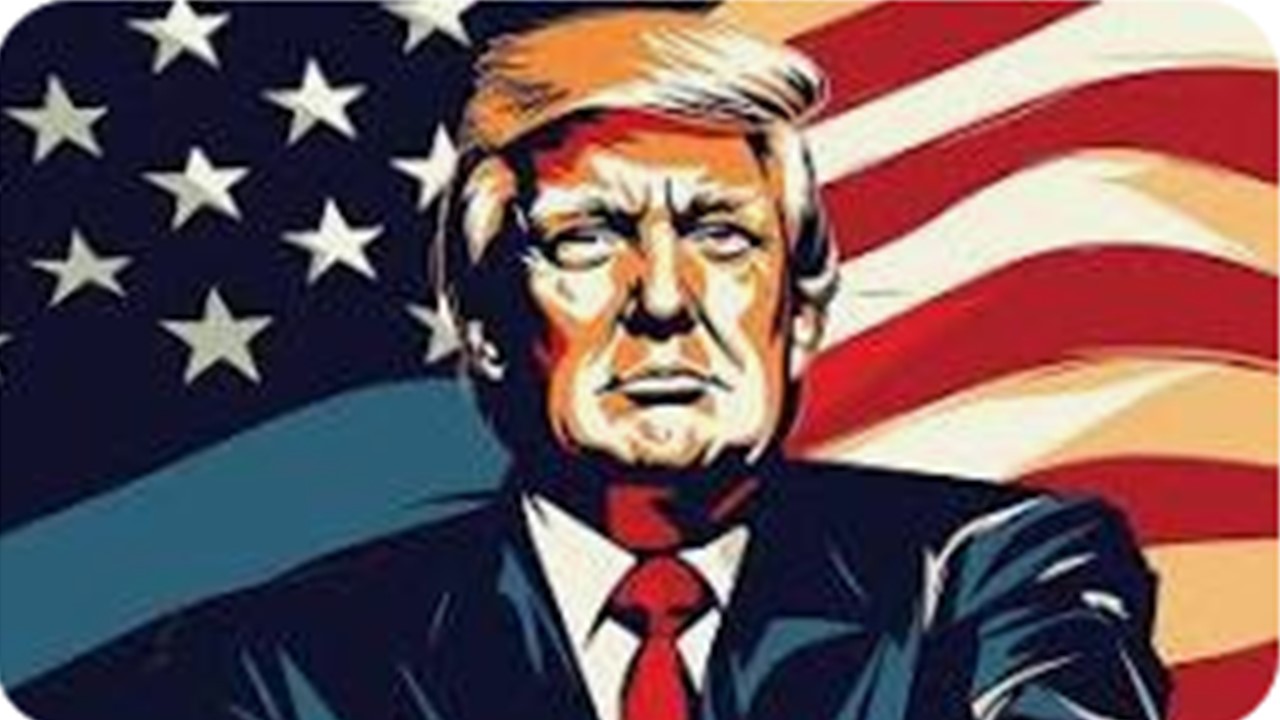
Donald Trump has sparked outrage with recent comments regarding the death of director and actor Rob Reiner and his wife. The former president, known for his often unpredictable statements, attributed the tragedy to what he termed “Trump Derangement Syndrome” (TDS), a phrase used by his supporters to describe intense opposition to him. According to Trump, Reiner and his wife were victims of “the rage that [the filmmaker] provoked in others due to his severe, persistent and incurable anti-Trump mental condition.”
He doubled down on the remarks the following day, stating that “Reiner was a bad person for the USA.” This comes as Reiner was a vocal Democrat who frequently criticized Trump, once calling him “the most incompetent human being to ever assume the presidency of the United States.” The controversy highlights the deeply polarized political climate that continues to shape public discourse.
On Thursday, after following commentary from Tucker Carlson, a prominent supporter of Trump, regarding a potential national address, anticipation grew among Venezuelans that Trump would address the situation in Venezuela. Instead, Trump delivered a speech focused on his own administration, claiming a golden age had arrived with his return to power. He asserted that in just 11 months, he had made the United States “the most grandiose and… the sexiest country in the world,” constructing what critics describe as a reality detached from current events.
Trump’s characteristic self-importance, belief in his own uniqueness, difficulty accepting responsibility, need for attention, tendency to exaggerate and lie, manipulative nature, arrogance, and lack of empathy, paint a picture of a narcissist unrestrained in self-admiration. These traits have been widely discussed throughout his public career.
Trump has also claimed responsibility for the apparent electoral success of Asfura in Honduras, offering support and intervening in the election process, similar to his backing of Milei in Argentina with both political and financial assistance. He stated he offered help and funding to Asfura, and after the election results in Chile, claimed to have been the determining factor in the victory of José Antonio Kast, asserting that Kast wasn’t leading the race until Trump voiced his support.
Beyond these claims, Trump has repeatedly stated his ability to broker peace – offering to end the war in Ukraine in 24 hours, claiming to have resolved eight conflicts in Africa and Asia, and even suggesting he could solve the millennia-old Israeli-Palestinian conflict, a feat he says even God couldn’t accomplish in 3,000 years. He believes these accomplishments alone qualify him for a Nobel Peace Prize.
Trump’s rhetoric consistently centers on himself, with a recurring refrain of “I, I, I, I,” and an inability to speak without self-promotion. His recent comments regarding a potential blockade of Venezuelan oil tankers illustrate this pattern. He stated, “Venezuela is completely surrounded by the largest Navy ever assembled in South American history. This will only grow, and the shock to them will be like nothing they have ever seen, until they return all of the oil, lands, and other assets that they previously stole from the United States.” He continued, “The United States will not allow a hostile regime to take our oil, lands, or any other assets, all of which must be returned to the United States immediately.”
The Venezuelan government is reportedly using this rhetoric to bolster its narrative that the United States seeks to steal Venezuela’s oil and natural resources, while simultaneously discrediting its own claims of fighting drug trafficking – evidenced by the destruction of over 20 “narco-boats” and 97 deaths resulting from bombings. Venezuelan commentators supportive of Trump have attempted to justify the statement, but it aligns with his established arrogant nature. He is aware that the US oil industry is largely private, with companies like Exxon, Chevron, and Conoco leading the sector.
Trump’s strong interest in Venezuelan oil presents a dilemma for the opposition, particularly for figures like María Corina Machado, who has positioned Trump as Venezuela’s potential savior. Machado has repeatedly emphasized that Trump is the only one who can help defeat the current regime, advocating for a strategy similar to those used in other regional countries – utilizing military power to intimidate the ruling elite and trigger a collapse of the government. As Osio Cabrices noted, she believes this could be the key to overcoming the current dictatorship.
However, it’s crucial to ensure a democratic transition free from the control of both the Venezuelan military and any foreign powers, preventing Venezuela from becoming merely a segment of a larger entity where fundamental decisions are made externally or by those who monopolize violence, as has been the case under the current government. This is the response Machado should offer to Trump and the Venezuelan military when the desired outcome is reached.
Note: As you may notice, this article is written in Times New Roman instead of the Calibri font I usually use. This change doesn’t affect the content, but it’s worth noting that Trump has elevated typography to an ideological issue, claiming Calibri is a “Woke” font.
