
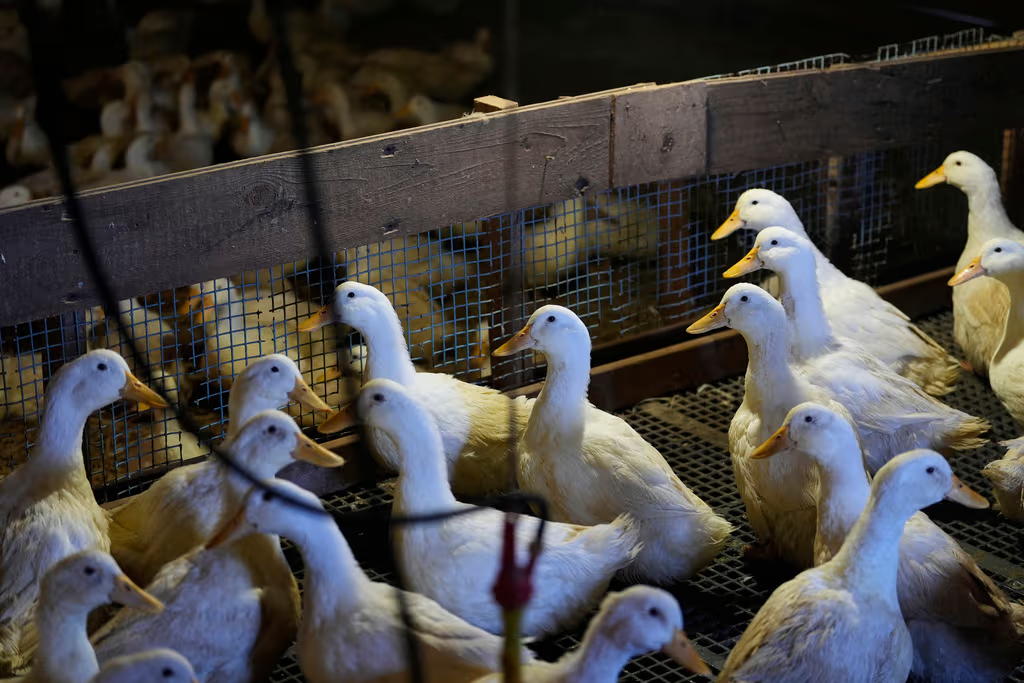
The first confirmed U.S. case of the H5N5 avian influenza strain has been identified in Washington state, prompting renewed vigilance from public health officials. While representing a distinct variant from the more prevalent H5N1-which saw 71 infections in the U.S. between 2024 and 2025-the case is not currently believed to pose an elevated risk to the public. The infection, detected in an adult with underlying health conditions, underscores the ongoing potential for avian flu to cross the species barrier, even as authorities maintain there is no evidence of person-to-person transmission.
Health officials in Washington state have confirmed the first human case of avian influenza in the United States in nearly nine months, raising awareness about the continued, though currently low, risk of bird flu transmission. The case, reported last week, highlights the importance of ongoing surveillance for avian influenza viruses.
The virus identified in the patient is H5N5. While distinct from the H5N1 strain responsible for 71 human infections in the U.S. between 2024 and 2025, it is not considered a greater threat to public health. Most of the H5N1 cases involved mild illness in workers at poultry and dairy farms, though one death was reported in Louisiana.
The Washington state patient is an adult with underlying health conditions and remains hospitalized in Grays Harbor County. Authorities believe the infection originated from exposure to wild birds through the individual’s domestic poultry flock, though the source is still under investigation.
Public health officials emphasize that the risk to the general population remains low and, at this time, there is no evidence of person-to-person transmission. The Centers for Disease Control and Prevention (CDC) echoed this assessment, stating there is no information suggesting “that the risk to public health has increased as a result of this case.”
The difference between H5N5 and H5N1 lies in a protein involved in the virus’s release from and spread to cells. However, experts suggest the two strains behave similarly. “These viruses behave in a similar way,” said Richard Webby, a leading influenza researcher at St. Jude Children’s Research Hospital in Memphis, Tennessee. “My instinct tells me to consider it the same as H5N1 from the human health perspective.”
Webby further explained the subtle distinctions, comparing the viruses to different brands of car tires. “Think of it as different brands of car tires. Both do the same job, just each one is better tuned for specific conditions, which we don’t fully understand.” He added that H5N5 may have a preference for infecting certain types of birds.
Avian influenza spreads through saliva, mucus, and feces of infected animals, and can also be transmitted through the milk of infected dairy cows. The risk of avian influenza typically increases in the late fall and winter months due to bird migration patterns, which can lead to contact between wild birds and poultry.
The CDC continues to monitor the situation closely and provide guidance to state and local health departments. This case serves as a reminder of the potential for avian influenza viruses to occasionally infect humans, and the importance of preventative measures, particularly for those working with or around poultry.
