
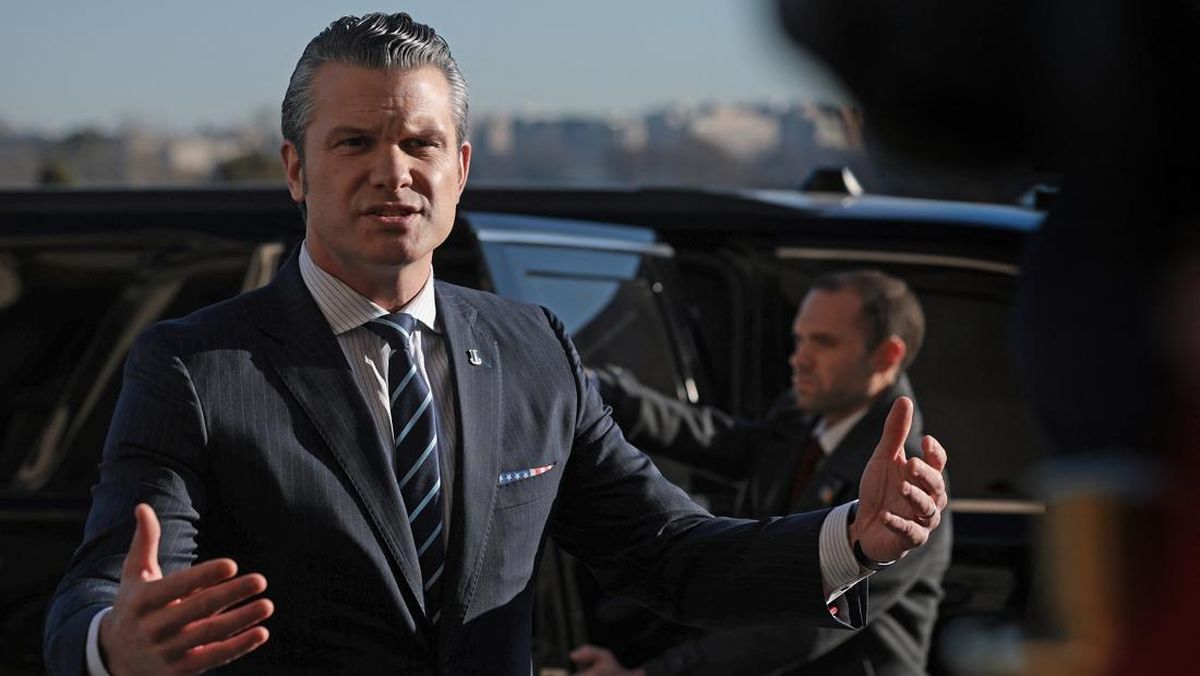
U.S. Defense Secretary Pete Hegseth sparked widespread criticism after reciting a fictional prayer during a Pentagon religious service on Wednesday, April 15, 2026. The passage he delivered closely resembled a monologue from the film Pulp Fiction, spoken by the character played by Samuel L. Jackson, and was presented as a biblical reference despite its origins in Hollywood fiction.
Hegseth referred to the text as “CSAR 25:17,” claiming it was inspired by Ezekiel 25:17 in the Bible and had been adopted by combat search and rescue units, including the “Sandy 1” team involved in aircraft rescue missions in Iran. However, fact-checkers confirmed that the monologue is largely fictional, only loosely inspired by scripture and partially adapted from a 1976 Japanese film, The Bodyguard, as reported by the Los Angeles Times.
The apply of the quote drew backlash given that Hegseth framed it as divine justification for potential military action against Iran, altering the ending of the passage to include a military call sign. Critics argued that invoking a fictional cinematic speech to legitimize warfare undermines the solemnity of religious observance and risks blurring the line between faith and political propaganda.
The controversy intensified amid rising tensions between the Trump administration and religious leaders, including Pope Leo, who has publicly criticized U.S. Foreign policy. Hegseth’s use of religious rhetoric continued into the following day, when he compared journalists critical of President Donald Trump to biblical figures who opposed Jesus during a press briefing at the Pentagon on Thursday, April 16, 2026.
In that remarks, Hegseth accused mainstream media of bias, stating they “watch every good deed to find a violation,” and likened their coverage of the Trump administration to the Pharisees’ efforts to undermine Jesus. He clarified that his criticism was not directed at all journalists, but at what he described as “mainstream media that hates Trump.”
The episode added to growing concerns about the politicization of religion within the U.S. Defense establishment, particularly as the administration continues to frame international conflicts through a religious lens. The incident has prompted renewed scrutiny over how senior officials use spiritual language in official settings, especially when tied to national security decisions.
