
A decade after teh explosive “FIFA Gate” scandal revealed widespread corruption within international soccer, the U.S. Department of Justice is moving to dismiss key cases against former executives from Fox and the Full Play Group [[1]]. The unexpected decision, coming just days after FIFA president Gianni Infantino received an award from former President donald Trump, raises serious questions about political influence and the future of the sprawling inquiry [[2]]. The move threatens to potentially unravel years of legal work and return millions in ill-gotten gains.
The U.S. Department of Justice has moved to dismiss two high-profile cases stemming from the decade-old FIFA corruption scandal, a decision that threatens to unravel a significant portion of the largest international corruption case in soccer history. The move raises questions about the independence of the Justice Department and its commitment to pursuing corruption within international sports organizations.
READ ALSO
The abrupt decision, made on December 9, came just four days after FIFA President Gianni Infantino presented Donald Trump with an unprecedented award – the FIFA Peace Prize – during the World Cup group stage draw in Washington. The timing of the award and the subsequent move by the Justice Department have fueled speculation about a potential quid pro quo.
READ ALSO
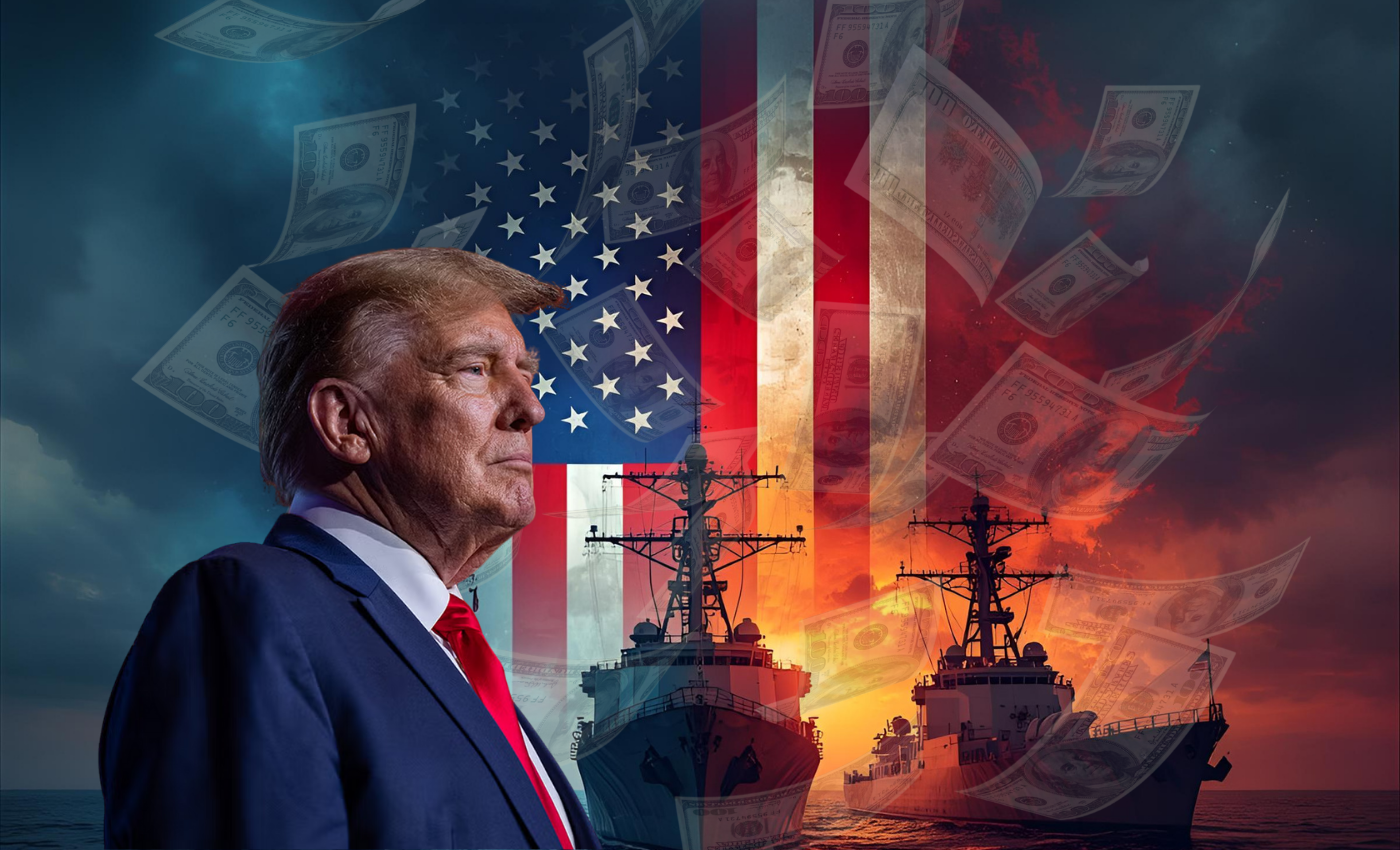
Liz Oyer, who until recently served as the Department of Justice’s pardon attorney, believes the timing is no coincidence. “This is corruption at the highest level,” Oyer stated on her Instagram account, denouncing what she considers a serious abuse of judicial power with potentially massive financial consequences for the state.
Which Cases is the U.S. Seeking to Dismiss?
Table of Contents
- Which Cases is the U.S. Seeking to Dismiss?
- Department of Justice Divided Over ‘FIFA Gate’ Decision
- What are the Potential Consequences of the Trump Administration’s Decision on ‘FIFA Gate’?
- What was ‘FIFA Gate’ and Why Does the U.S. Decision Affect the Case’s Judicial Legacy?
- The Controversy Surrounding the Peace Prize for Trump
- The Impact of ‘FIFA Gate’ in Colombia
The FIFA World Cup will be held in 2026. Photo:FIFA
The cases the Department of Justice now seeks to close involve Hernán López, former CEO of Fox International Channels, and the Argentinian firm Full Play Group, one of South America’s most influential sports marketing companies. Both had been convicted by a federal jury for their involvement in bribery schemes designed to secure broadcasting rights for international tournaments, including the 2018 and 2022 World Cups.
In July of this year, the U.S. Court of Appeals for the Second Circuit unanimously affirmed those convictions. However, when López and Full Play appealed to the Supreme Court, the administration’s position dramatically shifted.
According to sources, Deputy Attorney General John Sauer, the Department of Justice’s chief litigator before the Supreme Court and a former personal attorney for Trump, ordered federal prosecutors in Brooklyn to request that the convictions be vacated “in the interest of justice.” Sauer argued there was a high risk the Supreme Court would overturn the ruling and further weaken statutes related to public corruption.
Department of Justice Divided Over ‘FIFA Gate’ Decision
U.S. Department of Justice Photo:EFE
The order was not well-received within the Department of Justice itself. Joseph Nocella, the chief prosecutor for the Eastern District of New York, also appointed by Trump, attempted to halt the order and urged Sauer to reconsider. According to reports from sources including Bloomberg, Nocella warned that abandoning the case could have a devastating domino effect. Despite these concerns, the order came from Washington and was executed without allowing prosecutors to formally present arguments to sustain the case.
What are the Potential Consequences of the Trump Administration’s Decision on ‘FIFA Gate’?
Trump and Infantino. Photo:EFE
The potential consequences are far-reaching. Justice Department lawyers acknowledge that if the convictions of López and Full Play are overturned, dozens of cases associated with the FIFA case could be reopened, reviewed, or dropped altogether. This includes final convictions against soccer officials and sports marketing executives from various regions around the world. Furthermore, the U.S. government could be forced to return hundreds of millions of dollars in fines, forfeitures, and settlements collected over the past ten years.
What was ‘FIFA Gate’ and Why Does the U.S. Decision Affect the Case’s Judicial Legacy?
The FIFA scandal, or ‘FIFA Gate,’ erupted in 2015 when the Department of Justice, under then-Attorney General Loretta Lynch, revealed a corruption network that had operated for decades within international soccer. The investigation led to charges against more than 50 individuals and companies in at least 20 countries, resulting in over 30 guilty pleas and several convictions after trial. The case exposed a systematic system of bribery in the awarding of host countries, marketing contracts, and broadcasting rights.
If the Department of Justice itself says it can’t sustain this theory of prosecution, then those convictions shouldn’t stand
Latin America played a central role in the scheme. South American officials were sanctioned, and proceedings directly impacted countries like Colombia, where regional soccer officials and businesspeople linked to the commercialization of rights came under investigation for their role in corruption schemes associated with continental tournaments.
For many federations, the case marked a turning point in terms of institutional credibility.
That judicial legacy is now at risk.
Defense attorneys for other convicted individuals are already anticipating requesting similar treatment to that granted to López and Full Play, including the return of funds paid to the state. “If the Department of Justice itself says it can’t sustain this theory of prosecution, then those convictions shouldn’t stand,” said Justin Weddle, a former federal prosecutor and now a defense attorney for one of those involved.
The Controversy Surrounding the Peace Prize for Trump
Trump received controversial award. Photo:Archivo particular
The political context also adds tension, as the Department of Justice’s shift occurred amid a series of pardons and dismissals of cases against individuals accused of financial crimes with political connections, and days after FIFA awarded its first Peace Prize. The creation of the award generated debate from the start, as such a recognition had never been given before, and critics interpreted it as a gesture directed at Trump, who has repeatedly expressed his frustration at not receiving the Nobel Peace Prize. In recent days, there have even been formal calls to investigate the origin and circumstances of the award.
In Trump’s America, justice can be bought
For Liz Oyer, the episode is a symbol of institutional degradation. “In Trump’s America, justice can be bought,” said the former prosecutor who was removed from her position in March of this year for refusing to pardon friends of the president, particularly actor Mel Gibson, who had his right to carry firearms revoked.
The final word now rests with the federal judges who must decide whether to accept the dismissal of the charges. If they do, the likely outcome is a cascade of demands from executives and associations that have already been convicted, potentially including the return of fines they were required to pay.
The Impact of ‘FIFA Gate’ in Colombia
FIFA and Luis Bedoya Photo:Archivo EL TIEMPO
The FIFA case also had direct repercussions in Colombia, where Luis Bedoya Giraldo, then president of the Colombian Football Federation and vice president of CONMEBOL, was accused by the Department of Justice in 2015 for his involvement in bribery schemes, electronic fraud, and illicit association related to the commercialization of international tournaments.
He pleaded guilty in a New York federal court that same year, resigned from all his positions, and agreed to cooperate with U.S. authorities, becoming one of the highest-ranking South American officials to formally admit his responsibility.
READ ALSO
Investigations revealed that Bedoya received illicit payments in exchange for his support in awarding commercial and television rights for competitions organized by CONMEBOL, including continental tournaments and national team matches.
Additionally, sports marketing companies involved in the scandal, including Full Play Group, maintained commercial ties with South American federations, including the Colombian federation, through the organization of friendly matches and promotion contracts.
At the continental level, the scandal hit CONMEBOL hard, with its main leaders identified as central actors in the corruption scheme. Former CONMEBOL President Juan Ángel Napout was convicted in the U.S. to a prison sentence for accepting millions of dollars in bribes related to television and marketing rights for South American tournaments.
Another emblematic case was that of Rafael Esquivel, former president of the Venezuelan Football Federation and member of the CONMEBOL executive committee, who also faced charges of money laundering and conspiracy.
The Department of Justice’s investigations described CONMEBOL as a structure permeated for years by systematic practices of bribery, in which high-ranking officials of national federations exchanged votes and commercial decisions for illegal payments. Tournaments such as the Copa América, the Copa Libertadores, and the World Cup qualifiers were identified as part of the businesses that fueled that corruption network.
SERGIO GÓMEZ MASERI – Correspondent – Washington
@sergom68
