
President Donald Trump has established April 7, 2026, as the final deadline for a potential agreement with Iran, as international mediators make a final effort to secure a 45-day ceasefire to pave the way for a permanent end to the conflict.
This diplomatic push comes at a critical juncture in a war that has now lasted 36 days. While April 7 is viewed as the ultimate cutoff for a deal, recent attempts to cool tensions have been met with hostility. An ultimatum issued by President Trump on April 5, 2026, demanding that Iran reach an agreement or reopen the Strait of Hormuz within 48 hours, was dismissed by the Iranian military as “anxious and stupid.” Reports indicate that Iran has rejected the U.S. 48-hour proposal, further complicating the path to peace.
The closure of the Strait of Hormuz, a vital artery for global energy, has already triggered a sharp spike in international oil and gas prices. The development underscores the global economic vulnerability to the conflict, as the U.S. Administration balances military pressure with the need to stabilize energy markets.
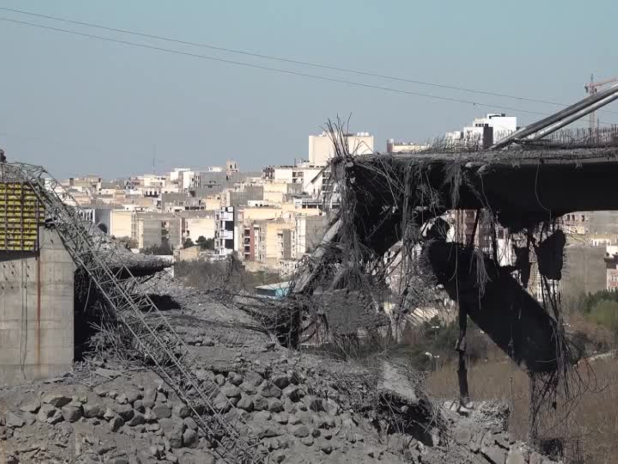
Military operations, conducted under the name “Operation Epic Fury,” have seen the U.S. And Israel target Iranian infrastructure and leadership. In a national address on April 2, 2026, President Trump claimed the operation had achieved “overwhelming victory,” asserting that the Iranian navy had been eliminated and its air force reduced to ruins. However, the campaign has not been without cost for the U.S. Military. Officials confirmed the loss of an F-15E Strike Eagle and an A-10 Thunderbolt II. Search and rescue operations for a missing American pilot entered their second day on April 6, 2026, while Iranian authorities have offered rewards to residents who provide information on the pilot’s location.
The administration’s rhetoric has remained aggressive. During his April 2 speech, President Trump threatened to bomb Iran back to the “Stone Age” and warned of precision strikes on every power plant in the country if a deal is not reached. These threats were echoed on April 5, when he warned that “hell will break loose” if the Strait of Hormuz is not reopened.
Parallel to the battlefield, the conflict has extended into legal and diplomatic spheres. The U.S. Department of State recently announced the arrest of two relatives of the late Qassem Soleimani after their green cards were revoked, though Iranian media has disputed the familial connection.
Despite the escalating rhetoric, consultations regarding a 45-day ceasefire continue. Such a truce would allow both sides to negotiate the broader terms of ending the war, though the window for diplomacy is rapidly closing.
The outcome of these negotiations will likely determine whether the region moves toward a fragile stability or faces a significant escalation in military strikes.
