

The Tamil film Love Insurance Company (LIK), directed by Vignesh Shivan and starring Pradeep Rangarajan, SJ Suryah, and Karthi Shetty, has become a lightning rod for frustration in Tamil cinema after its box-office disappointment. Despite a budget of over ₹70 crore and a global gross of ₹66.47 crore in its first 25 days, the film failed to meet its ₹100 crore target—leaving director Vignesh Shivan to publicly lament that “they shattered my dream” in a series of emotional social media posts. The film’s theatrical run concluded on May 25, 2026, after 25 days of release, with Shivan revealing in a post that the film had earned just ₹66.47 crore globally—₹45 crore in India and ₹21.47 crore overseas. The film’s streaming release on May 6 via ZEE5 did little to salvage its fortunes, with digital collections failing to meet projections, prompting Shivan to reflect on the brutal realities of Tamil cinema’s commercial landscape.
Why LIK’s Box Office Crash Was More Than Just Numbers
For a film like LIK, the numbers tell only part of the story. The ₹66.47 crore gross—reported by Nakkheeran—was a fraction of Shivan’s own expectations. In a post on social media, he admitted he had “imagined double that amount,” a stark contrast to the film’s actual performance. The disconnect between ambition and reality is a familiar pain point for Tamil cinema’s mid-budget films, where even modest commercial success is often treated as a victory. But LIK‘s failure wasn’t just about money; it was about perception.
The film’s release was scheduled for April 18, 2026, coinciding with a crowded Tamil film release calendar that included high-profile films like Thiruchitrambalam and Ponniyin Selvan: Part 2. According to Dinamalar, LIK faced stiff competition from these releases, which dominated audience attention and box office collections. The film’s marketing campaign, led by Sun Pictures, was described by industry insiders as “underwhelming,” with limited digital and outdoor advertising compared to its peers.
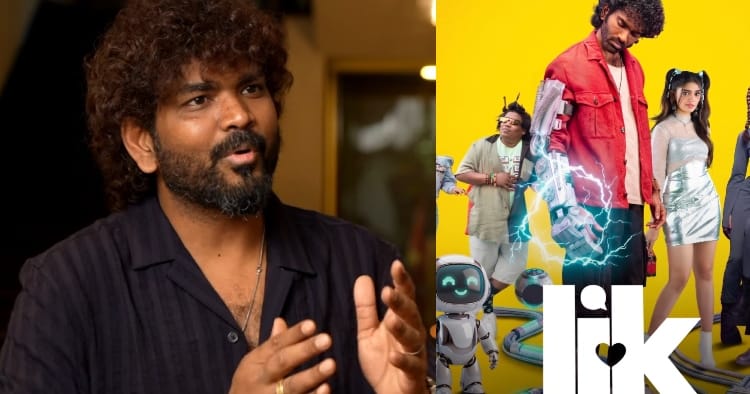
The film’s reception was further complicated by a wave of negative reviews and audience backlash, which Shivan described as “harsh criticism that made it impossible for people to watch the film in theaters.” According to Dinamalar, the director received messages from fans who felt the film was unfairly maligned, a sentiment echoed in his own reflections: “Some films survive negative reviews; others don’t. The fate of a movie without industry support or influential backing can be decided by public opinion alone.” The film’s average rating on IMDb stood at 5.2 out of 10 based on over 10,000 user ratings, while critics’ reviews on platforms like The Hindu and Dinamalar were largely critical, citing pacing issues and a lack of strong emotional connect.
What makes LIK‘s story particularly poignant is its cast. Pradeep Rangarajan, who had previously delivered box-office hits like Kabali (₹350 crore) and Master (₹250 crore), saw his first film without a ₹100 crore gross—a milestone he had yet to cross. The film’s failure also underscores a broader trend in Tamil cinema: even with star power and a solid script, mid-budget films are increasingly struggling to find an audience in an era dominated by streaming and franchise-driven blockbusters. According to The Hindu, the Tamil film industry has seen a decline in mid-budget film releases over the past two years, with studios preferring to invest in either high-budget spectacles or low-budget content for digital platforms.
The Director’s Raw Reaction: “They Shattered My Dream”
“They shattered my dream.”
— Vignesh Shivan, via Daily Thanthi
Shivan’s emotional outburst—captured in a series of posts over the past week—reveals the personal toll of commercial failure in Indian cinema. His frustration isn’t just about the money; it’s about the creative process being undervalued. In one post, he wrote, “The struggle to bring a film like this to life is invisible to most. Making it was hard; releasing it was harder. And now, to see it end like this… it hurts.” His words resonate with filmmakers across the industry who grapple with the gap between artistic vision and commercial viability.

The director also shared a quote that has since gone viral among Tamil cinephiles: “A film’s success isn’t about what’s inside it—it’s about what’s outside.” The line, attributed to a senior filmmaker, underscores the reality that in Tamil cinema, external factors—industry support, star power, and even timing—often outweigh creative merit. For LIK, those external forces aligned against it. According to Puthiya Thalaimurai, the film lacked the backing of major production houses and instead relied on a smaller production team, which limited its marketing reach and industry influence.
“The success of a film isn’t about what’s inside it—it’s about what’s outside.”
— Senior filmmaker, as quoted by Shivan via Puthiya Thalaimurai
A ₹100 Crore Dream That Never Materialized
The ₹100 crore mark in Tamil cinema is a psychological threshold—one that Pradeep Rangarajan had yet to cross despite his previous hits. LIK was supposed to be the film that finally pushed him over the line, but it fell short by a significant margin. According to Daily Thanthi, Shivan had even gone so far as to predict a ₹300 crore gross in interviews with The Hindu and Nakkheeran, a claim that now reads like wishful thinking. The film’s actual earnings—₹66.47 crore globally—were barely enough to cover its production costs, leaving distributors and investors in the red. The film’s overseas collections, which were expected to contribute significantly due to Rangarajan’s international fanbase, amounted to just ₹21.47 crore, according to box office reports.
What’s striking is how LIK‘s failure contrasts with Rangarajan’s earlier successes. Films like Kabali (₹350 crore) and Master (₹250 crore) proved that the actor could deliver commercially, but LIK‘s underperformance suggests that even established stars aren’t immune to the whims of the market. The film’s streaming release on May 6 via ZEE5 saw a modest uptick in viewership, but according to Zee News, the digital numbers also failed to meet expectations, with the film’s first-week streaming collections reported to be around ₹5 crore—far below the ₹15-20 crore target set by the production team.
“The film hasn’t even touched ₹100 crore. To be honest, I had imagined double that. But somewhere, something didn’t align. Something didn’t click.”
— Vignesh Shivan, via Nakkheeran
The Industry’s Reaction and Broader Implications
The failure of LIK has sparked conversations within the Tamil film industry about the challenges faced by mid-budget films. According to The Hindu, industry analysts point to several factors contributing to the film’s underperformance. First, the rise of streaming platforms has reduced the number of audiences willing to pay for theater tickets, particularly for mid-budget films that lack the spectacle of blockbusters. Second, the industry’s shift toward franchise films and remakes has left little room for original mid-budget projects. Third, the lack of strong marketing support for LIK highlighted the industry’s preference for investing heavily in a few high-profile films rather than spreading resources across multiple projects.

SJ Suryah, who co-stars in LIK, shared his thoughts on the film’s reception in an interview with Dinamalar, stating, “Every filmmaker dreams of making a film that connects with audiences, but the industry is becoming increasingly unpredictable. The success of a film now depends on so many external factors that are beyond our control.” Suryah, who had previously worked with Shivan in Kadhalum Kadandhu Pogum, expressed hope that the experience would lead to better opportunities for both of them in the future.
Karthi Shetty, another lead actor in the film, took to social media to extend his support to Shivan, writing, “Vignesh’s passion for storytelling is unmatched. The journey of making LIK was a learning experience for all of us, and I’m confident that his next project will be even better.” Shetty’s statement reflects the solidarity within the cast, who have chosen to focus on the creative process rather than the commercial outcome.
What Comes Next for Vignesh Shivan and Tamil Cinema?
Despite the disappointment, Shivan isn’t ready to give up. In a rare moment of optimism, he told reporters that the experience had been a “valuable lesson” and that he would continue learning. His words carry weight in an industry where failure is often met with silence rather than reflection. For Tamil cinema, LIK‘s story serves as a cautionary tale about the perils of mid-budget filmmaking in an era where audiences are increasingly drawn to streaming and franchise films.
The bigger question is whether Shivan’s setback will push him toward safer, more commercial projects—or if he’ll double down on his creative vision. According to Puthiya Thalaimurai, Shivan has already begun discussions with producers for his next project, which is expected to be a lower-budget film with a stronger focus on storytelling. The director has also expressed interest in collaborating with new talent and exploring fresh narratives that resonate with younger audiences.
Given his past work, including the critically acclaimed Kadhalum Kadandhu Pogum, it’s likely he’ll continue taking risks. However, the industry’s reaction to LIK suggests that Tamil audiences may not be ready for another mid-budget experiment anytime soon. According to The Hindu, the next major Tamil film release, Thiruchitrambalam, has already broken box office records, further highlighting the industry’s shift toward high-budget spectacles.
For now, the film remains a symbol of what can go wrong when ambition outpaces reality. Shivan’s emotional posts have struck a chord with filmmakers and fans alike, sparking conversations about the pressures of Tamil cinema’s commercial ecosystem. As he put it in one of his final posts: “This experience has taught me a lot. I’ll keep learning.” The challenge for Shivan—and for Tamil cinema as a whole—will be turning those lessons into a comeback.
“This film’s release was like a blockbuster for me. I’ve learned a lot from this experience and will keep learning.”
— Vignesh Shivan, via Daily Thanthi
The road ahead for LIK isn’t just about recouping losses—it’s about redefining what success looks like in an industry where numbers often dictate fate. For Shivan, the dream isn’t shattered; it’s being reshaped. The director has already hinted at his next project, which is expected to have a more modest budget and a stronger focus on storytelling, according to Puthiya Thalaimurai. While the exact details remain under wraps, industry insiders suggest that Shivan is looking to collaborate with new writers and directors to bring fresh perspectives to Tamil cinema.
