
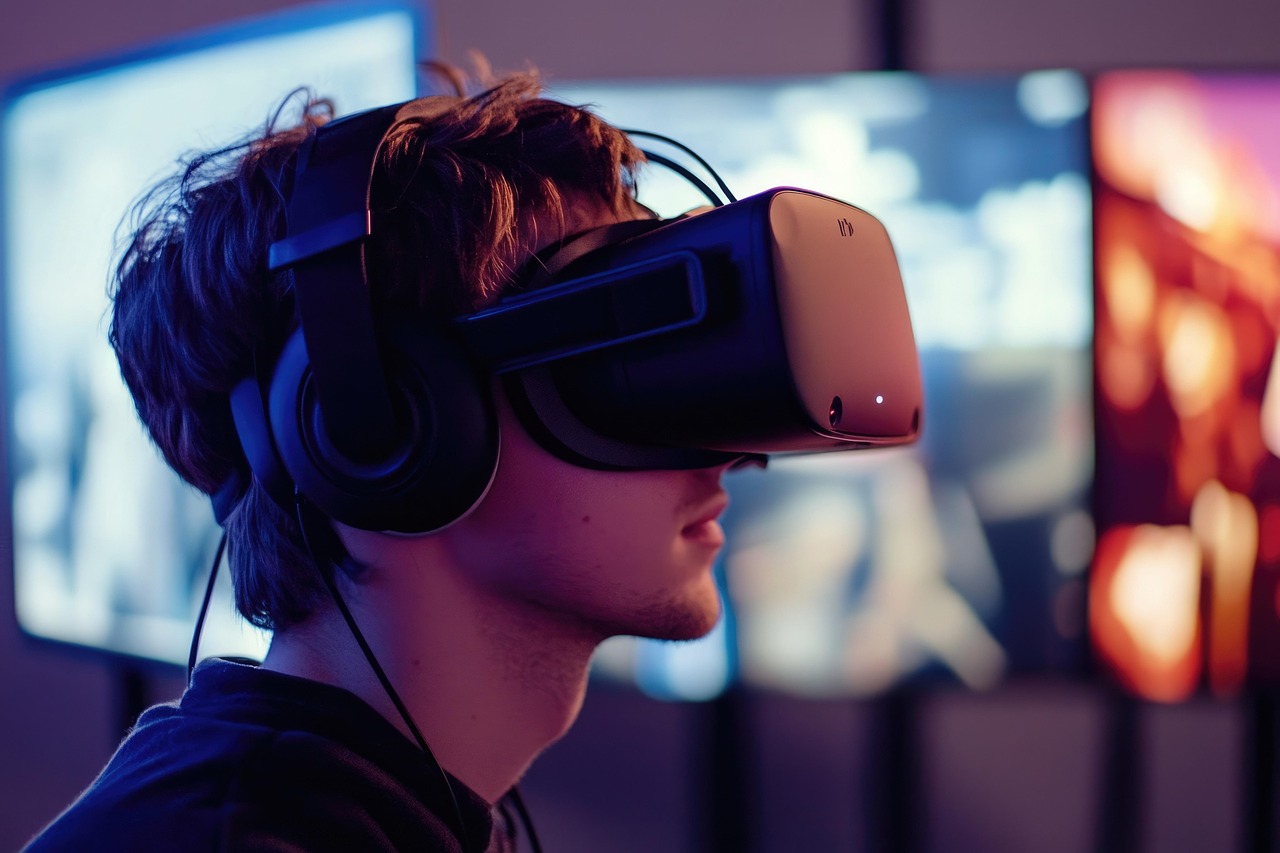
Virtual reality (VR) is emerging as a powerful tool in education, offering immersive, hands-on learning experiences that go beyond traditional methods like PowerPoint presentations. This shift comes as educators seek more effective ways to engage students in an increasingly digitally-driven world.
According to educational consultant and trainer Steven Raaijmakers, the widely held belief that students have shrinking attention spans is a myth. However, he notes that technology and social media are increasingly used to quickly capture student attention, making it crucial for teachers to locate ways to keep students effectively and healthily involved in lessons.
Moving Beyond Passive Learning
VR facilitates a kinesthetic learning approach, emphasizing interaction and action over simply listening or reading. Research indicates that this type of learning can create stronger mental connections and improve retention of procedures.
This approach is particularly well-suited for practical, vocational training in fields like healthcare, engineering, and installation perform.
Practice in the Virtual World, Application in Reality
With a VR headset, students can practice complex procedures – such as the steps involved in installing equipment – in a safe, controlled environment before working with real-world materials. Michel van Eersel, co-founder of the education platform Connec2, explains that this allows for the training of more students simultaneously, without the require for additional practice spaces, materials, or instructors.
By familiarizing themselves with the process in VR, students can work more efficiently with actual materials. “This reduces the time practice spaces are occupied and accelerates the training of skilled professionals,” says Van Eersel.
A Virtual Classroom Experience
During IPON 2026, IO+ had the opportunity to experience a VR demo from Connec2, based on a lesson used to train students in installing charging stations. Once the headset was on, the exhibition space remained visible, but an interactive charging station appeared in the user’s field of view. The headset automatically connected to those of other participants and demonstrator Bart Kok, who took on the role of instructor and activated functions through a digital lesson menu.
Participants could select and install components themselves, creating a collaborative virtual classroom environment. In another exercise, a steel structure was built, with a two-meter beam easily moved in VR – a task that would be physically challenging in the real world. Van Eersel emphasizes that VR is particularly effective for learning procedures, but the real feel and physical experience still need to be gained with actual materials. “VR is not a replacement for real-world training,” he states.
However, VR can provide valuable supplemental support. “A pop-up question about the weight of a component, for example, can appear during the virtual lesson,” says Kok. Van Eersel adds that instructors can customize their own lesson programs: “You are in control of your own curriculum.”
Digital Tools Have a History in Education
Digital training tools have been used in education for some time, particularly in the medical sector. Digital dissection tables and virtual simulations offer alternatives to cadavers, which can be limited in availability and used only once.
At Jeroen Bosch Hospital, medical trainees use VR to experience situations from the patient’s perspective. These applications demonstrate the increasing adoption of digital learning tools across various disciplines.
Future Trends: Lighter Headsets and AI Integration
VR technology is rapidly evolving, with companies like Meta developing smart glasses in collaboration with Ray-Ban that integrate artificial intelligence.
Van Eersel anticipates that VR headsets will continue to become smaller and lighter, eventually resembling regular eyeglasses. While significant work remains to miniaturize the technology, “we are already exploring how to integrate AI into the headsets,” says Van Eersel.
