
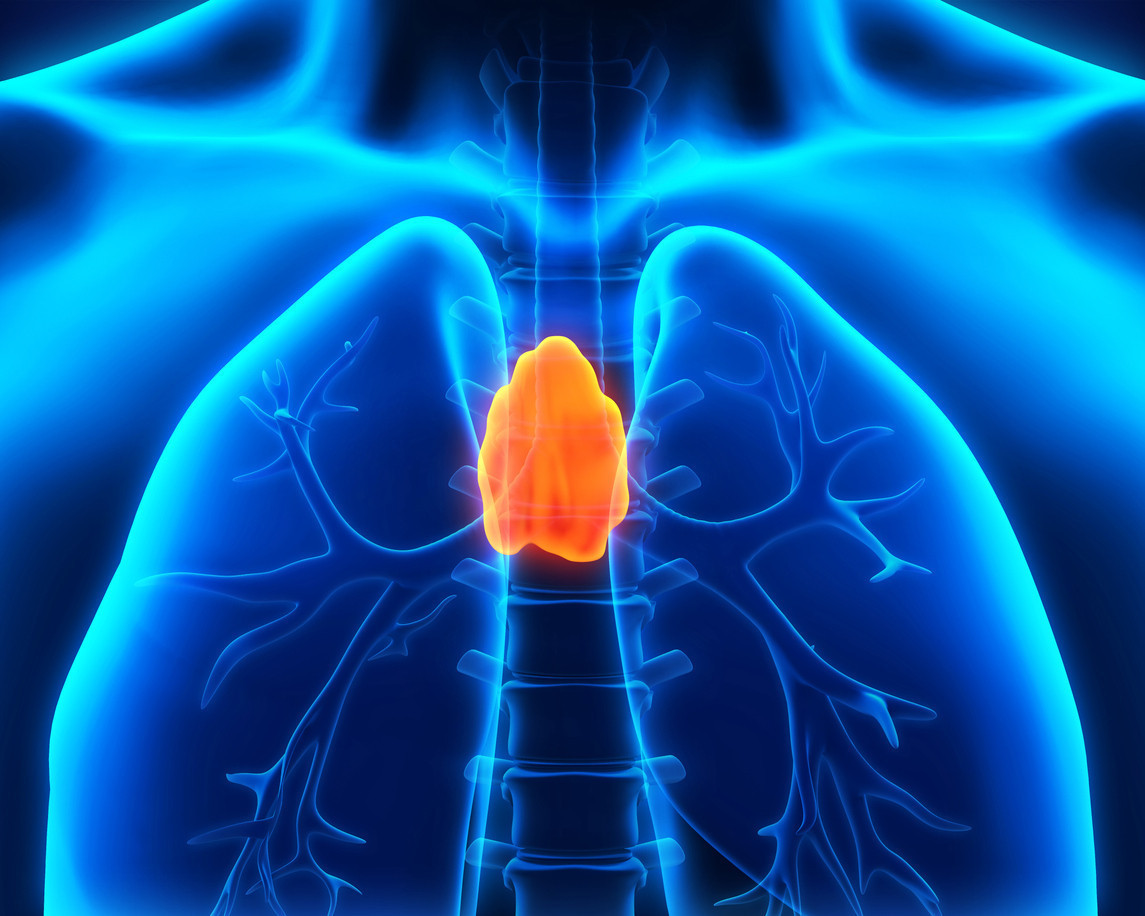
Located directly behind the breastbone, the two-lobed thymus gland has long been one of the body’s most enigmatic organs. For decades, much of the medical community largely overlooked it, dismissing the tissue as “useless” or non-functional for the majority of a person’s life. However, emerging research is now challenging these old assumptions, suggesting that the thymus may be a critical factor in longevity and the fight against cancer.
From “Evolutionary Accident” to Health Regulator
The scientific perception of the thymus has shifted dramatically over the centuries. While the ancient Greeks once speculated that this tissue might be the “center of the soul,” later scientific views were far more dismissive. In the early 1960s, a Nobel Prize-winning scientist characterized the organ as an “unimportant evolutionary accident,” describing it merely as a “cemetery” for cells.
For a long time, the medical consensus was that the thymus played an indispensable role in establishing a functional immune system during childhood, only to shrink rapidly and become obsolete following puberty. This perceived decline led many to believe the organ had no significant impact on adult health.
Current findings are now rewriting that narrative. Rather than playing a supporting role that ends in adolescence, researchers now view the thymus as one of the most powerful lifelong regulators of immune health and the aging process. Understanding how this organ functions throughout adulthood is becoming a priority for public health, as it may hold the key to maintaining a resilient immune system into old age.
Impact on Longevity and Disease Prevention
Recent studies highlight the critical role the thymus may play in protecting the body against various severe health threats. Beyond its impact on general longevity, the organ is being linked to the prevention of cancer, autoimmune diseases, and cardiovascular risks.
These discoveries have sparked a surge of interest in medical strategies aimed at rejuvenating the thymus or slowing its age-related deterioration. By better understanding these mechanisms, scientists hope to unlock new ways to preserve immune function and combat age-related decline.
The shift in focus underscores a growing realization in medical science: organs once deemed redundant may actually be essential to long-term wellness and disease resistance.
