
Utilizing the James Webb Space Telescope, astronomers have made a groundbreaking finding-a “hot Jupiter” exoplanet, WASP-121b, exhibiting not one, but two enormous tails of escaping helium gas [1]. located 880 light-years away,this unprecedented observation offers a new window into how planets lose their atmospheres and evolve,providing valuable data on the fate of gas giants in extreme environments. The findings, recently published by researchers at the Université de Montréal, highlight the power of advanced telescopes in unraveling the mysteries of exoplanetary systems.

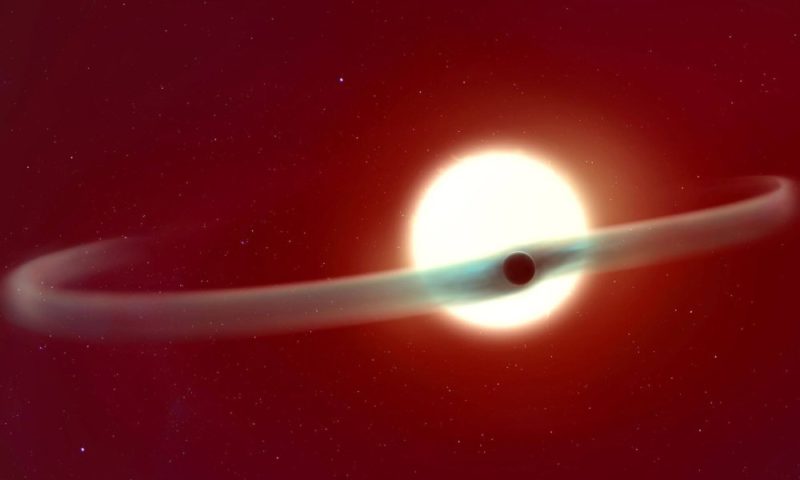
Astronomers have discovered a hot Jupiter exoplanet, WASP-121b, sporting not one, but two massive tails of escaping helium gas. Located approximately 880 light-years from Earth, the planet’s close orbit around its star exposes its atmosphere to intense radiation, causing lighter gases to stream into space. This latest finding, made possible by the James Webb Space Telescope, offers a unique glimpse into planetary atmospheric loss and evolution.
WASP-121b is classified as a “hot Jupiter,” a gas giant similar in composition to Jupiter but orbiting incredibly close to its host star. Its orbital period is a mere 30.6 hours, resulting in extremely high surface temperatures. Scientists also categorize it as a “heavy metal exoplanet” due to the presence of elements like magnesium and iron in its scorching atmosphere.
The star’s radiation is actively stripping away lighter gases, such as hydrogen and helium, from WASP-121b’s atmosphere, creating a trailing tail similar to that of a comet. Recent observations using the James Webb Space Telescope revealed a surprising detail: instead of a single tail, WASP-121b possesses two helium tails extending from opposite sides of the planet and following its orbital path. These enormous tails collectively span more than 100 times the planet’s diameter, forming a vast, semi-circular structure around approximately 60% of its orbit.
While astronomers have previously observed planets with single tails, the discovery of a double-tailed exoplanet is unprecedented. Romain Allart, the lead author of the research, suggests that stellar wind and gravitational forces are likely contributing factors to this phenomenon, but understanding the formation process requires advanced 3D modeling techniques.
The double-tailed planet WASP-121b provides astronomers with new insights into planet formation and evolution. Whether a protoplanet can retain its atmosphere, or gradually lose it over time, determines its ultimate fate – whether it becomes a gas giant, a Neptune-like planet, or a rocky world stripped of its atmosphere. Helium serves as an effective tracer for atmospheric escape, making WASP-121b an ideal subject for studying this process. Astronomers plan to continue using the Webb Telescope to determine how common this double-tail phenomenon is.
(本文由 台北天文館 授權轉載;首圖為WASP-121 b雙尾行星的藝術家概念圖,來源:蒙特婁大學)
延伸閱讀:



科技新知,時時更新
jQuery(document).ready(function(){
jQuery('iframe').each(function(i){ var $this = jQuery(this); if ( $this.attr('data-src') ) { var data_src = $this.attr('data-src'); data_src += '&v=' + (new Date()).getTime(); $this.attr('data-src', data_src); } });
setIframe();
//lazy-iframe jQuery(window).scroll(function(){ setIframe(); }); });
