
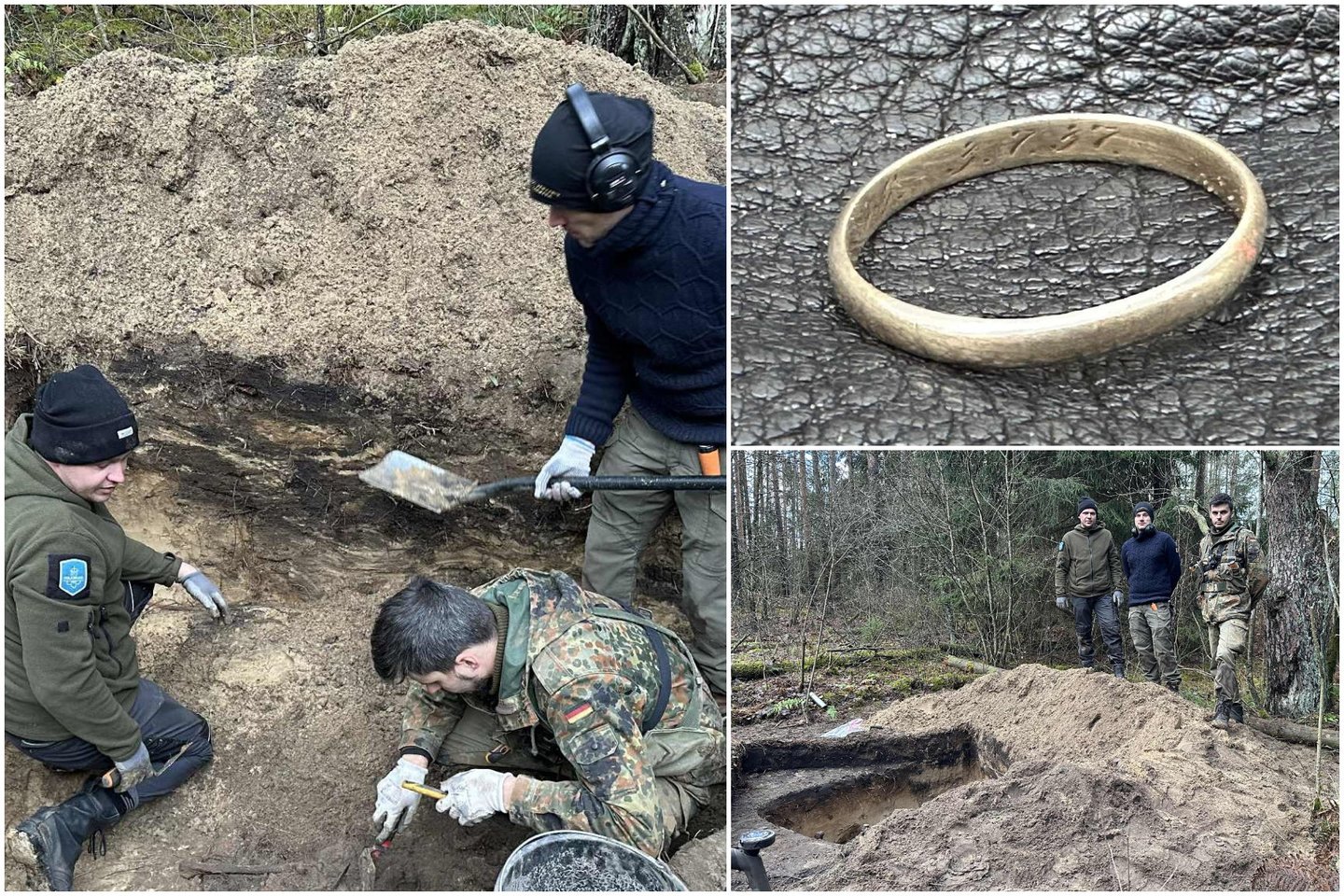
The discovery of a World War II-era burial site in a rural area of Lithuania is shedding light on a little-known chapter of the conflict’s final months. Remains believed to be those of eight German soldiers were recently unearthed following leads provided by local residents who remembered long-held family stories about the events. The site, located near the village of [withheld – no location given in article], is now undergoing careful archaeological examination, perhaps offering new details about the complex and frequently enough brutal history of the Eastern Front and its lasting impact on local communities.
The remains of German soldiers, along with personal artifacts dating back to World War II, have been discovered in an area of Lithuania following accounts from local residents, officials said. The discovery offers a rare glimpse into the final days of the war in the region and the aftermath for those who lived through it.
Archaeologists unearthed the remains of eight soldiers, along with a gold wedding ring inscribed with the dates “October 16, 1936 – July 3, 1937,” and the name of the wearer. Also recovered were three identification tokens, fragments of medical scissors and fabric, and uniform buttons.
Investigators also found bullets at the site, corroborating reports that the soldiers were executed.
According to Žilvinas and Arvydas, two individuals who led authorities to the location, members of the Polish Home Army, known as Armia Krajowa, shot the German soldiers in July 1944. They said local villagers were then ordered to bury the bodies.
Žilvinas told reporters that his late neighbor, Pranas, had shared the story of the execution and burial, explaining that his father and other villagers were compelled to carry out the task. He noted that there are no surviving witnesses to the events in the village today.
The excavation was led by Linas Kvizikevičius, head of the Cultural Heritage Department and an archaeologist. He was assisted by Mantas Trinkūnas, a specialist in exhumations from the department, along with volunteers Gabrielius Narušis and Norbertas Vilkickij.
