
A rare and lengthy total solar eclipse is forecast to occur on August 2, 2027, offering a spectacular celestial display visible across a broad corridor spanning from spain to Somalia. The event, anticipated by astronomers as one of the most accessible of the 21st century, is expected to last over six minutes in some locations, providing prime viewing opportunities for millions and a notable chance for scientific study. This article details the unique conditions aligning to create this extraordinary eclipse and the advancements in predictive modeling that allow for such accurate forecasting.
On August 2, 2027, a total solar eclipse lasting 6 minutes and 23 seconds will be visible across a wide swath of populated areas, stretching from Spain to Somalia. Astronomers are anticipating the event as a rare and exceptionally observable celestial phenomenon. The eclipse’s extended duration, combined with favorable atmospheric conditions, promises optimal viewing opportunities for millions.
READ ALSO
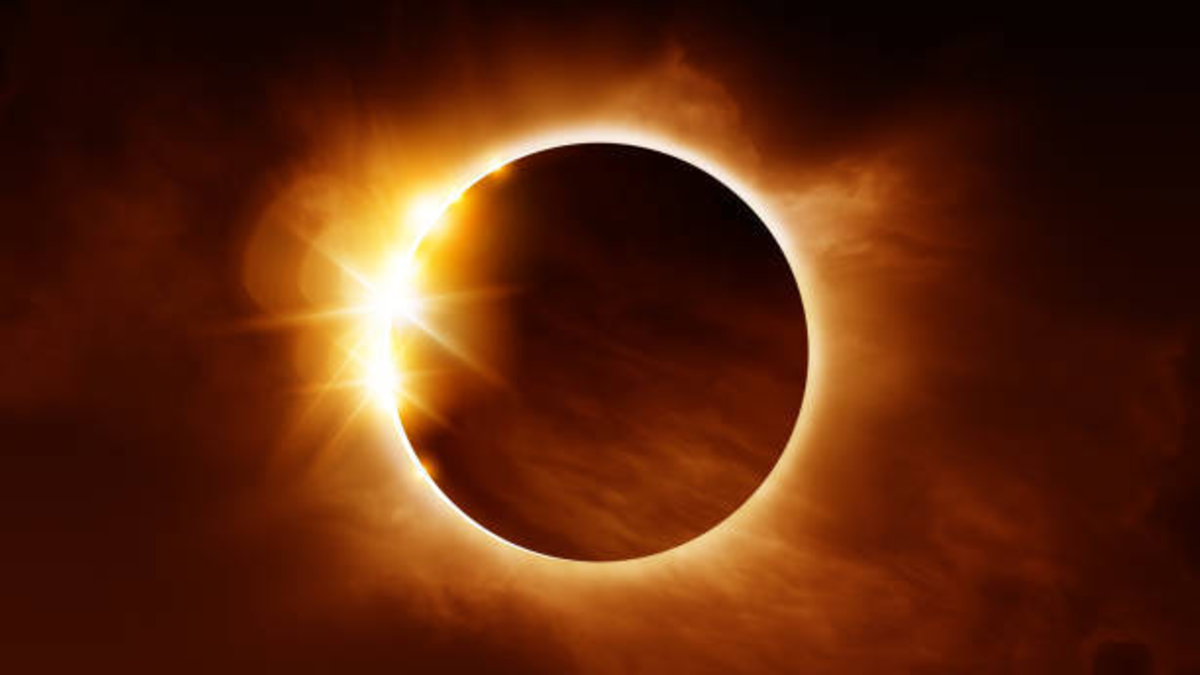
A solar eclipse occurs when the Moon passes between the Sun and the Earth, blocking the Sun’s light. A total solar eclipse happens when the blockage is complete, while an annular eclipse occurs when a bright ring remains visible around the Moon’s silhouette. Throughout history, these events have inspired both myth and scientific inquiry, playing a crucial role in the development of modern astronomy.
Today, scientists can accurately predict an eclipse’s duration. According to NASA, most eclipses last between 10 seconds and seven and a half minutes. The space agency’s database indicates that the longest total solar eclipse in a 12,000-year period will occur on July 16, 2186, and will last for seven minutes and 29 seconds. In contrast, the shortest recorded eclipse took place on February 3, 919 A.D., lasting just nine seconds.
While the 2186 eclipse remains distant, the August 2, 2027 event is shaping up to be one of the longest and most accessible eclipses of the 21st century for public observation.
An Unrepeatable Astronomical Opportunity for Decades
The timing of the 2027 eclipse coincides with a unique combination of celestial and climatic conditions. Earth will be at its aphelion – its farthest point from the Sun – making the Sun appear slightly smaller in the sky. Simultaneously, the Moon will be near its perigee, the point in its orbit closest to Earth, increasing its apparent size and making a complete solar blockage more likely to last for several minutes. This precise alignment maximizes the duration of totality.
A solar eclipse occurs when the Moon passes between the Earth and the Sun Photo:iStock
Adding to the favorable conditions, the path of totality will traverse arid regions with a low probability of cloud cover, such as Libya and Egypt. These areas are expected to become prime observation points. NASA notes that current eclipse forecasts are accurate to within less than a minute over hundreds of years, thanks to calculations based on “Newton’s laws of motion” and models integrating the positions and velocities of Earth and the Moon.
The shadow path, approximately 275 kilometers wide, will begin over the Atlantic Ocean, cross the Strait of Gibraltar, and extend over 15,000 kilometers before ending in the Indian Ocean. The Spanish coasts of Cádiz and Málaga, as well as Tangier and Tetouan in Morocco, will be among the first locations to experience totality. The ability to precisely predict these events demonstrates the power of modern astronomical modeling.
However, global attention will focus on Egypt. During the middle of the day, approximately 40 kilometers southeast of Luxor, darkness will envelop the desert for 6 minutes and 23 seconds – one of the longest durations observable from populated areas for the remainder of the century. Outside the central path, a partial eclipse will be visible across much of Europe, large parts of Africa, and western Asia.
The total eclipse will be visible in Spain, Morocco, Algeria, Tunisia, Libya, Egypt, Sudan, Saudi Arabia, Yemen, and Somalia.
How Eclipses are Predicted and Why They Matter
NASA explains that predicting an eclipse involves modeling “the geometry and mechanics of how the Earth and Moon orbit the Sun under the influence of the gravitational fields of these three bodies.” By integrating these equations into computers, scientists can identify the precise moments when the Moon will obscure the Sun.
READ ALSO
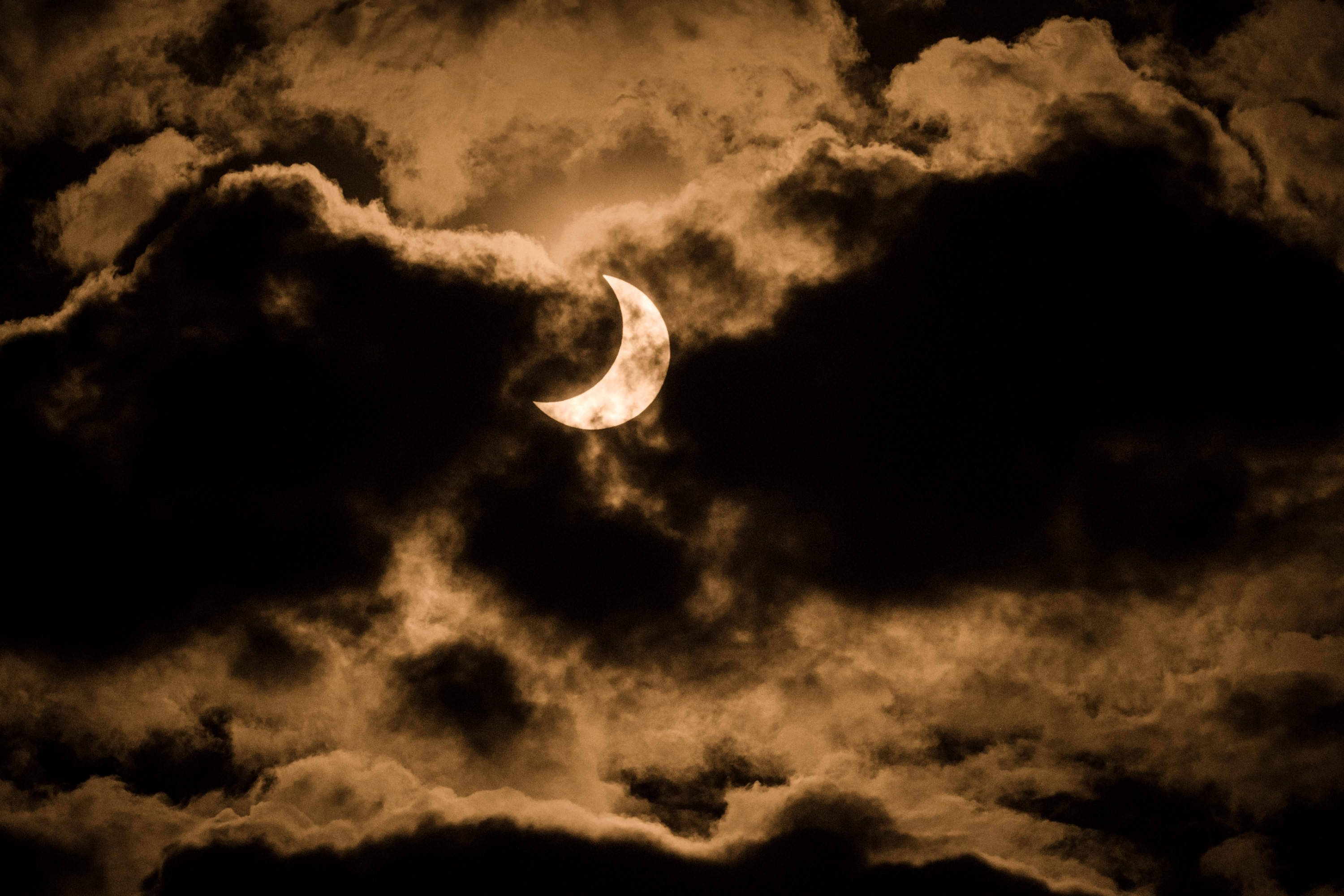
Beyond predicting their occurrence, solar eclipses provide opportunities to study the solar corona – visible only during totality – and to better understand how the Sun transfers energy to the solar wind, which can affect technologies on Earth and astronauts in space. They also offer a unique chance to investigate Earth’s atmosphere: “This localized blocking of solar energy allows us to study the effects of the Sun on our atmosphere,” the space agency notes.
With two years until the event, scientists and enthusiasts are already preparing for what promises to be a historic encounter with one of the most awe-inspiring natural spectacles in the sky.
SCIENCE DESK
