
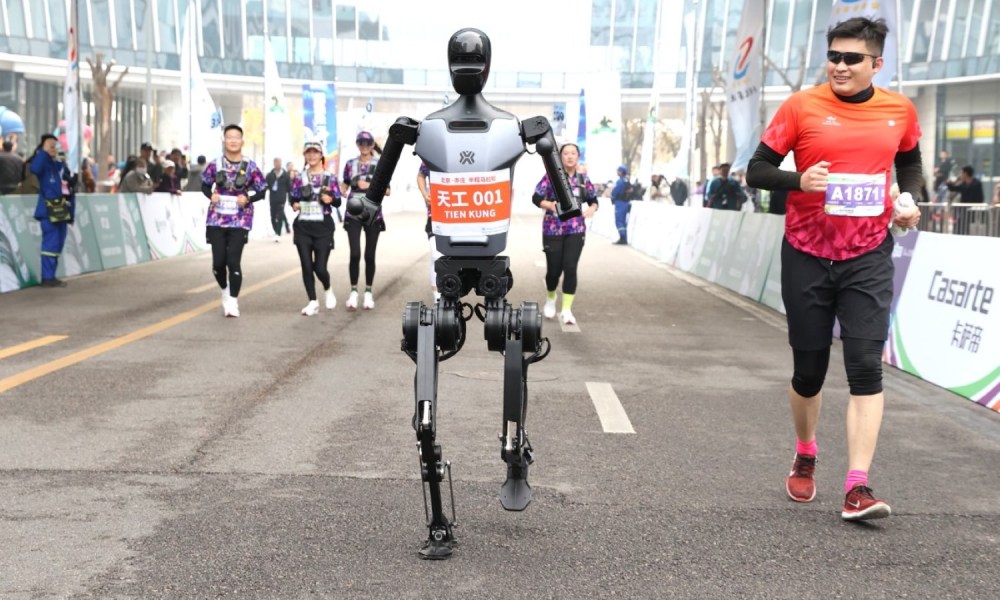
Beijing is set to host more than 300 humanoid robots in its second annual half-marathon on April 19, 2026, marking a major leap in the city’s push toward autonomous robotics.
The event, held in the Yizhuang Economic and Technological Development Zone (E-Town), will feature bipedal machines from 26 different brands — a significant increase from just 21 teams in the inaugural 2025 race.
Organizers have introduced a latest autonomous navigation category, which currently includes 38% of the registered teams. To encourage independence, any robot relying on human operators will receive a 1.2 time penalty, effectively multiplying its net time and giving a clear advantage to machines capable of independent sensing and pathfinding.
Robots taller than 75 centimeters must complete the full 21.0975-kilometer (13-mile) course without assistance. Each competitor will wear a shoulder badge powered by the BeiDou Navigation Satellite System, enabling centimeter-level tracking and real-time location reporting to race officials.
A full-scale test of the race route was conducted from the evening of April 11 to the early morning of April 12, 2026, in E-Town, preparing organizers and participants for the official event.
The Tiangong humanoid robot, developed by the Beijing Humanoid Robot Innovation Center, was among those observed during a test run on Beijing’s streets on March 15, 2026, highlighting the growing readiness of China’s robotics industry for real-world challenges.
With stricter technical standards and a focus on autonomy, the 2026 edition aims to shift from experimental demonstrations to what officials describe as standardized high performance in humanoid robotics.
