
A Czech manufacturer, Amadea, boasts an astonishing catalog of over 70,000 unique products, all crafted within its three facilities in the Czech Republic. The company’s scale is unmatched in Europe for small, wooden goods, a testament to its adaptable manufacturing process.
Despite its significant output – approximately 150 million Czech koruna (roughly $6.5 million USD as of February 21, 2026) in annual sales – Amadea remains relatively unknown within its home country. The company’s success highlights the potential for specialized manufacturing and the growing demand for handcrafted goods.
Currently, preparations are underway in the company’s Lázně Bělohrad facility for the upcoming holiday season. Laser cutting machines and skilled artisans are working to produce decorations, with wood shavings covering the factory floor. Amadea also operates as a sheltered workshop, providing work opportunities and delivering materials to employees working remotely due to health reasons.
Foto: Filip Horáček
Amadea is Europe’s largest manufacturer of nativity scenes.
Amadea is also Europe’s largest producer of wooden nativity scenes, exporting its products worldwide. “It always makes me happy when I travel through Italy or the Austrian Alps and notice our decorations in the windows,” said Martina Portych, the company’s representative. “At first, we copied Italian designs, but now I see that Italians are inspired by our ideas.”
The company’s product range extends beyond nativity scenes to include souvenirs, tourist stamps, corporate promotional items, wooden crates, planters, ornaments, knife holders, cutting boards, and a wide variety of other wooden goods.
Founded in 2002, Amadea began with a partnership that later dissolved, leading Martin Portych to establish his own business. The initial investment included tampoprinting and injection molding machines, and a trip to a trade fair in Germany sparked an interest in laser technology. A laser machine was imported from Taiwan, a relatively uncommon practice in wood processing at the time.

“We bought it quite wildly,” Portych explained. “We didn’t have service secured, so we had to learn it ourselves. Getting spare parts was a problem.” Initially intended for promotional items, the laser’s application shifted to wooden ornaments when customer demand proved insufficient for the former. “We were the first to start industrially producing them with a laser in Europe,” Portych stated.
The company made its debut at Christmasworld in Frankfurt, securing a small booth near the restrooms and decorating it with nine ornaments using burlap and wood chips purchased from a local hardware store. The unconventional display reportedly drew attention from attendees.
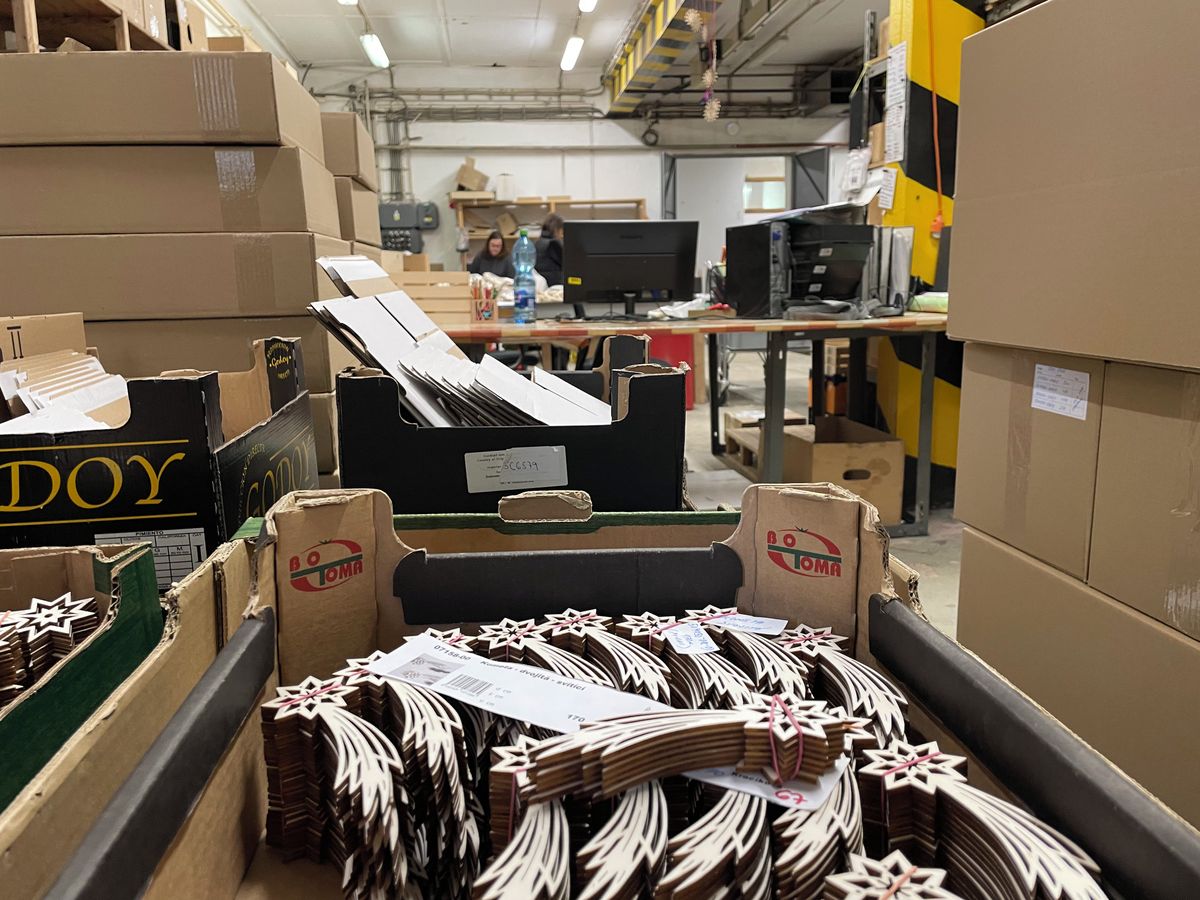
Foto: Filip Horáček
The company started with a few ornaments and now offers as many products as a hypermarket.
A single customer placed a substantial order, leading to Amadea’s products being indirectly distributed to Christmas markets in major German cities. Prior to EU membership, foreign customers were often wary of Czech businesses. “Czechs were generally considered unreliable and untrustworthy at that time, and people were afraid to place orders,” Portych recalled.
Today, the Czech manufacturer has a strong reputation abroad and no longer needs to attend trade shows. Amadea’s products are sold in Germany, Poland, Slovenia, Canada, France, and many other countries. The company previously experienced success in Russia, receiving substantial orders, including from state-owned energy giants Gazprom and Rosneft.

Some requests were quite unusual – Portych recalls a customer who ordered a glowing portal with a nuclear power plant and a chapel in the middle. Prior to the Crimean crisis, the situation began to escalate, with Russian authorities detaining a truck carrying Czech goods. The company ultimately withdrew from the Russian market.
Germany accounts for only three percent of the company’s revenue. The largest order came when Martin devised ornaments for Škoda Auto, ranging from the vintage Laurin & Klement model to the Superb. “I offered it to Škoda, where I would likely have been dismissed, but a German manager happened to be visiting and said, ‘That’s nice, I want it!’” Volkswagen ordered so many souvenirs that the Czech company from Podkrkonoší had to grab out a loan to purchase another laser, marking the finish of its “basement” production era.
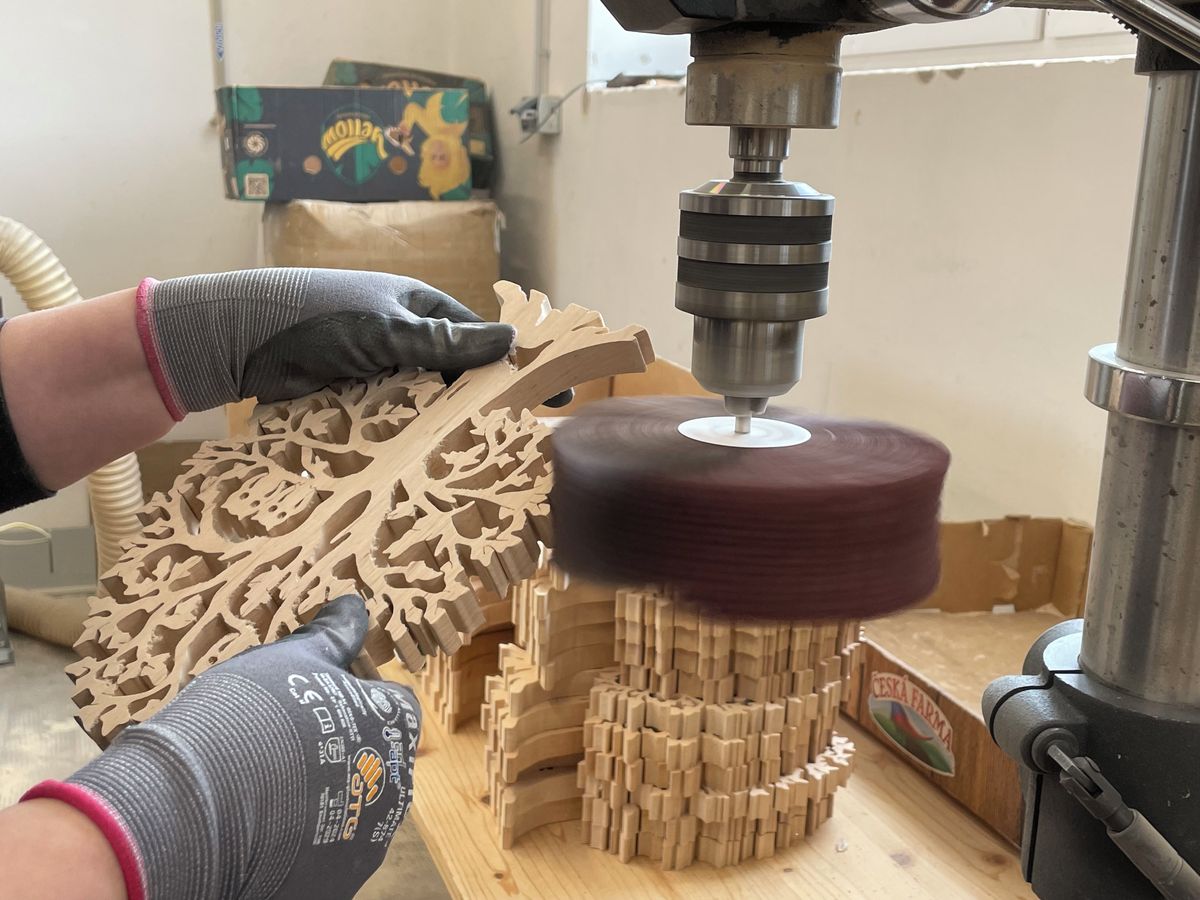
Foto: Filip Horáček
Amadea combines precise machine production and manual work.
Amadea operates three factories in the Czech Republic. Last year and a half, the company acquired the bankrupt Krkonošské dřevařské závody in Bílá Třemešná, gaining control of the production process from the particularly beginning. The company selects trees in Czech forests, transports the logs, and dries the wood in-house.
A second facility for processing solid wood is located in Ostroměř, a capability added in 2014, expanding the company’s offerings beyond ornaments and decorations to include products for the home.
Ninety percent of the company’s revenue is generated in the Czech market, a shift from previous years. This change was driven by the establishment of its own retail stores in central Prague. Amadea competes with small woodworking shops and online retailers offering wooden products, such as bewooden.cz.
However, Amadea also faces competition from cheaper foreign imports, particularly from China. This competition existed even before the rise of marketplaces like Temu. “When we exhibited at Christmasworld, vendors from China were two floors above, with one booth offering purely counterfeit Amadea products,” Portych recalled. “I pulled out a business card and pointed out that these were our products. He looked at me and said, ‘You have good products.’”
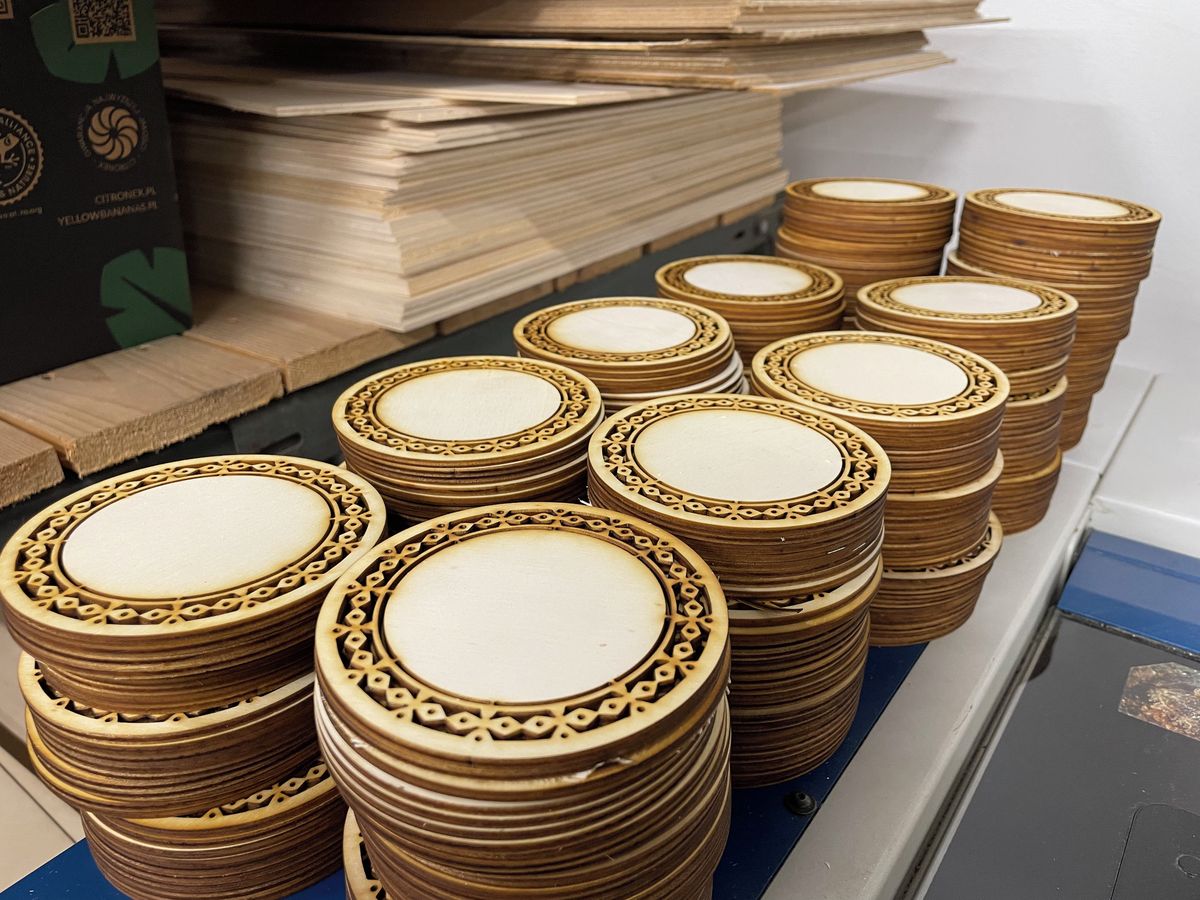
Foto: Filip Horáček
The company was among the first to manufacture decorations using laser engraving.
Recently, the influx of shipments from Temu has grow a concern. “Towards the end of the year, we definitely felt it, and our profit is lower. It’s challenging to quantify, but every year our business has grown, but last year it increased much less than usual. I estimate that these marketplaces took about 10 percent,” Portych said. The company views the competition from Chinese marketplaces as unfair, noting that the products often do not meet the same standards and fail to comply with European legislation.
Amadea believes it can compete based on the superior quality of its products and its focus on larger items, which are less practical to import from China. The company launched its e-shop during the COVID-19 pandemic, when retail sales declined, and it now generates about ten percent of its revenue through the online channel.
Another challenge is the excessive bureaucracy. The company is preparing for the EU Deforestation Regulation (EU
