
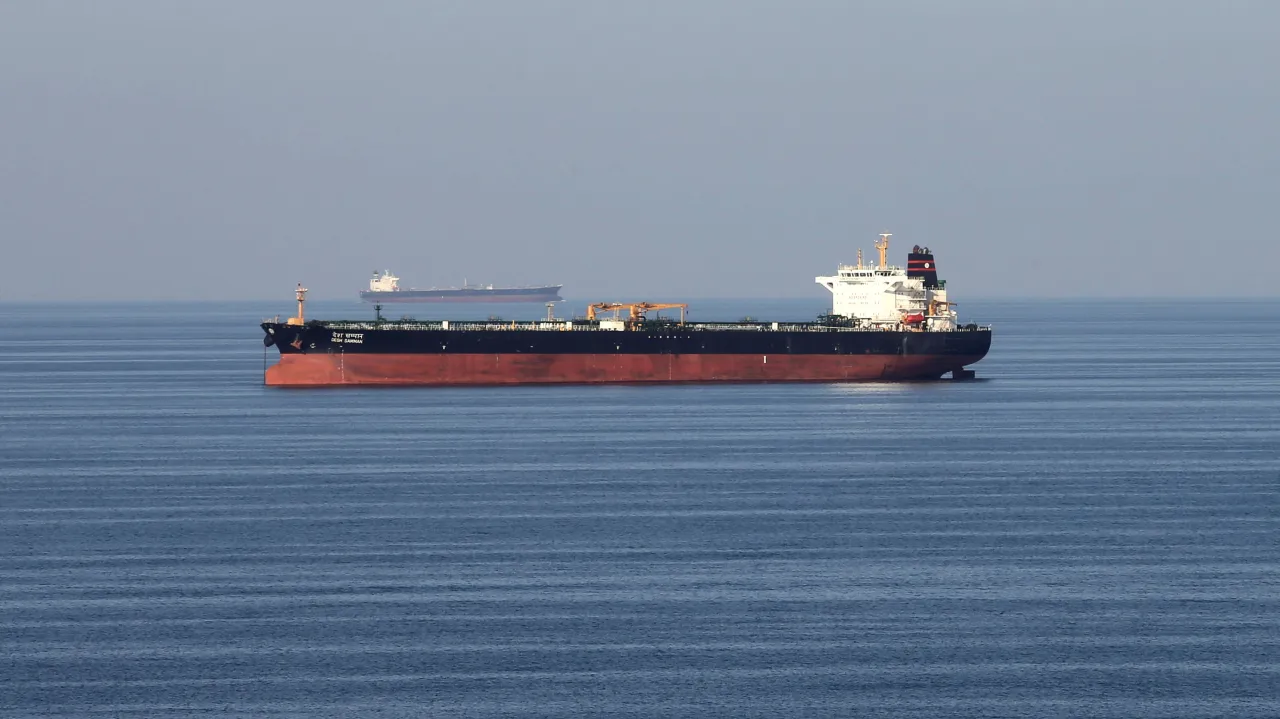
Oil prices surged on Monday amid escalating concerns that military actions involving the U.S. And Israel targeting Iran could disrupt global supply. Brent crude, a key international benchmark, jumped over nine percent to trade near $79.50 a barrel as of 8:15 Central European Time. West Texas Intermediate (WTI), the U.S. Benchmark, saw a similar increase, approaching $73 a barrel. Gold and natural gas prices similarly rose sharply, although equity markets declined.
“Brent crude, which already closed above $73 a barrel over the weekend – its highest level since last July – briefly spiked to $82 after trading opened,” said Petr Lajsek, an analyst at Purple Trading. This price movement reflects the growing anxiety surrounding potential disruptions to energy markets.
Traders are particularly worried that conflict could halt shipping traffic through the Strait of Hormuz, a critical waterway for global oil supplies, handling approximately 20 percent of worldwide crude shipments. Analysts estimate that a prolonged closure of the Strait could push oil prices to $100 a barrel.
According to Jörg Krämer, chief economist at Commerzbank, sustained high oil prices “would increase inflation in the Eurozone by more than one percentage point and reduce economic growth by several tenths of a percentage point.” The potential for broader economic fallout is a key concern for policymakers.
U.S. President Donald Trump suggested in an interview with the Daily Mail that a military operation against Iran could last four weeks. This timeline adds to the uncertainty surrounding the situation.
“A complete and prolonged closure of the Strait of Hormuz would represent a major shock to global markets,” stated Filip Sommer, director of the Center for Middle Eastern Studies at CEVRO University in Prague over the weekend. “Riyadh does have an alternative in the form of the so-called East-West pipeline leading to the Red Sea, and Abu Dhabi can use the pipeline to the Fujairah port outside the Strait of Hormuz, but these capacities are not a full substitute for a long-term restriction of maritime transport.”
Natural Gas Prices Also React to Attacks
Wholesale natural gas prices for the European market rose by more than 20 percent on Monday in response to the U.S.-Israeli actions in Iran, reaching nearly €40 (approximately $43.50) per megawatt-hour (MWh). Approximately one-third of global liquefied natural gas (LNG) supplies transit through the Strait of Hormuz.
The key front-month gas contract at the Title Transfer Facility (TTF) in the Netherlands showed an increase of around 22 percent around 9:00 CET, trading near €39 per MWh. Earlier, prices had risen to €39.85 per MWh, according to data from Barchart.
Gold Also Rises Sharply
Demand for gold has also increased significantly due to the attacks. Around 8:40 CET, gold prices were up 2.4 percent, trading near $5,405 per troy ounce. Prices had previously climbed above $5,419, the highest level in over four weeks.
“Unlike previous escalations in this conflict, both sides now have fairly compelling reasons to continue the escalation,” Kyle Rodda of Capital.com told Reuters. Independent analyst Ross Norman predicted that gold prices would reach new highs as the world, in his view, enters a new era of geopolitical uncertainty. “Gold is likely the best gauge of global uncertainty,” he noted.
Gold prices reached a record high near $5,600 per ounce at the finish of January. Investors view gold as a safe haven during times of political and economic uncertainty. The price of the metal rose 64 percent throughout last year, driven by geopolitical tensions, lower interest rates, and a weaker dollar.
European Stocks Decline
European stock markets opened lower on Monday, with the region’s benchmark index falling nearly two percent shortly after the start of trading. Investors are monitoring developments surrounding the U.S.-Israeli attack on Iran and the associated rise in oil prices. Concerns are mounting that expensive oil and the broader impact of military conflict in the Middle East will worsen the performance of many companies.
The pan-European STOXX Europe 600 index, which tracks trading on exchanges in Britain and select EU countries, was down more than 1.8 percent below 622.20 points around 9:30 CET, reaching its lowest level in roughly two weeks. There was increased interest in defense stocks and oil companies.
