
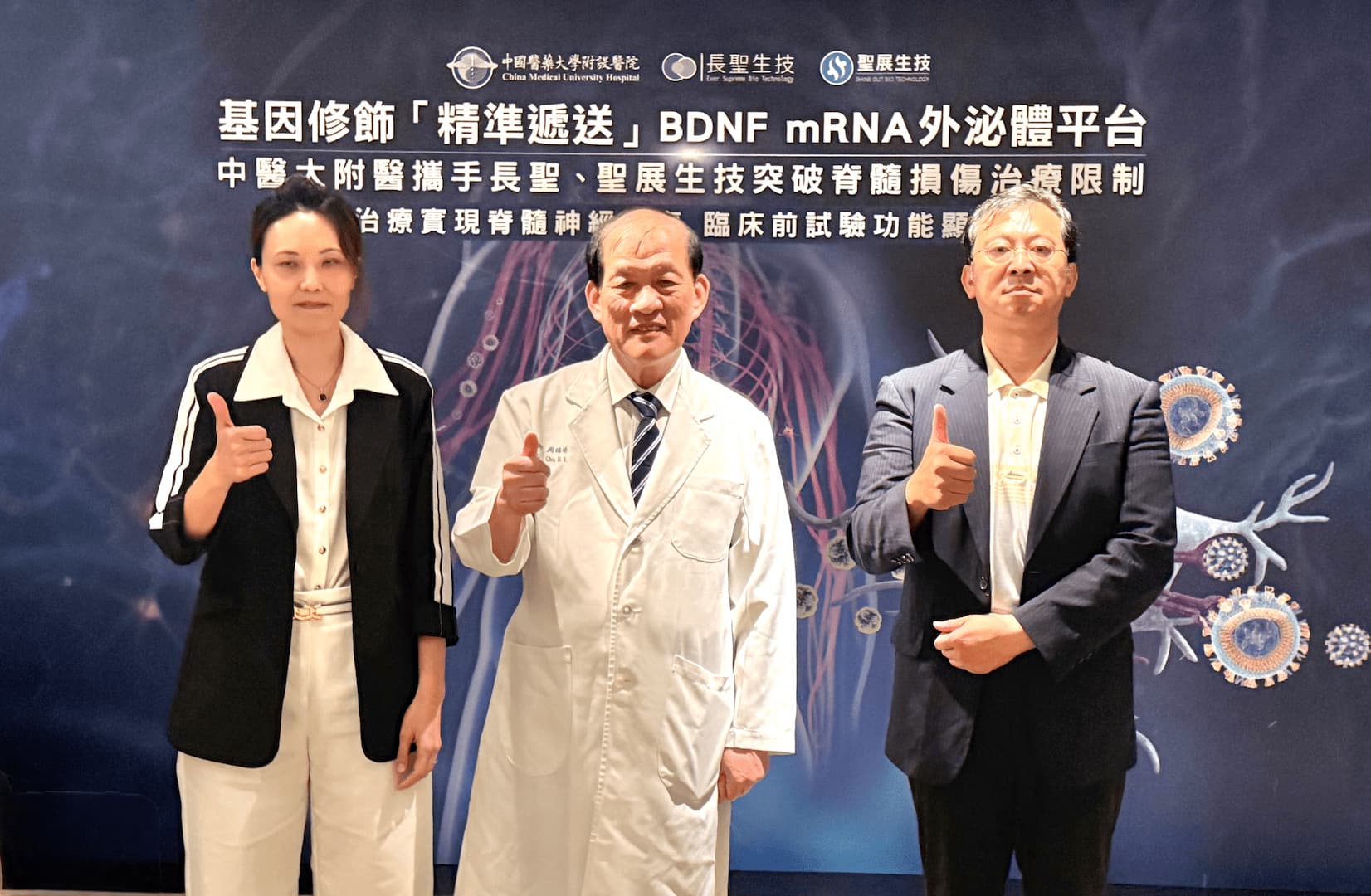
A research team led by Dr. Chou Te-Yang, Superintendent of China Medical University Hospital (CMUH), has developed a pioneering “navigation exosome” platform that could redefine the treatment of neurodegenerative conditions. The breakthrough, known as the αDAT-EV platform, allows therapeutic agents to bypass the blood-brain barrier (BBB) and precisely target damaged nerve regions, offering new hope for patients with Parkinson’s disease and those suffering from spinal cord injuries.
Overcoming the Blood-Brain Barrier
For decades, the blood-brain barrier has remained one of the most significant bottlenecks in neurology. According to Dr. Chou, approximately 98% of potential medications are unable to effectively penetrate this barrier, severely limiting the efficacy of treatments for central nervous system (CNS) disorders. This limitation has historically forced clinicians to rely on treatments that manage symptoms rather than repairing underlying neural damage.
The newly developed αDAT-EV brain navigation exosome platform functions essentially as a “GPS” for medication. By utilizing genetic engineering, researchers modified the surface of the exosome membrane with antibody fragments capable of recognizing the dopamine transporter (DAT). This modification allows the exosome to actively navigate through the BBB and deliver its cargo directly to the damaged areas of the brain associated with Parkinson’s disease.
Precision Treatment for Parkinson’s Disease
The clinical implications of this technology are particularly significant for Parkinson’s disease, a condition that currently affects approximately 80,000 people in Taiwan and nearly one million in the United States. Dr. Chou noted that current therapies typically focus on supplementing missing components—such as Levodopa—but fail to repair neurons or clear abnormal proteins from the brain.

Using the αDAT-EV platform, the team successfully delivered curcumin, a compound that shows promise in cellular experiments but typically fails in human application due to poor absorption and inability to reach the brain. By leveraging this navigation system, curcumin can now penetrate the BBB to provide precision treatment. This advancement suggests a shift from symptomatic relief toward potential neural repair, supporting the goal that spinal cord injury may no longer result in lifelong disability through the use of navigation exosomes to repair nerves.
A Collaborative Scientific Milestone
The development of the αDAT-EV platform was a collaborative effort between China Medical University Hospital, Changsheng Biotech and Shengzhan Biotech. This project follows the team’s previous success in creating the HLA-G targeted exosome platform for treating solid tumors, marking a strategic expansion of their drug-delivery expertise into the high-complexity field of the CNS.
The research findings have been accepted for publication in the Journal of Nanobiotechnology, a leading international peer-reviewed journal specializing in biological nanotechnology. As global populations age and the prevalence of neurodegenerative diseases rises, the ability to deliver drugs with such precision could guide future strategies for treating a wide array of brain and nerve disorders.
